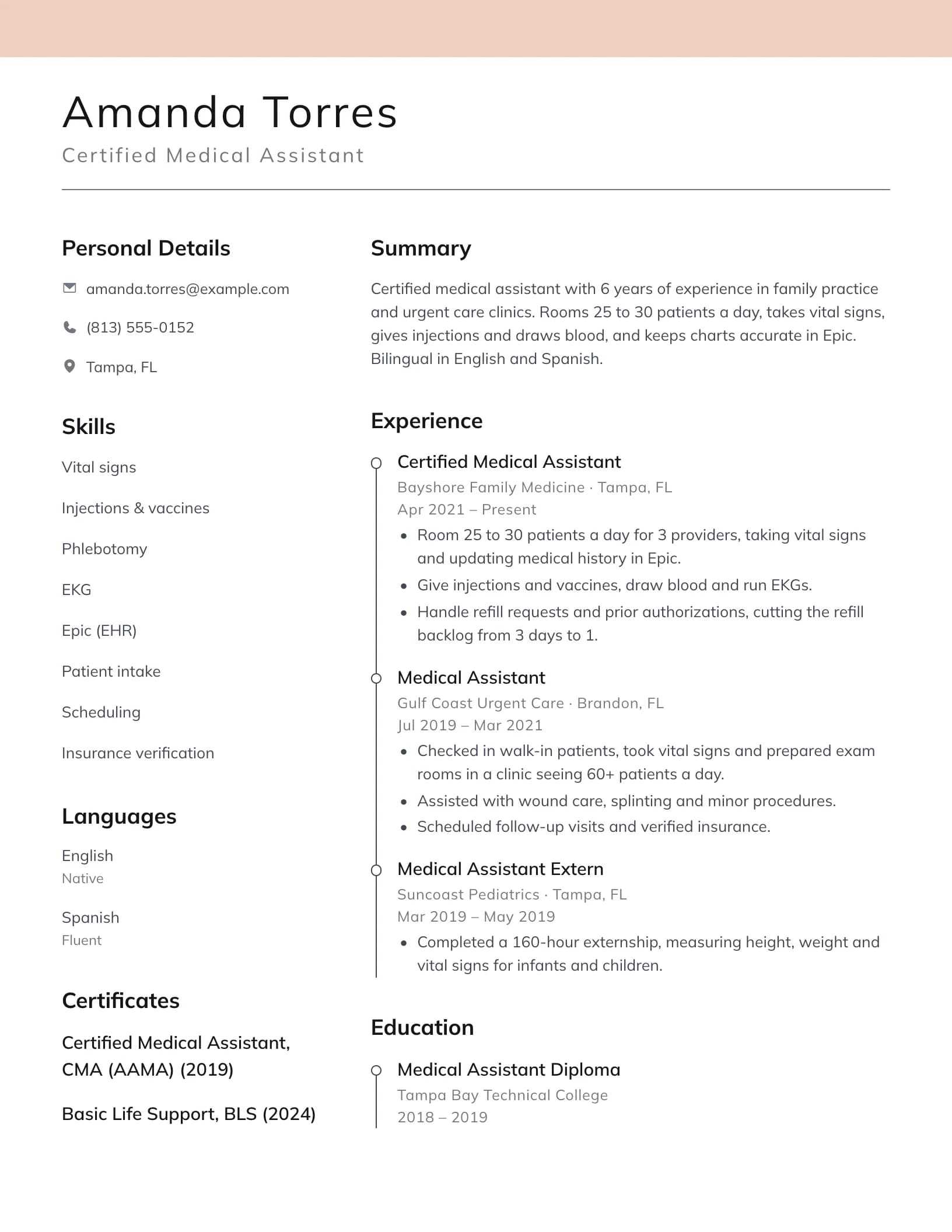
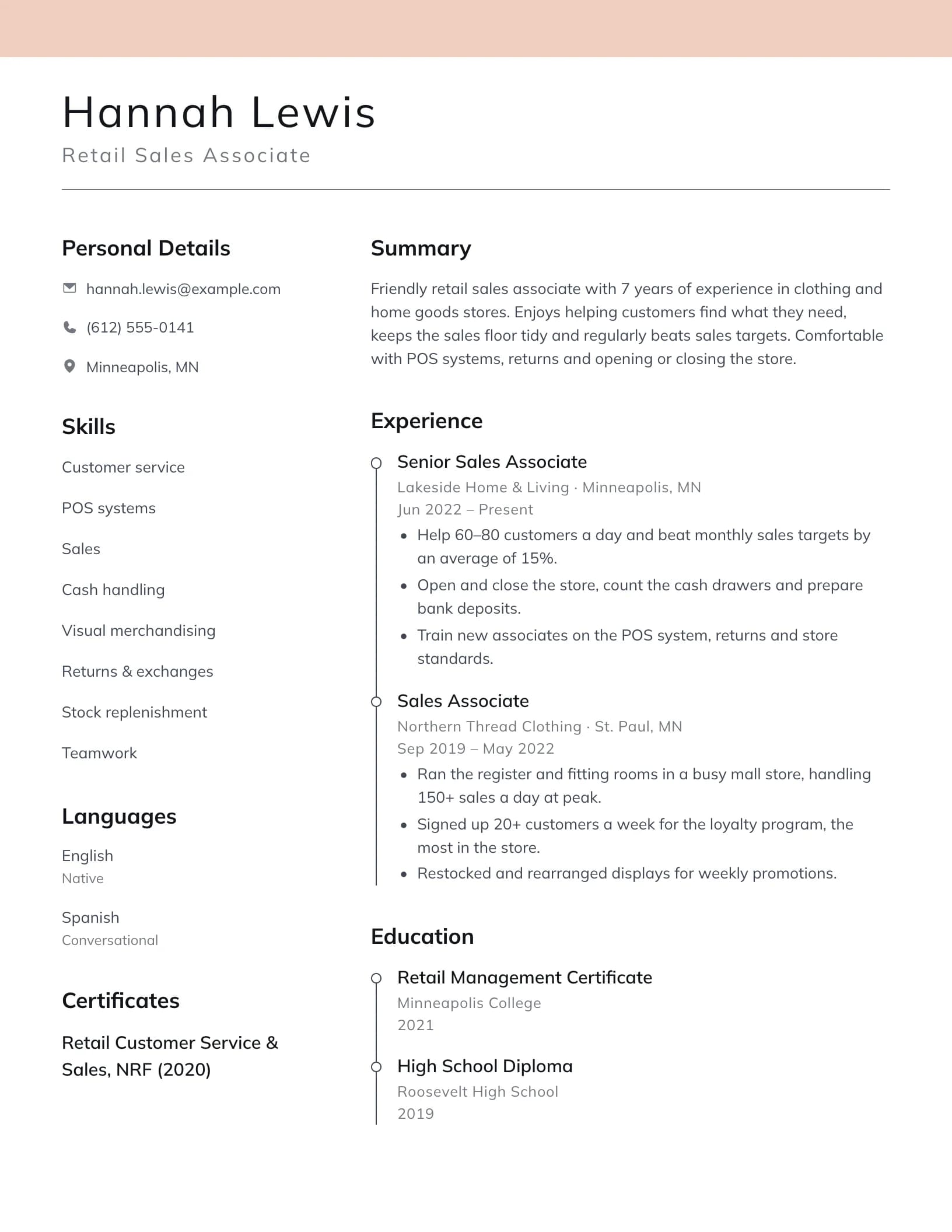
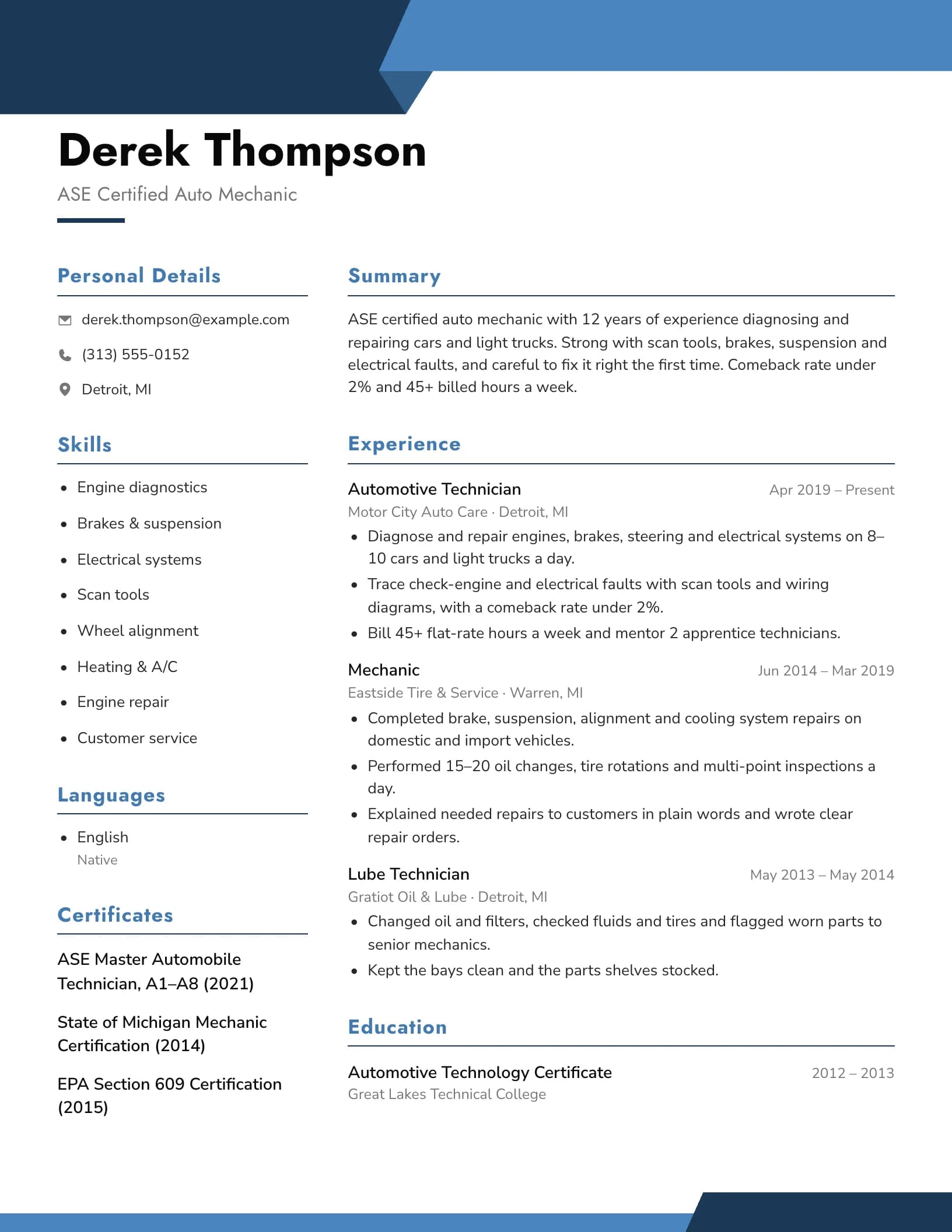
The best skills to put on a resume are the ones the job ad asks for and you can prove: the equipment you can run, the tasks you can do and a few people skills. Six to ten is enough for most resumes.
This guide shows how to choose them, where to put them and what a good list looks like for your kind of work. For the whole page, start with our guide on how to write a resume.
On this page · 10 sections
What are job skills and people skills
Skills come in two kinds, and a good resume has both.
Job skills are things you have learned to do and could show someone: drive a reach forklift, work a grill, take a blood pressure reading, wire a panel, run a cash register, speak Spanish. You will also see them called hard skills.
People skills are about how you work: showing up on time, staying calm with an unhappy customer, leaving clear notes for the next shift. They are also called soft skills.
| Job skills | People skills | |
|---|---|---|
| What they are | Tasks, tools, machines, software, languages | How you work and how you deal with people |
| How to show them | Name them in your skills section | Prove them in your work experience lines |
Job skills are the easiest to compare with the job ad, so they come first in your list. People skills can decide between two people who can both do the work.
How to pick the right skills from the job ad
The job ad is the employer's own list of what they want. Use it every time you apply.
- Mark every skill in the ad. Look for tools, machines, tasks, software and licenses, and for words like reliable or team.
- Check off the ones you have. Count only the skills you could explain or show in an interview.
- Use the ad's words. If the ad says POS system and your resume says cash register, add POS system.
- Add what the ad left out. Include one or two skills the job clearly needs, even if the ad did not name them.
- Put the most important first. The skills the ad names first, or names twice, go at the top of your list.
The words matter because many employers keep applications in software called an applicant tracking system, or ATS, and recruiters can search it for the words in the ad. A resume that uses the same words is easier to find. Our guide to an ATS-friendly resume explains how that works.
Never add a skill you do not have because the ad names it. You will be asked about it in the interview, or on your first day.
No ad in front of you? Read three ads for the same kind of job. The skills that appear in all three are the ones to lead with.
How many skills should I put on a resume
Six to ten skills is enough for most resumes. That covers what the ad asks for, and it is short enough that a manager reads the whole list.
- With fewer than five, the section looks thin.
- With more than twelve, your best skills get lost.
- A skilled trade or a technical job can run a little longer, because the exact tools and systems matter there.
Most of the list should be job skills, with two or three people skills at the end. If you have several skills of one kind, put them on one line. "Forklifts: sit-down, reach and order picker" reads better than three separate entries.
Where to put skills on a resume
Skills belong in three places, and each place does a different job.
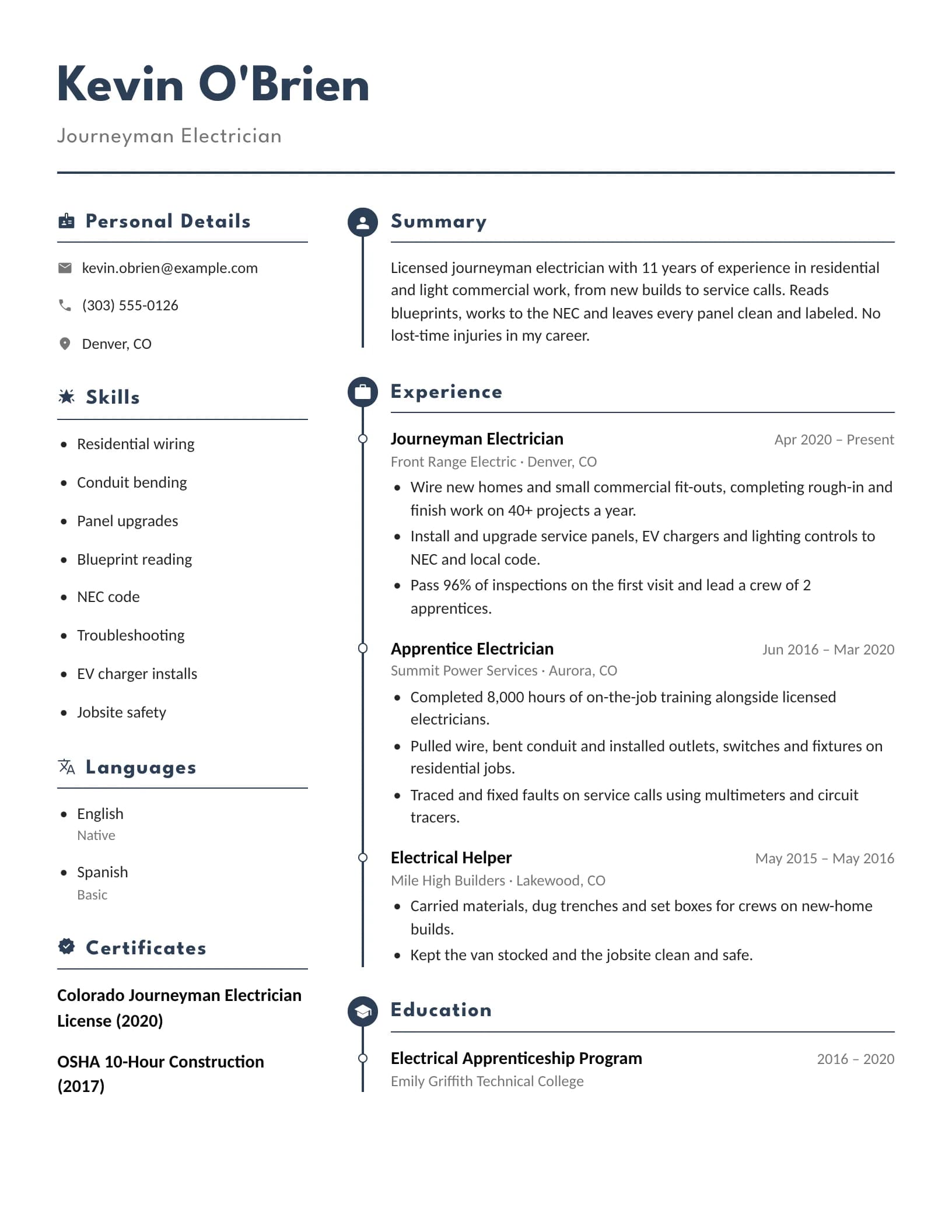
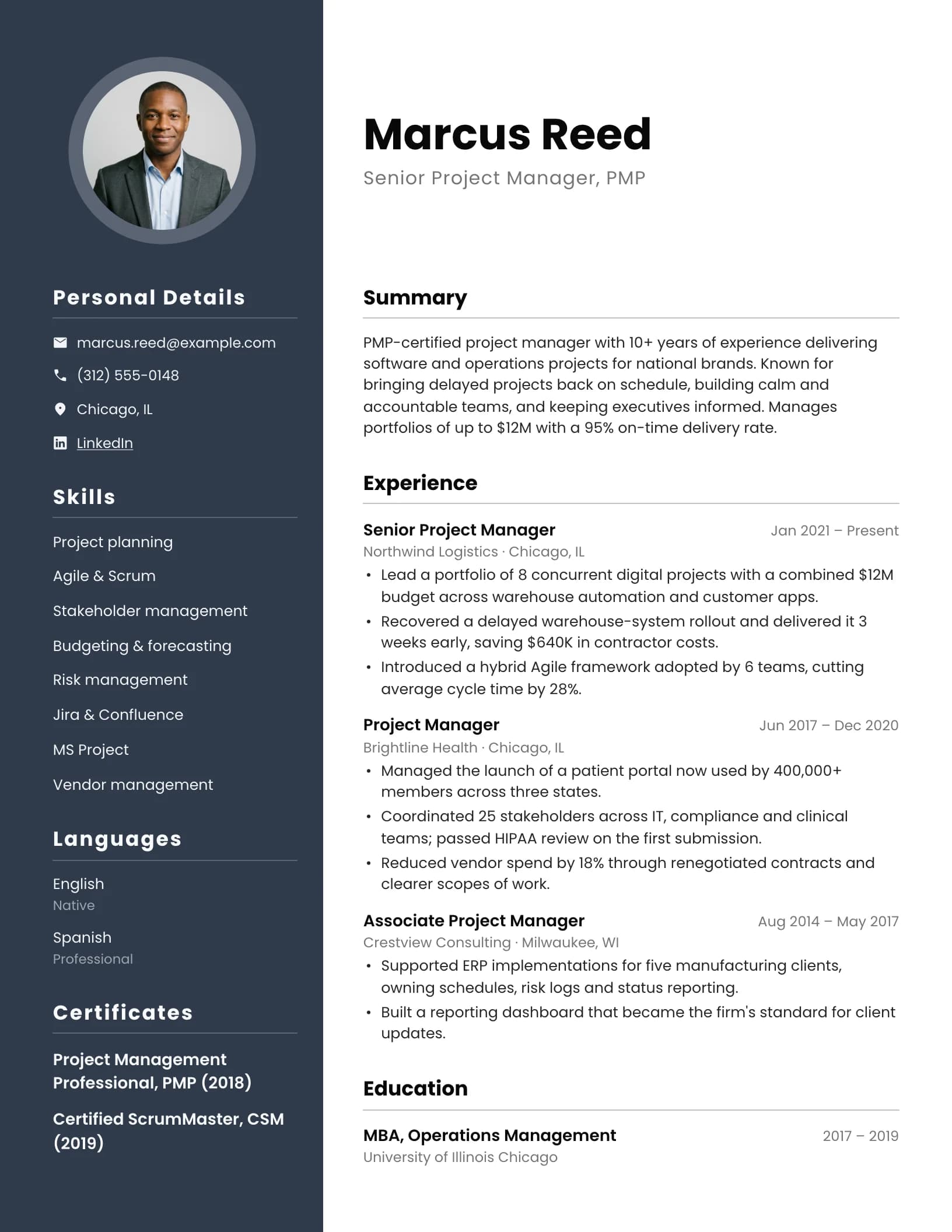
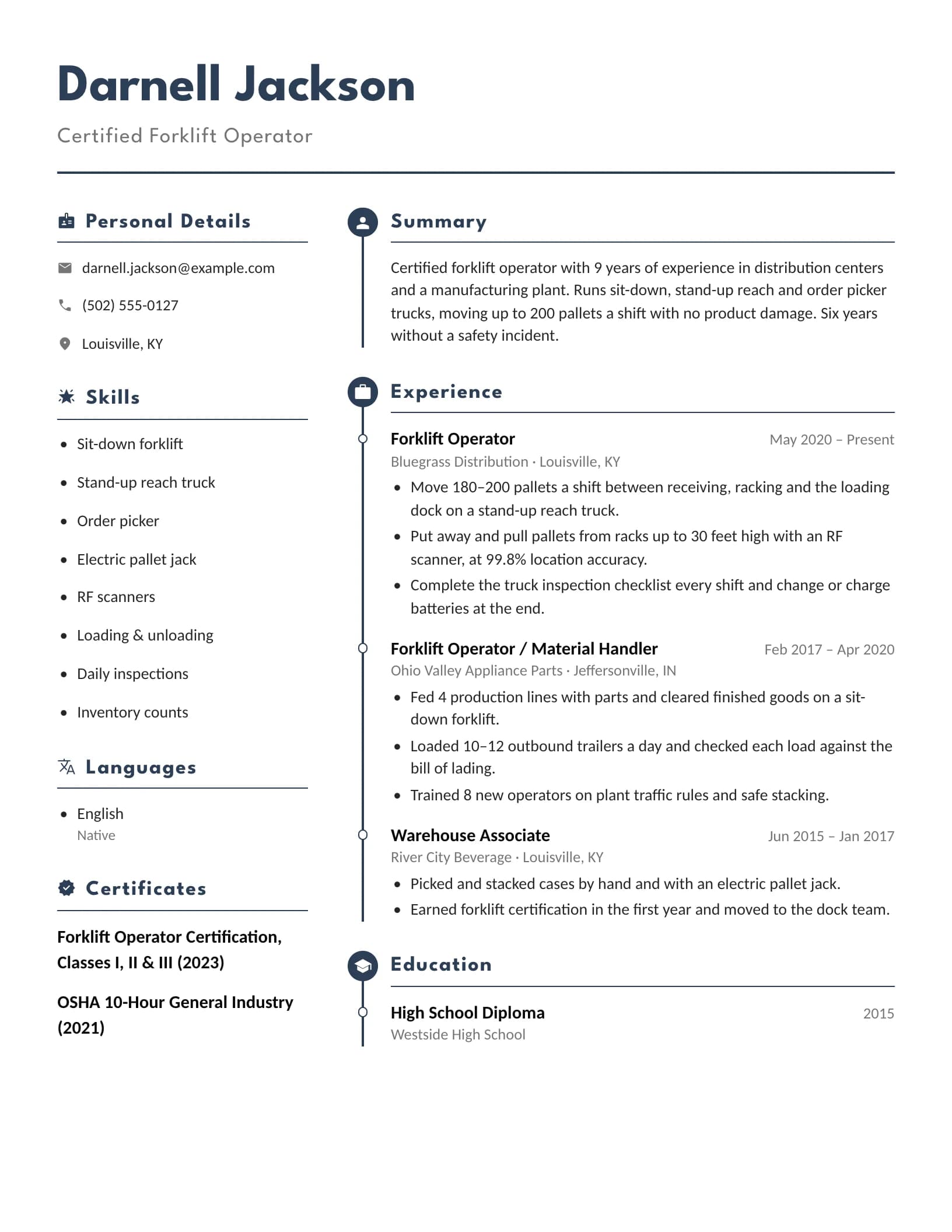
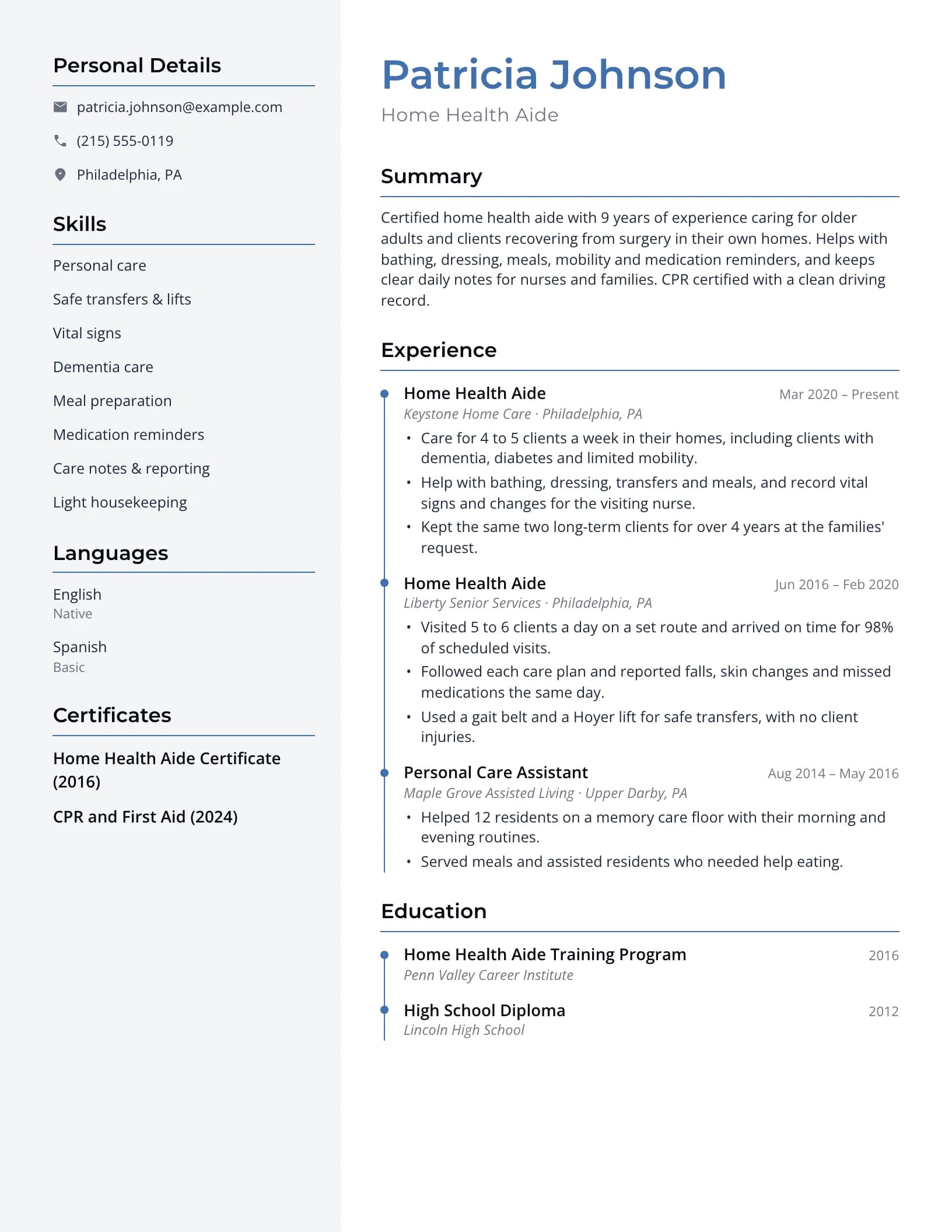
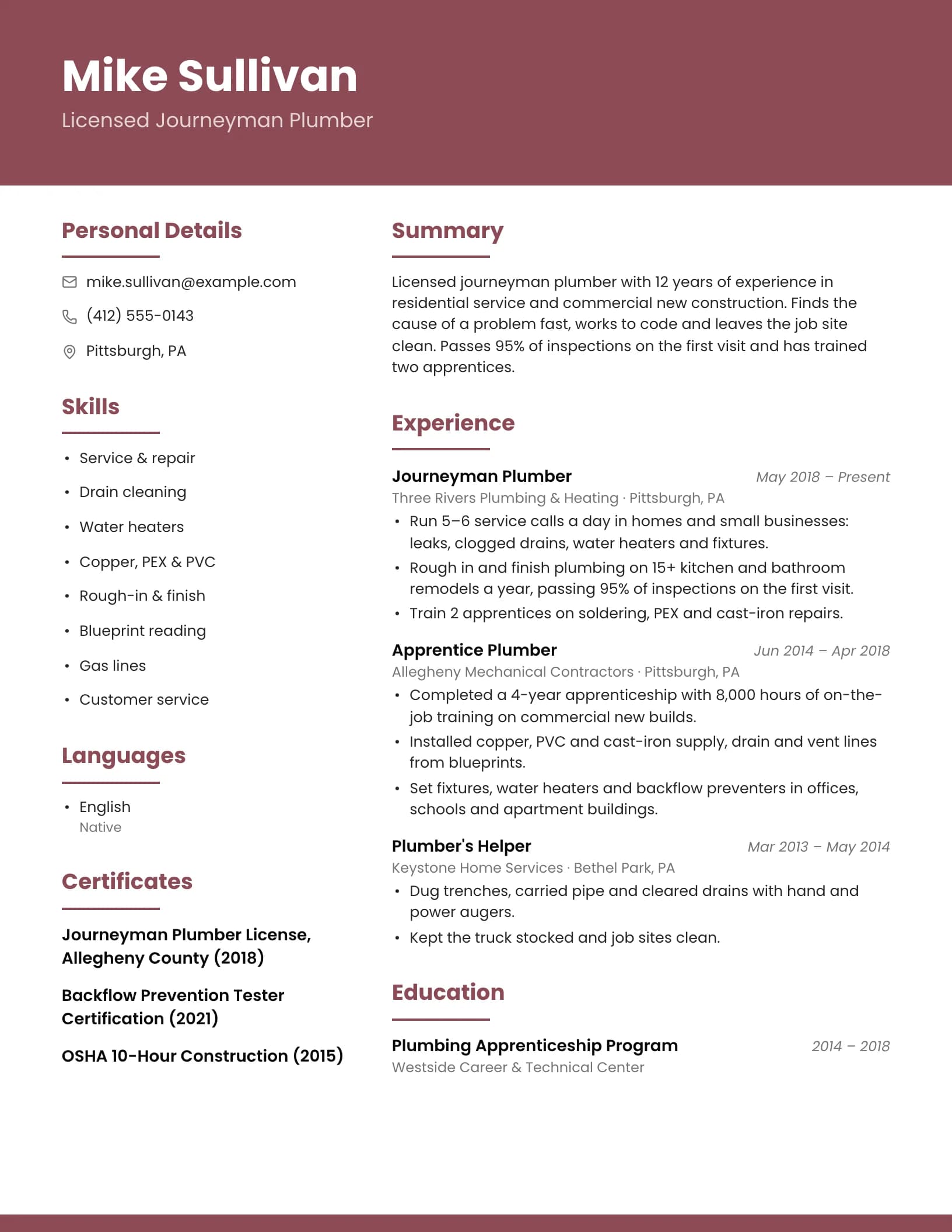
- The skills section. A short list of skill names. In a two-column template it usually sits in the narrow side column. In a one-column template it usually comes after work experience.
- The summary. Name your two or three strongest skills in a sentence at the top of the page. See how to write a resume summary.
- Your work experience lines. This is where you prove a skill, by showing where you used it and how much. See how to describe work experience on a resume.
A skill that is named in the list and then shown in a work line is far more convincing than a skill that is only claimed.
Skills: teamwork, communication, hard worker, time management.
Trained 5 new stockers on the night crew and left written notes for the morning shift at the end of every night.
Licenses and certificates need their own section. A commercial driver's license, a forklift certificate, a food handler card or CPR training goes under Certificates, with the year, where nobody can miss it.
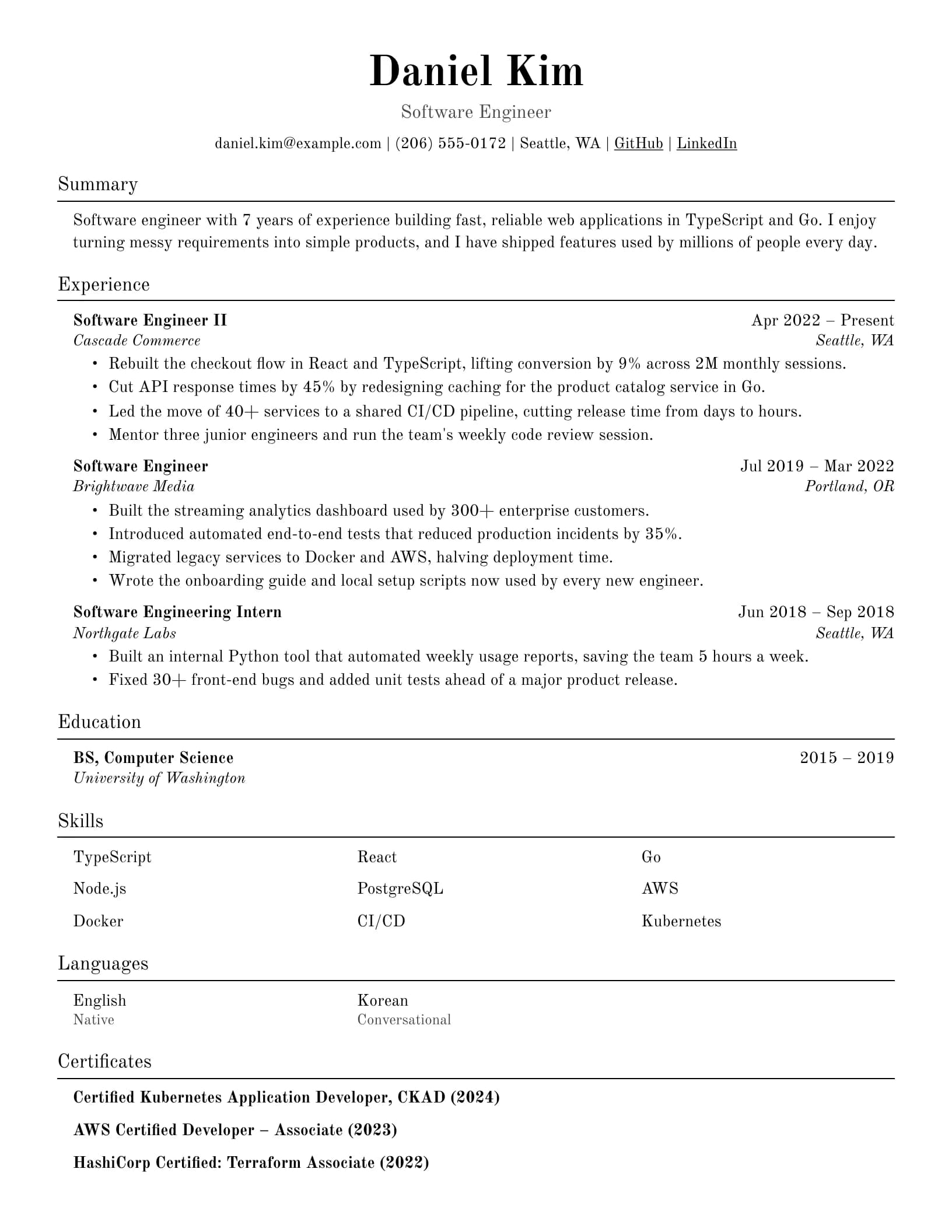
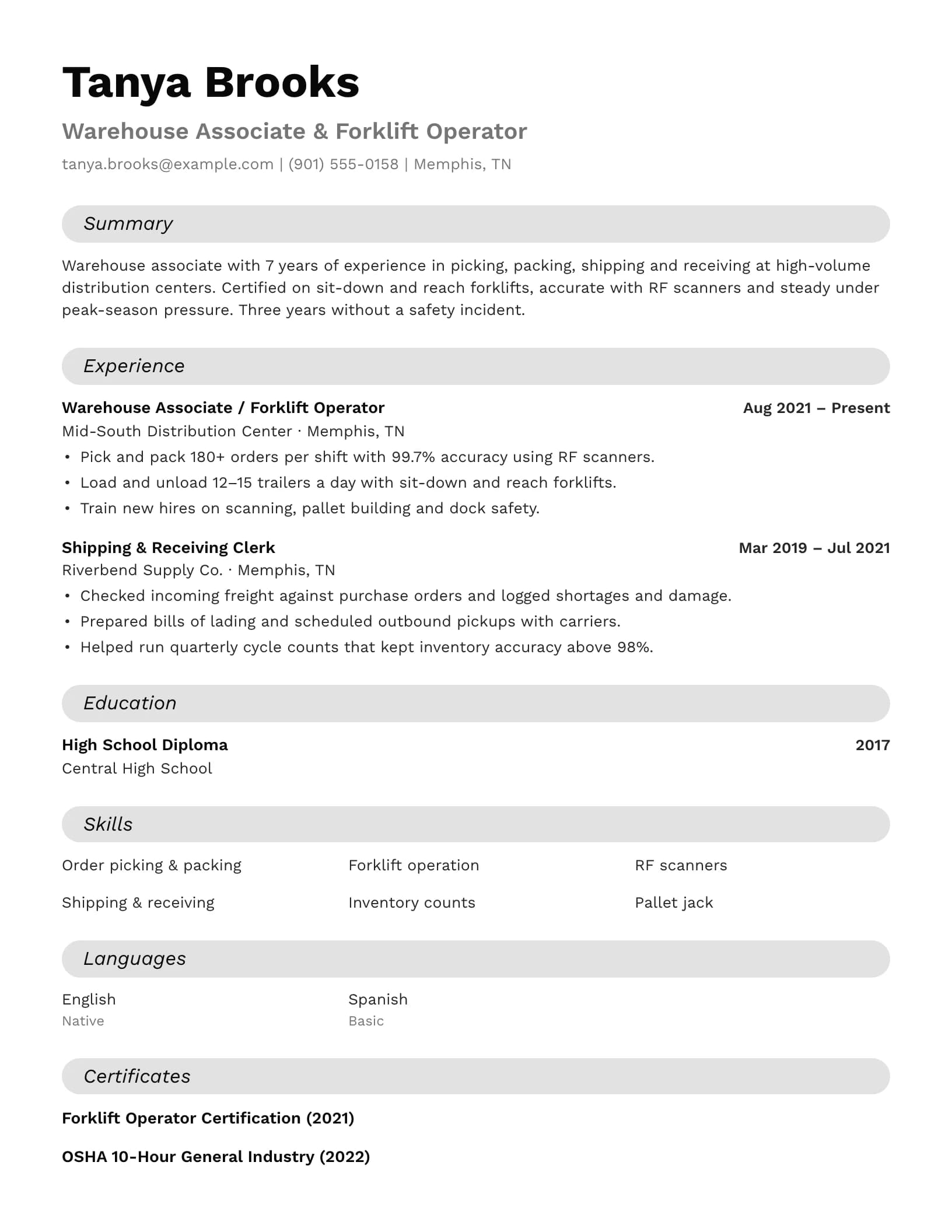
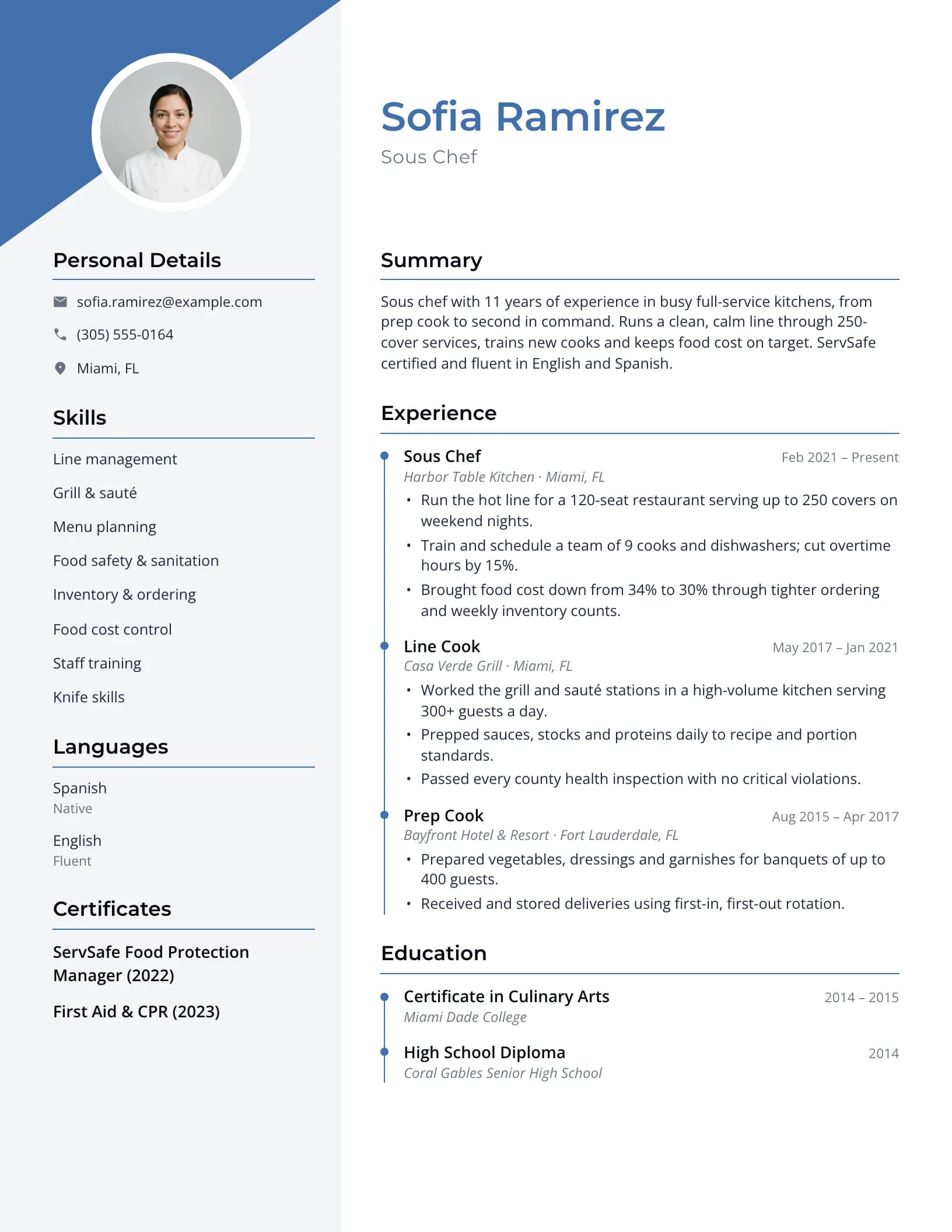
Either kind of template works for a skills list. In DuckResume you can switch template at any time without retyping, so try both.
 SlateUse this template
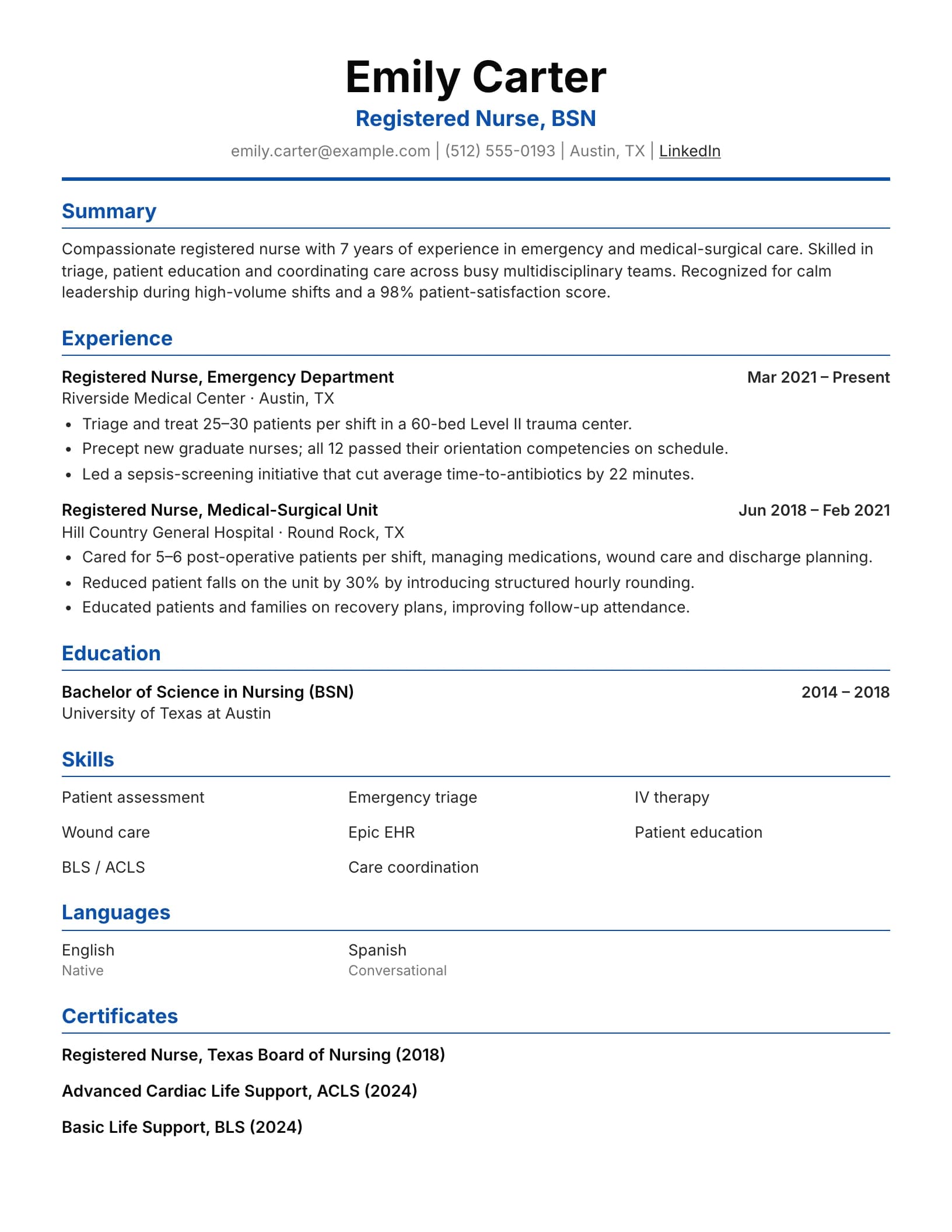 LedgerUse this template
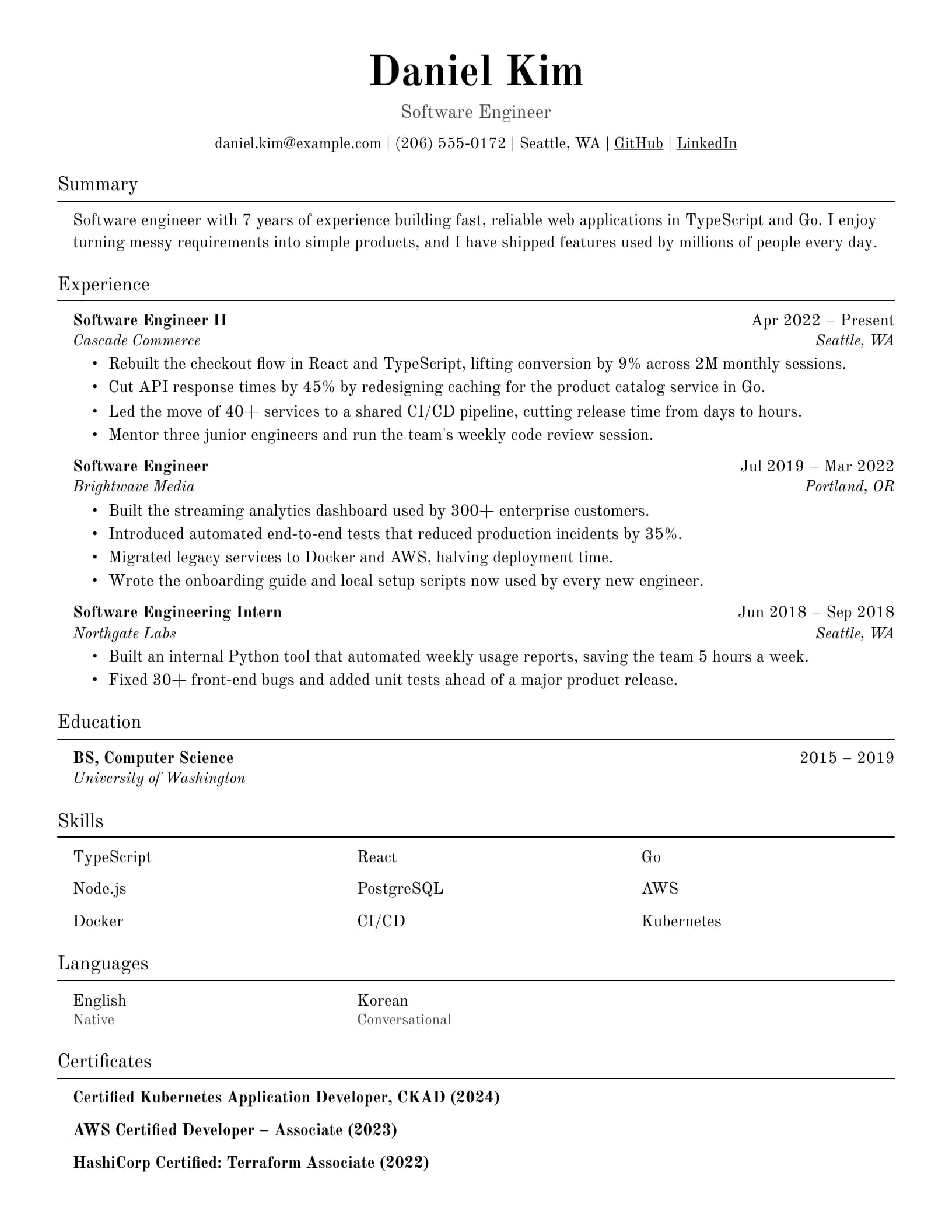 TypesetUse this template
Resume skills examples by type of work
Use these lists as a starting point. Take only what is true for you, then check the wording against the job ad.
Driving and warehouse work
- Job skills: vehicle checks before and after a trip, route planning, electronic logs, securing a load, pallet jack, forklift, RF scanner, order picking and packing, inventory counts.
- People skills: being on time, care with paperwork, friendly service at the customer's door, working to a daily target.
See the truck driver and warehouse worker resume examples.
Food service
- Job skills: grill, fry and prep stations, knife work, food safety and cooking temperatures, stock rotation, taking orders on a POS system, cash and card payments, espresso drinks.
- People skills: staying calm in a rush, clear communication with the kitchen, remembering regular guests, speed without mistakes.
See the line cook and server resume examples.
Care work
- Job skills: help with washing, dressing and grooming, safe lifting and transfers, medication reminders, taking and recording vital signs, dementia care, preparing meals, writing care notes.
- People skills: patience, kindness, noticing small changes in a person, clear reports to families and nurses, respect for privacy.
See the caregiver and CNA resume examples.
Skilled trades
- Job skills: reading blueprints and wiring diagrams, finding faults with a multimeter, bending conduit, fitting and soldering pipe, welding (MIG, TIG or stick), framing and finish carpentry, preventive maintenance, working to code.
- People skills: solving problems, explaining the work to a customer, teaching apprentices, keeping a safe and tidy job site.
Trades are where an exact list helps most, so name the systems, materials and tools you really work with. See the electrician and HVAC technician resume examples.
Retail
- Job skills: cash register and POS system, handling cash and counting the drawer, returns and exchanges, stocking shelves, product knowledge, setting up displays, opening and closing the store.
- People skills: friendly service, patience with unhappy customers, honesty with money, staying steady when the line is long.
See the cashier and retail sales associate resume examples.
Cleaning and security
- Cleaning job skills: floor care with scrubbers and buffers, cleaning and sanitizing restrooms, safe use of cleaning chemicals, turning over rooms, laundry, restocking supplies.
- Security job skills: access control and ID checks, patrols, watching CCTV, writing incident reports, calming tense situations, emergency response.
- People skills: being trusted to work alone, attention to detail, honesty, politeness with the public.
See the janitor and security guard resume examples.
Office work
- Job skills: Microsoft Word, Excel and Outlook, Google Docs and Sheets, managing a calendar, multi-line phones, data entry, filing, typing speed in words per minute, invoices and expense reports.
- People skills: being organized, clear writing, care with private information, a polite phone manner.
See the administrative assistant and receptionist resume examples.
Should I put skill levels on my resume
A skill level says how good you are at a skill, from beginner to expert. On the page it may appear as a word, a row of dots or a bar.
Levels help when:
- The skill is a language. An employer needs to know whether you can serve a customer in Spanish or only say hello.
- Your level is not the same for every skill. For example, you are strong in Excel and basic in PowerPoint.
- The ad asks for a level, such as advanced Excel or fluent English.
Leave levels off when:
- The skill is a people skill. "Patience: 4 out of 5" tells nobody anything.
- Every skill would get top marks. A full row of dots on every line adds nothing.
- You are a beginner at it. It is usually better to leave the skill out, unless the ad asks for it.
A level is your own estimate, so be honest. Where you can, give a fact in place of a level: "Typing: 60 words per minute" says more than "Typing: advanced".
In DuckResume each skill can carry a level, and you can leave the level off. Software that searches resumes reads words, not dots or bars. So when a level matters for the job, say it in words too, in your summary or a work line: "conversational Spanish".
Skills to put on a resume with no experience
You have skills even if you have never had a paid job. Look at school, home, volunteering, sports and hobbies.
- Job skills: handling money at a school sale or fundraiser, typing, email, word processing and spreadsheets, a second language, cooking, looking after children, lifting and physical work, hand and power tools.
- People skills: being on time, working in a team, learning quickly, staying polite with customers.
Pick the ones that fit the job, and back each one up somewhere on the page. A team sport backs up teamwork. A perfect attendance record backs up reliability.
Our guide on how to write a resume with no experience covers the rest of the page. The high school student and college student resume examples show a finished skills section for a first job.
What skills to leave off your resume
A short, true list is stronger than a long one. Leave these out:
- Skills you cannot back up. If you could not show it or talk about it, leave it out.
- Skills the job does not use. Welding will not help you get a front desk job.
- Skills everybody has. Using a phone or the internet is assumed, unless the ad asks for it.
- Empty words. Hard worker, team player and fast learner mean nothing without a line that proves them.
- Out-of-date skills. Drop software and equipment that employers no longer use.
- Work you do not want to do again. If you list it, expect to be asked to do it.
More skill lists for your job
Every resume example on this site has a longer list of job skills and people skills for that job, next to a sample resume you can open and edit.
You can also browse all our resume examples to find the job closest to yours.