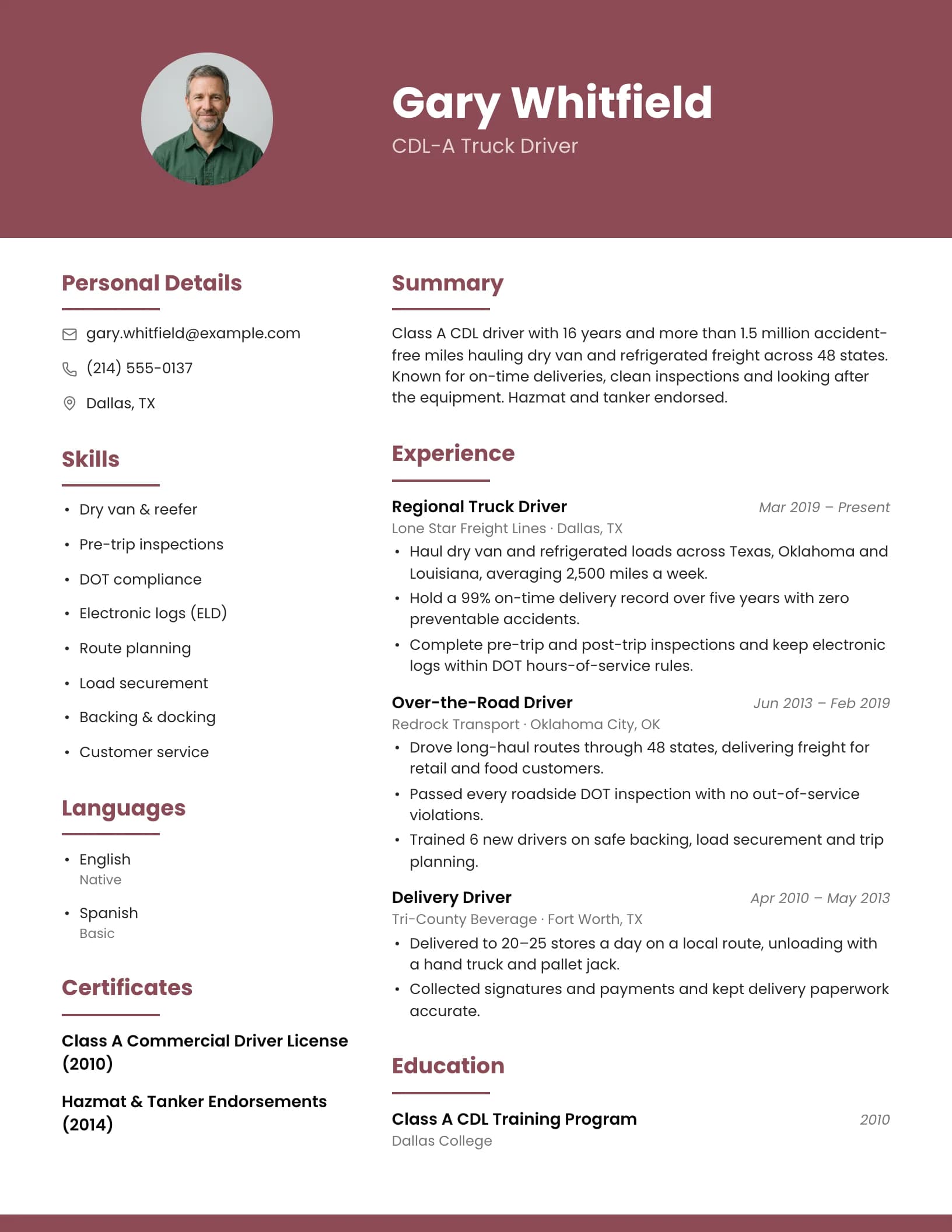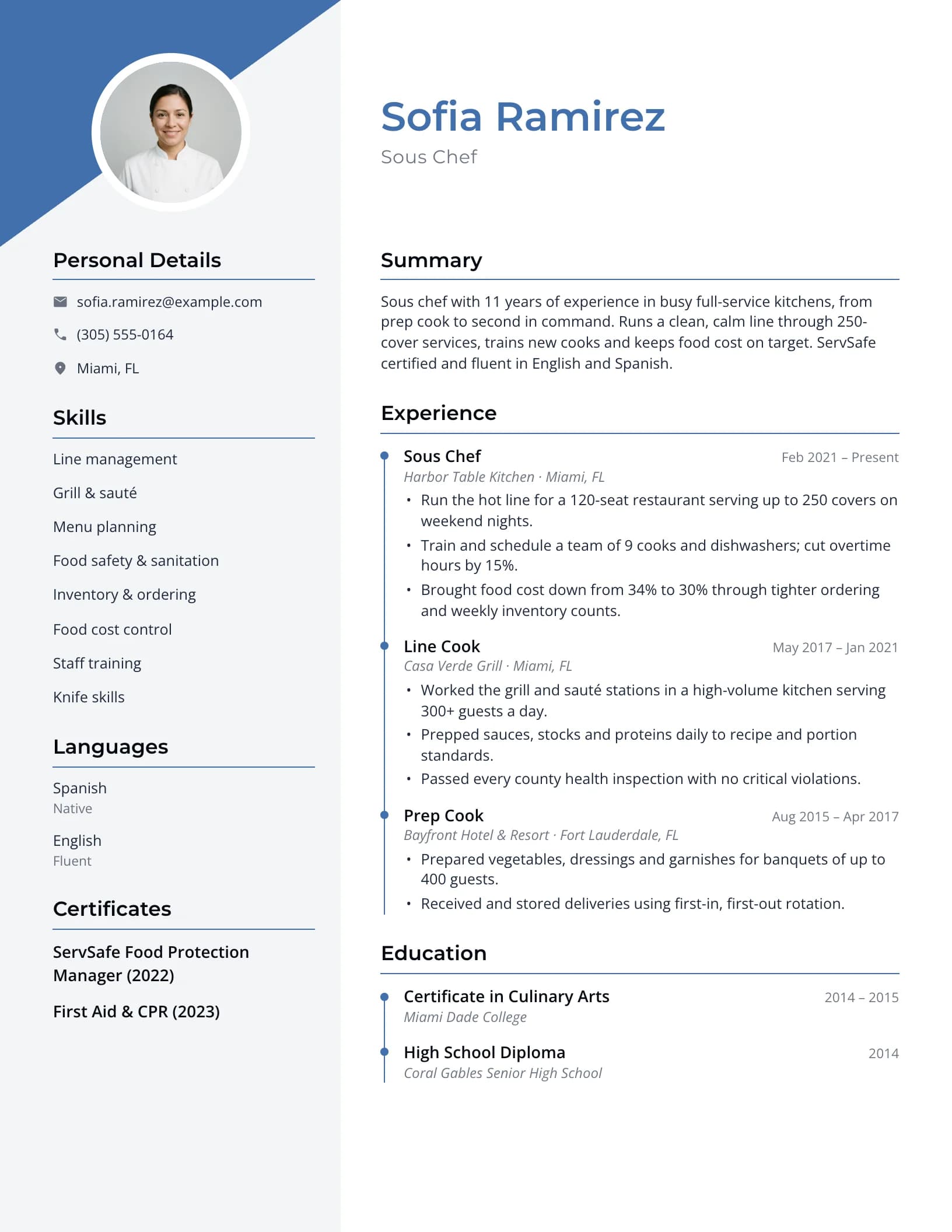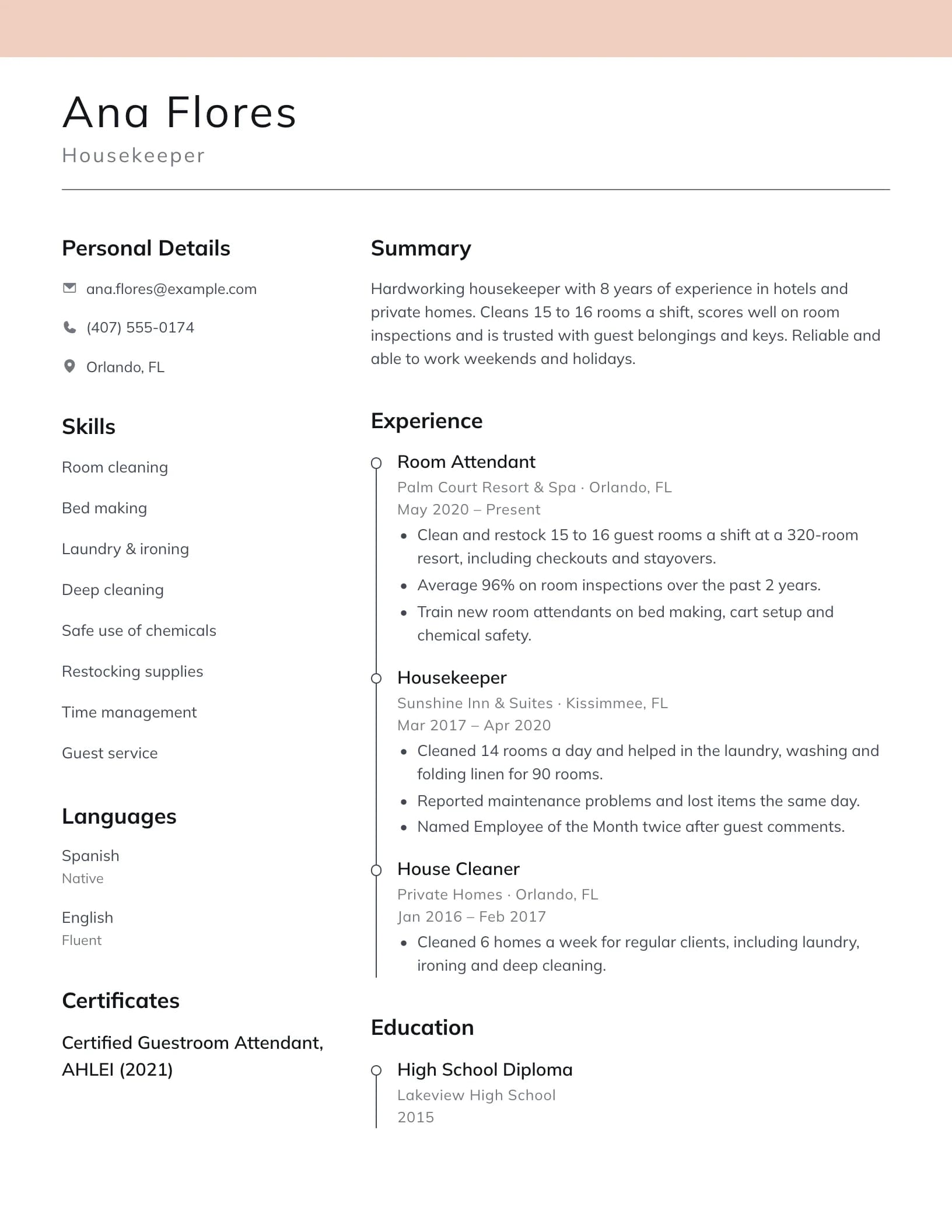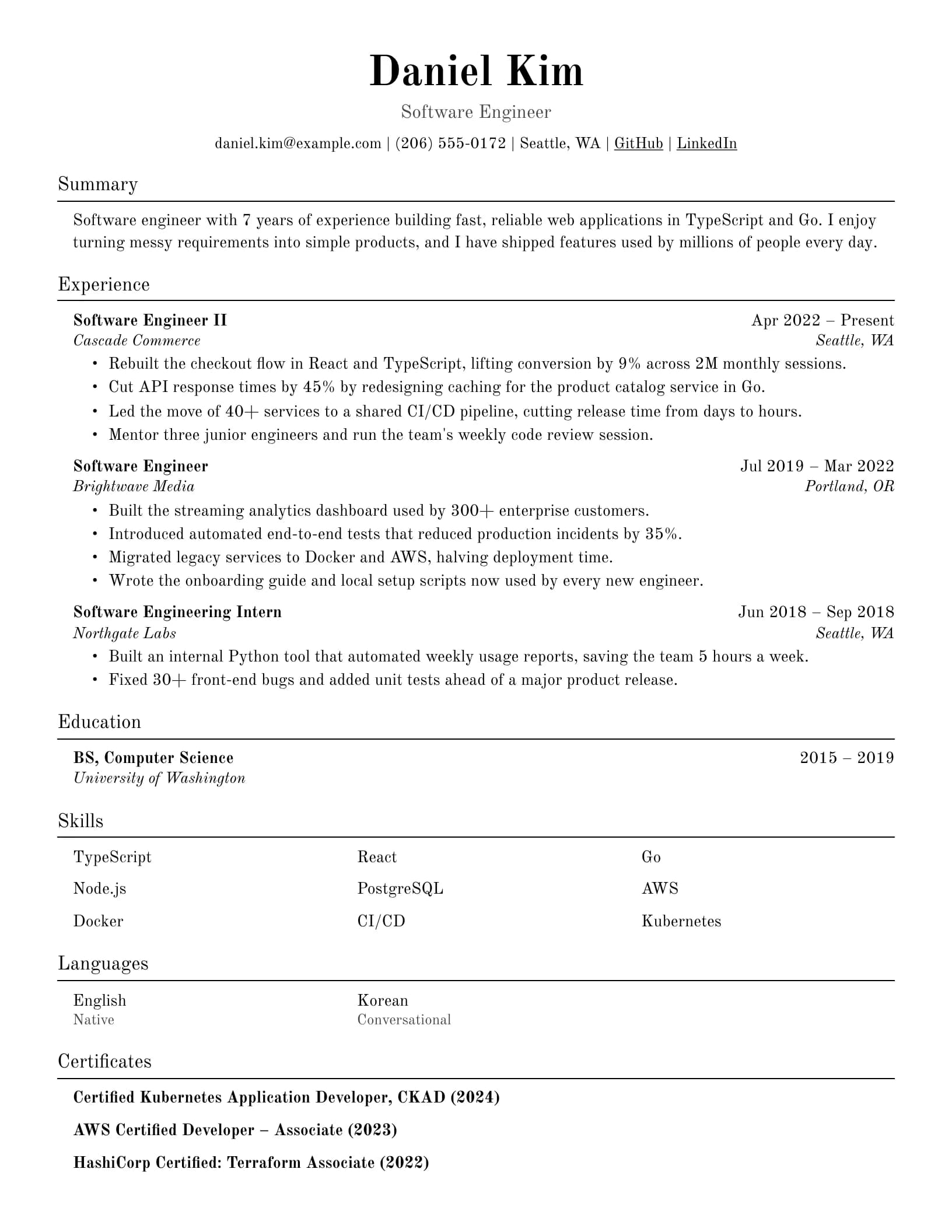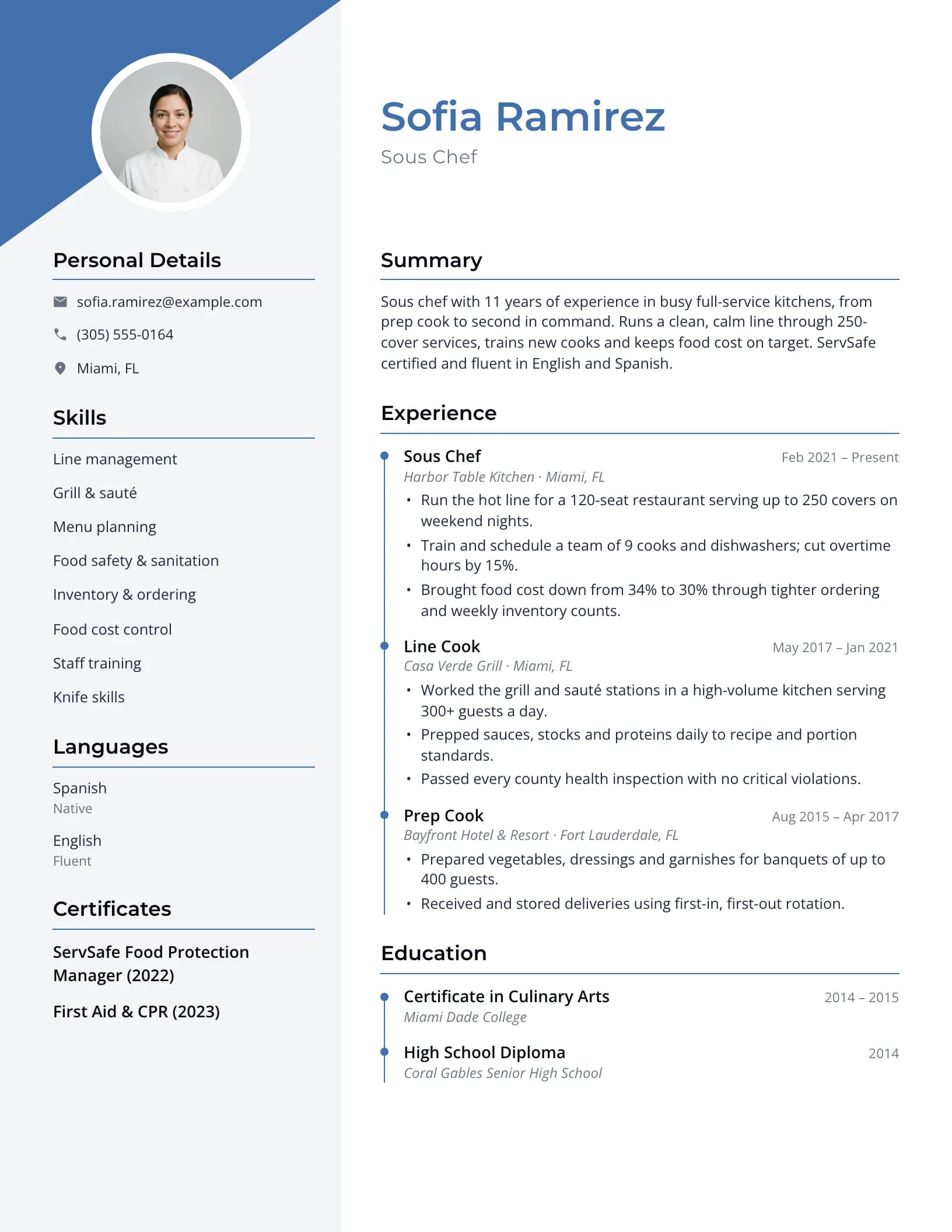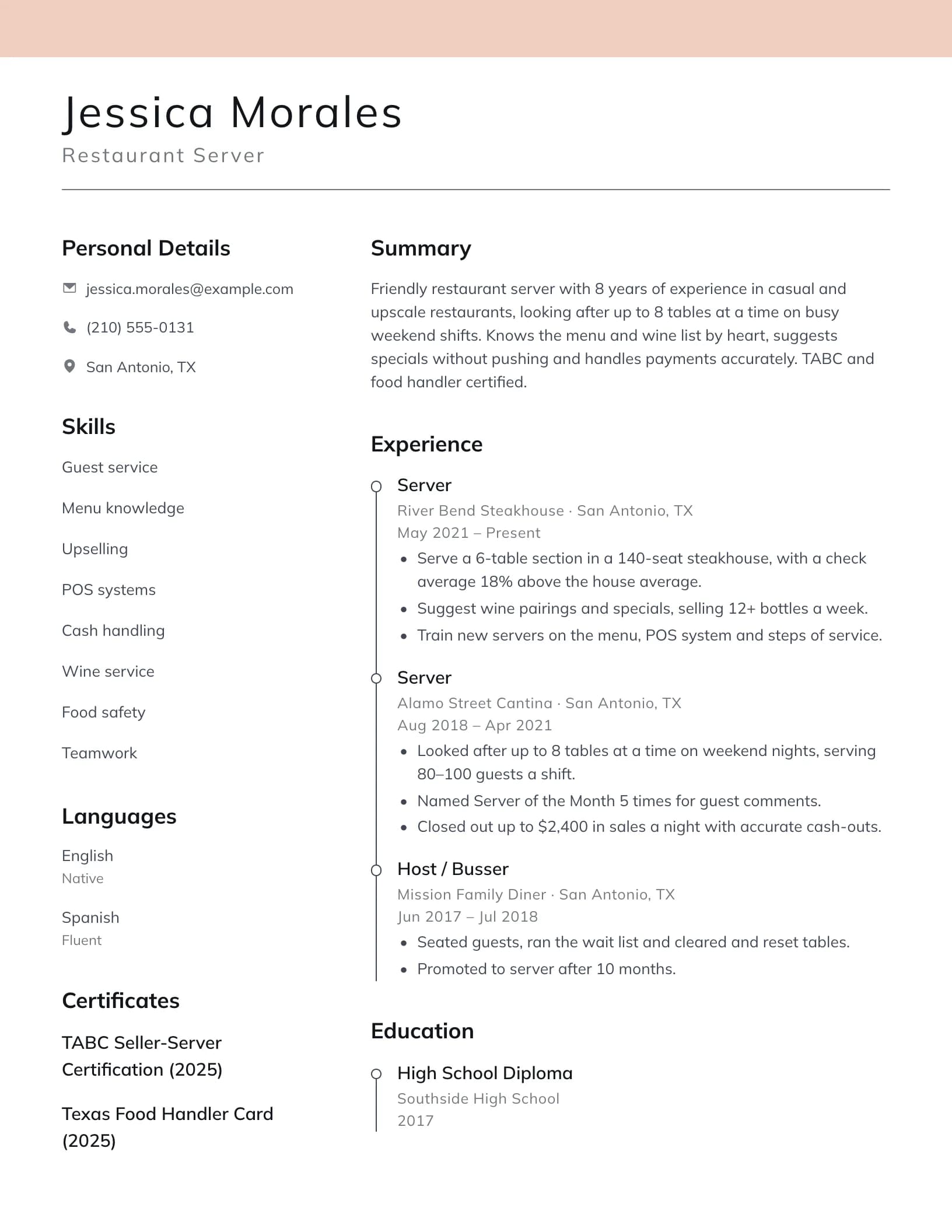
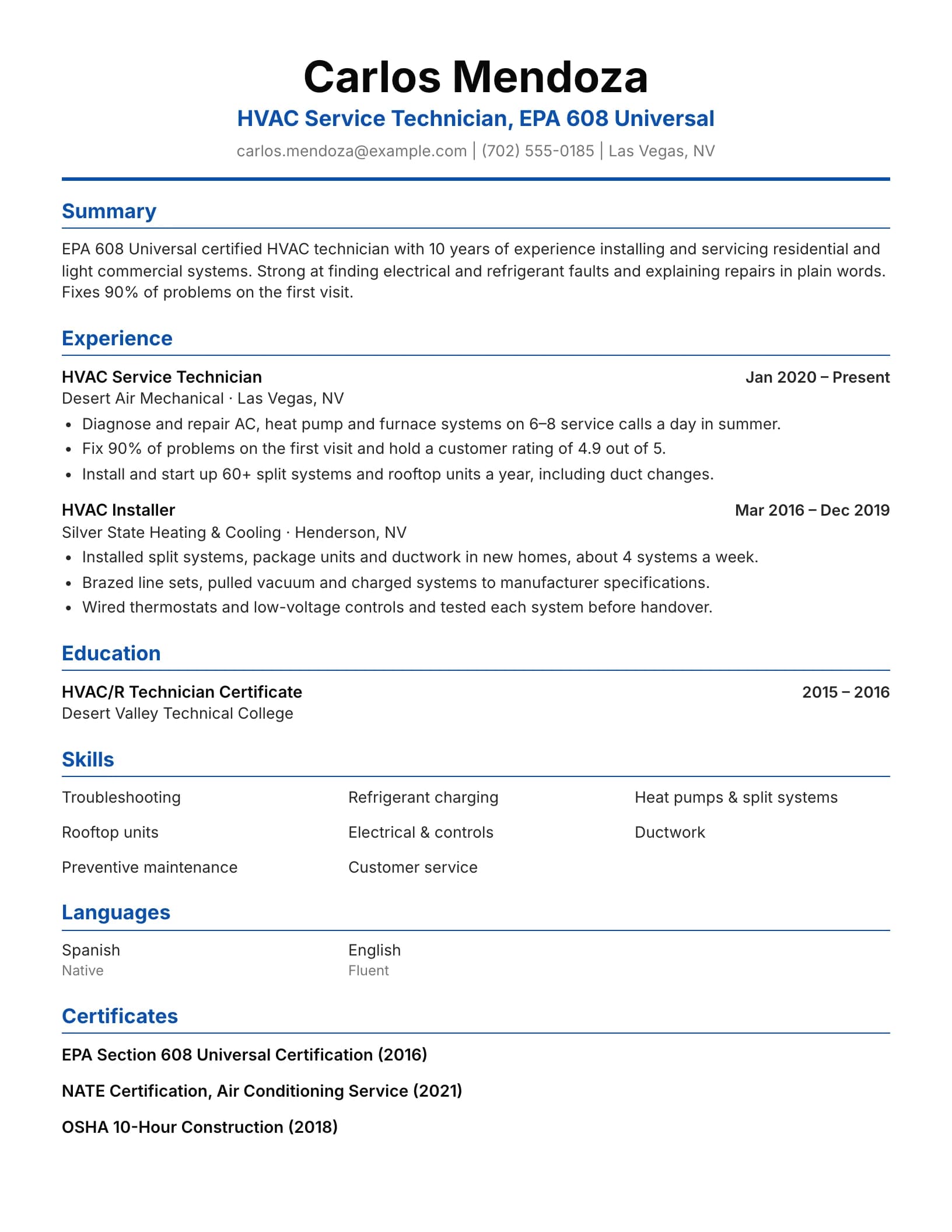
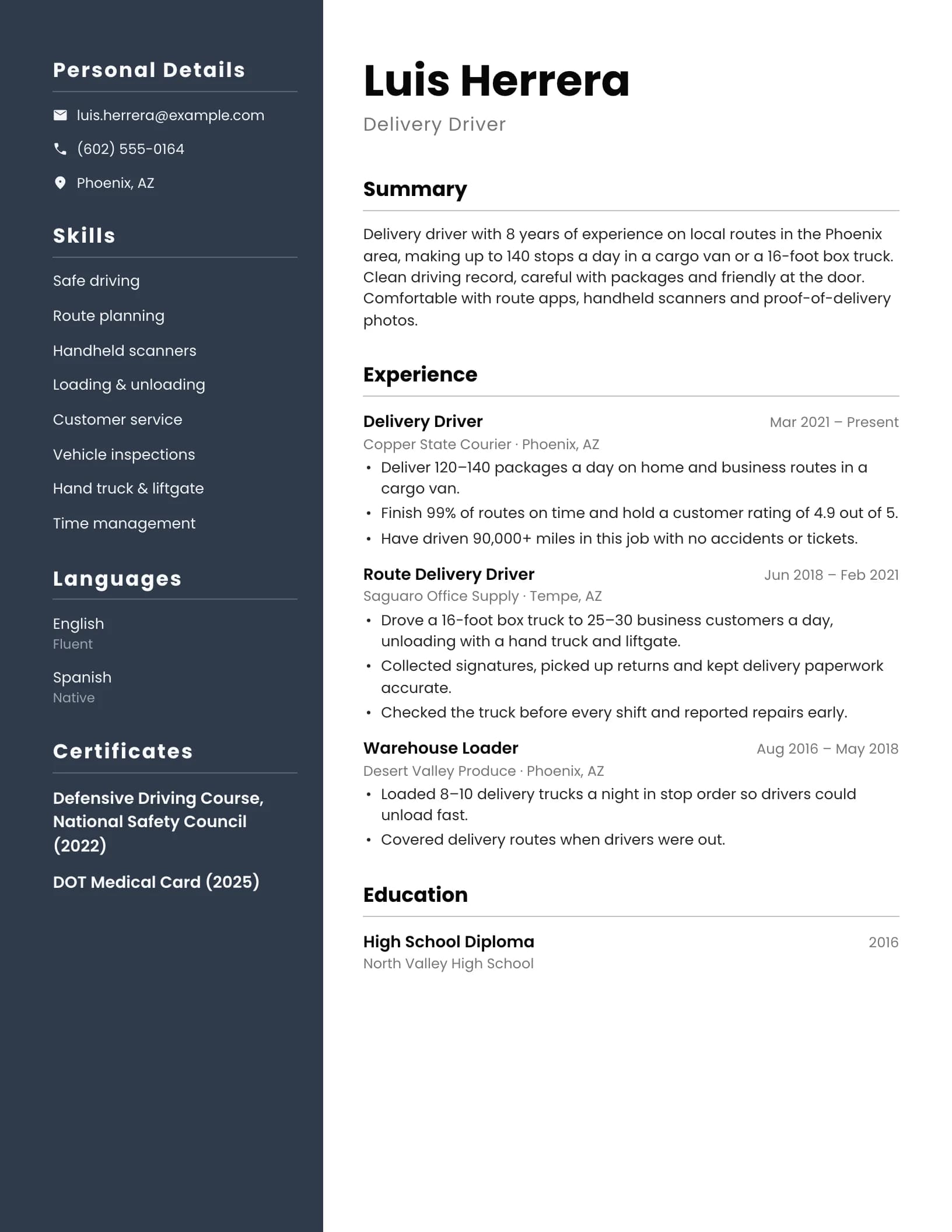
To describe work experience on a resume, list each job with your job title, the employer, the place and the dates, starting with your newest job. Under each job, write three to five short lines that say what you did and how well you did it, with a number wherever you have one.
The examples below are for drivers, cooks, caregivers, warehouse workers, cashiers and cleaners. For the rest of the page, see how to write a resume.
On this page · 12 sections
What to list for each job on your resume
Every job gets the same four facts, in the same order:
- Job title. Use the title you really held. If it was unusual, add the everyday name in parentheses, such as Fulfillment Associate (Warehouse Picker).
- Employer. The name of the company. If few people know it, add a few words about it, such as "a 90-seat family diner".
- Place. The town or city and the state. Leave out the street address.
- Dates. The month and year you started and left. For the job you have now, write Present as the end date.
Put your newest job first and work backward. This is called reverse-chronological order, and it is the order employers expect. Our guide to resume format covers the other ways to arrange a resume.
Here is a finished entry:
Warehouse Associate, Northgate Distribution, Columbus, OH. Mar 2021 to Present
- Unload 6 to 8 inbound trailers a shift with an electric pallet jack and scan every pallet into the inventory system.
- Pick about 140 orders a shift with a handheld scanner, with an error rate under 1%.
- Trained 9 new hires on scanner use and safe lifting.
A simple formula for a strong resume line
A strong line has three parts: an action word, what you did and a number.
| Action word | What you did | A number |
|---|---|---|
| Delivered | packages on a home and business route | 110 stops a day |
| Stocked | grocery shelves on the overnight crew | 50 cases an hour |
Action words. Start with a plain verb that names the work: drove, delivered, loaded, picked, packed, operated, cooked, served, cleaned, stocked, repaired, installed, trained, cared for. Skip openers like "Responsible for" and "Duties included", which say nothing about what you did.
Numbers. You do not need sales figures. Any honest count works:
- How many: customers, orders, rooms, stops or pallets, per shift, per day or per week.
- How big: the size of the team, the building, the truck or the cash drawer.
- How well: on-time deliveries, passed inspections, months without an accident or a cash shortage.
A careful estimate is fine. Write "about 60 customers a day" if that is what a normal day looks like. Never make a number up, because an interviewer may ask you about it.
Stuck for a number? Think through one ordinary shift and count the trucks, tables, rooms or customers. That figure is honest, and it is enough.
Weak and strong resume lines for hands-on jobs
A weak line names a duty. A strong line shows the size of the job and how well you did it.
Responsible for making deliveries.
Delivered building supplies to 15 to 20 job sites a day in a 24-foot box truck, with no damage claims in two years.
The strong line tells the employer what you drove, how busy the route was and that you were careful. The weak line could describe anyone on their first day.
Here is the same change for five more jobs:
| Job | Weak line | Strong line |
|---|---|---|
| Cook | Cooked food for customers. | Ran the grill and fry stations at a 90-seat diner, sending out about 200 plates on a weekend breakfast shift. |
| Caregiver | Looked after elderly people. | Cared for 8 residents a night in a memory care unit, helping with washing, dressing and meals. |
| Warehouse worker | Worked in the warehouse. | Built and wrapped about 45 mixed pallets a shift for grocery stores, with no rejected loads in the last year. |
| Cashier | Handled money. | Served about 200 customers a shift on the register and closed the drawer with no shortages for 14 months. |
| Cleaner | Did cleaning. | Cleaned 22 patient rooms and 4 restrooms a night at a 150-bed hospital, following the infection-control checklist. |
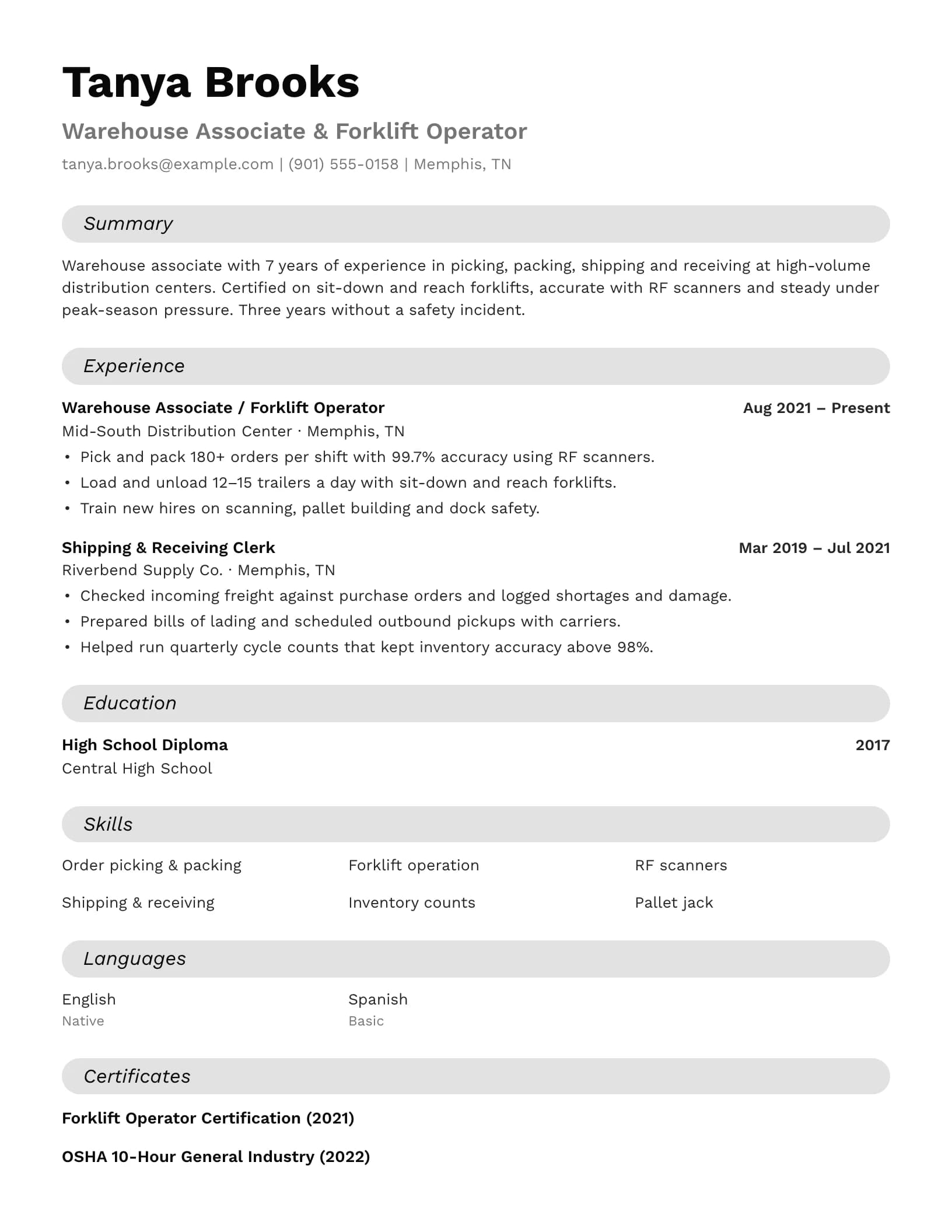
Our resume examples have more lines like these: delivery driver, line cook, caregiver, warehouse worker, cashier and janitor.
The tools and machines you name in these lines should also appear in your skills section. See skills to put on a resume.
How many bullet points per job on a resume
Give your recent work the most room. The lines under a job are often called bullet points, and this is how many to write:
- Your current or most recent job: three to five lines.
- The job before that: two or three lines.
- Older jobs: one or two lines, or only the job title, employer and dates.
Keep each line to one or two lines on the page, and put the strongest one first. You do not need to list every duty. Pick the ones that match the job ad.
Your best line can also go in the summary at the top of the page. See how to write a resume summary.
How far back should work experience go
About 10 to 15 years is enough for most people. This is a common rule of thumb, not a law. Recent work says the most about what you can do today.
Leave older jobs off, or cut them down to the job title, employer and dates. Keep an older job in full only when it is the one that best matches the job you want. If you drove a truck 16 years ago and are applying to drive again, that job belongs on the page.
You do not have to list every job. A resume is a summary of your most recent and most useful work. An application form is different. If a form asks for your full work history, fill it in completely and honestly.
In the US, aim for one page, or two if you have ten or more years of experience that matters for the job. In the UK and much of Europe, where the document is called a CV, two pages are normal. See resume vs CV.
Should a resume be in past or present tense
Use present tense for the job you do now and past tense for every job you have left.
- Current job: Drive, load, clean, train.
- Past jobs: Drove, loaded, cleaned, trained.
One exception: something you finished inside your current job stays in past tense, like "Trained 9 new hires" in the first example above.
Leave out the word "I" and start each line with the verb.
How to explain a gap in your work history
Many people have a gap: a layoff, an illness, raising children, caring for a relative, a move. Handle it honestly and briefly.
- Give true dates. Do not stretch a job's dates to cover a gap. Employers can check them.
- Leave a short gap alone. A few months between jobs needs no explanation on the page.
- Keep the dates in one style. Month and year is the clearest. Years alone, such as 2021 to 2023, are also accepted if you write every job that way. Know the months in case a form or an interviewer asks.
- Fill a long gap with what you did. For a gap of about a year or more, add a short entry where the gap falls: a course, volunteering, odd jobs or caring for family. You do not need to give private details.
Family Caregiver, Dayton, OH. Jun 2022 to Aug 2023
Cared for a parent after a stroke: meals, medication reminders, help with walking and rides to appointments.
How to list short jobs, temp work and agency work
A long row of short jobs can make it look as if you do not stay anywhere. Grouping them fixes most of the problem.
- Agency and temp work. List the staffing agency as your employer, with one set of dates for the whole time you worked through it. Use the lines to say where you were sent and what you did. A long assignment that fits the job you want can have its own entry, with the agency's name in parentheses.
- Seasonal jobs. Put the word Seasonal in the job title, so the short dates explain themselves.
- Gig and day work. Group it under one title and one set of dates, such as Delivery Driver (app-based), 2022 to 2024.
- Very short jobs. A job that lasted a few weeks and adds nothing can be left off your resume. If an application form asks for every job, include it there.
Warehouse Worker (temporary assignments), Keystone Staffing, Allentown, PA. Feb 2023 to Nov 2024
- Worked four assignments at grocery and retail distribution centers, each lasting 3 to 8 months.
- Picked, packed and loaded on day and night shifts, and was asked back by two of the four sites.
How to show promotions and many years in one job
Many years with one employer is a strength. The risk is an entry that reads as if nothing changed in all that time, so show what did: new machines, new duties, training new staff, being trusted with keys or cash.
If you were promoted, write the employer once. Then give each job title its own dates and its own lines, newest first.
Desert Bloom Senior Living, Mesa, AZ
Lead Caregiver, Jan 2022 to Present
- Lead a team of 5 caregivers on the day shift and train every new caregiver on safe transfers and care notes.
Caregiver, Apr 2017 to Dec 2021
- Cared for 9 residents a shift, helping with washing, dressing, meals and mobility.
If your title changed but the work stayed much the same, one entry is enough. Use the newest title and add a line such as "Promoted from Cashier to Head Cashier in 2022".
What to write if you have no work experience
Experience does not have to be paid. Volunteering, school projects, caring for a relative, helping in a family business and regular odd jobs all count. Write each one like a job: a title, where and when, and one to three lines on what you did.
Our guide on how to write a resume with no experience walks through the whole page, and the high school student resume example shows a finished one.
Let the builder help with the wording
If the lines are the hard part, DuckResume can start them for you. Type a few notes about a job, and Write with AI turns them into a description. Where a number is needed, it leaves a blank for you to fill in with the real figure. It can also suggest improvements to lines you have already written. You check every word.
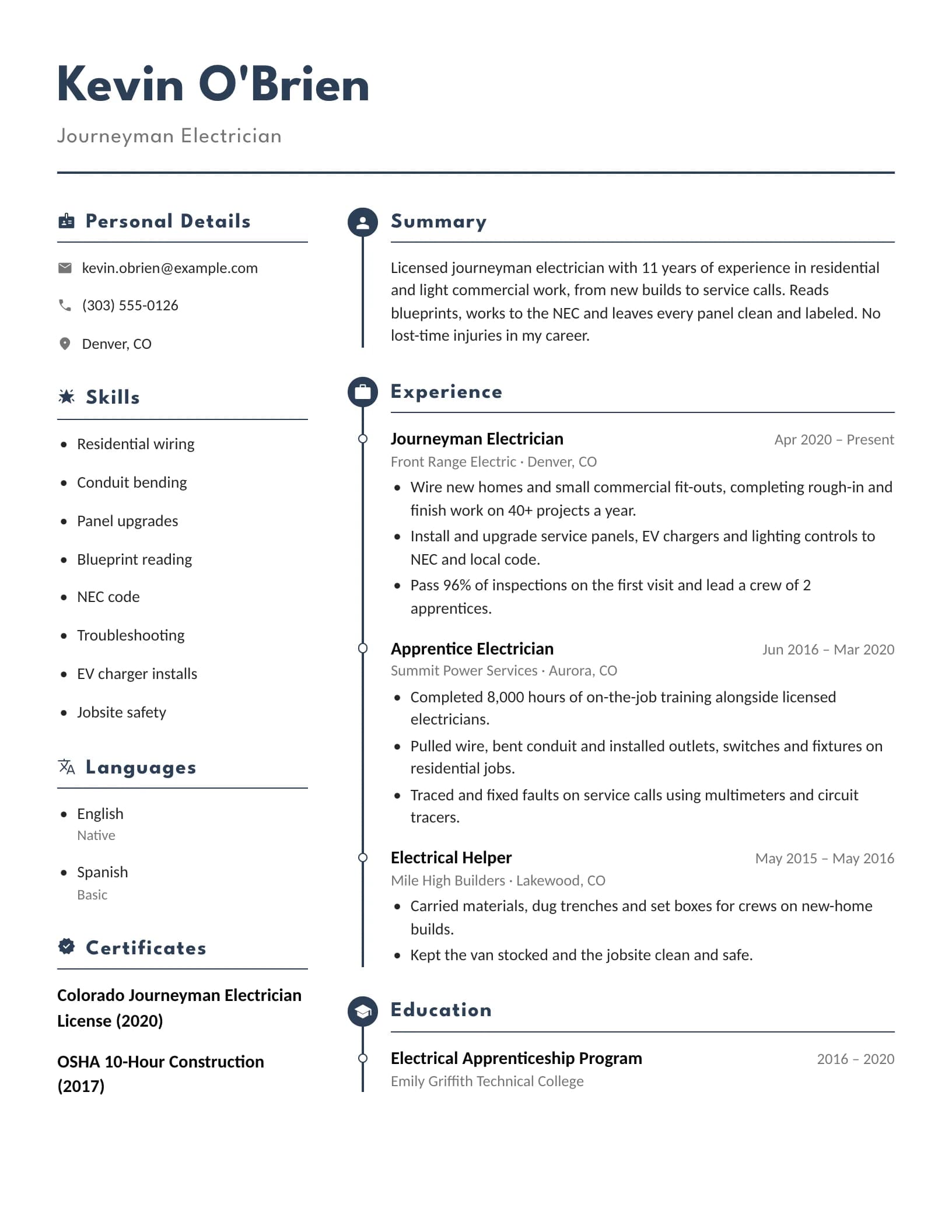
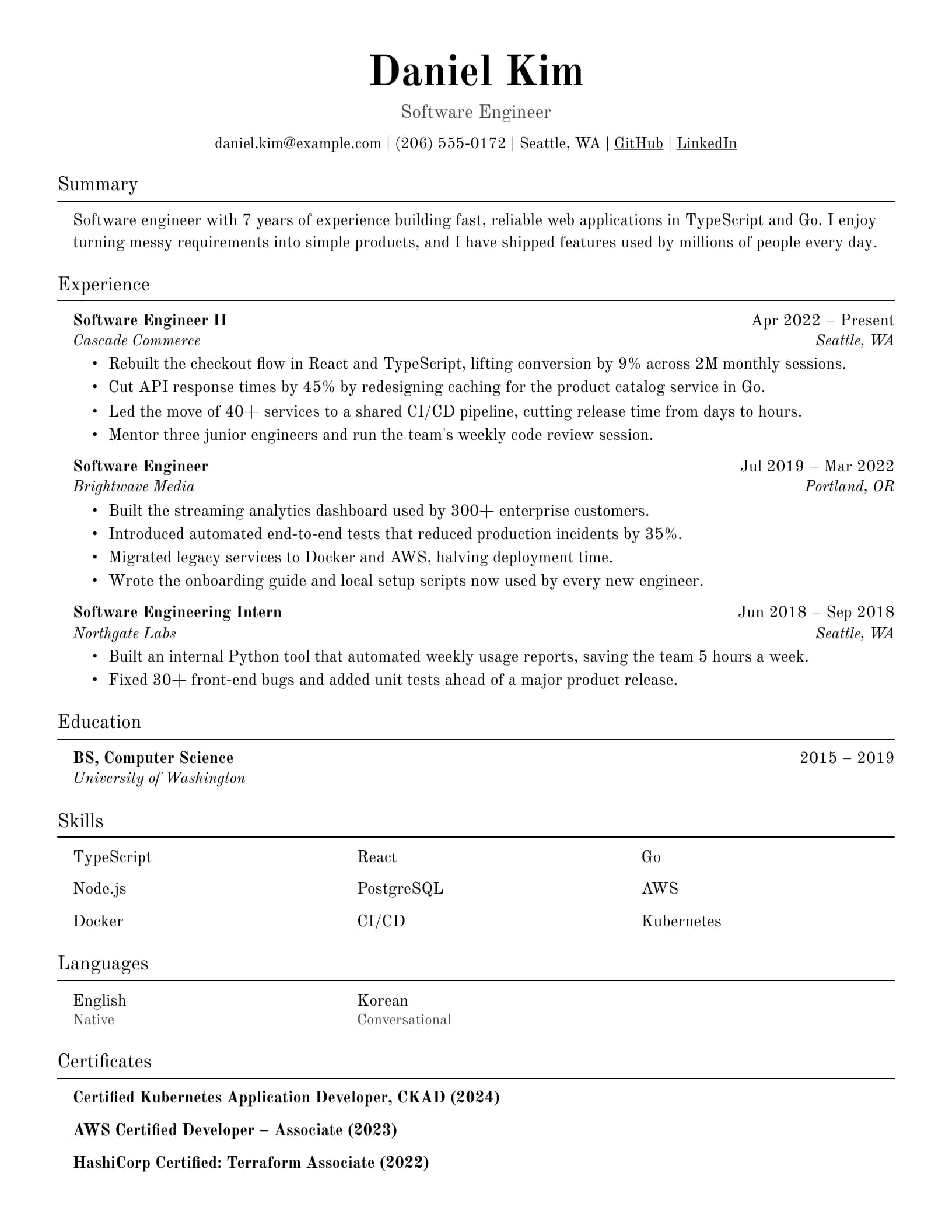
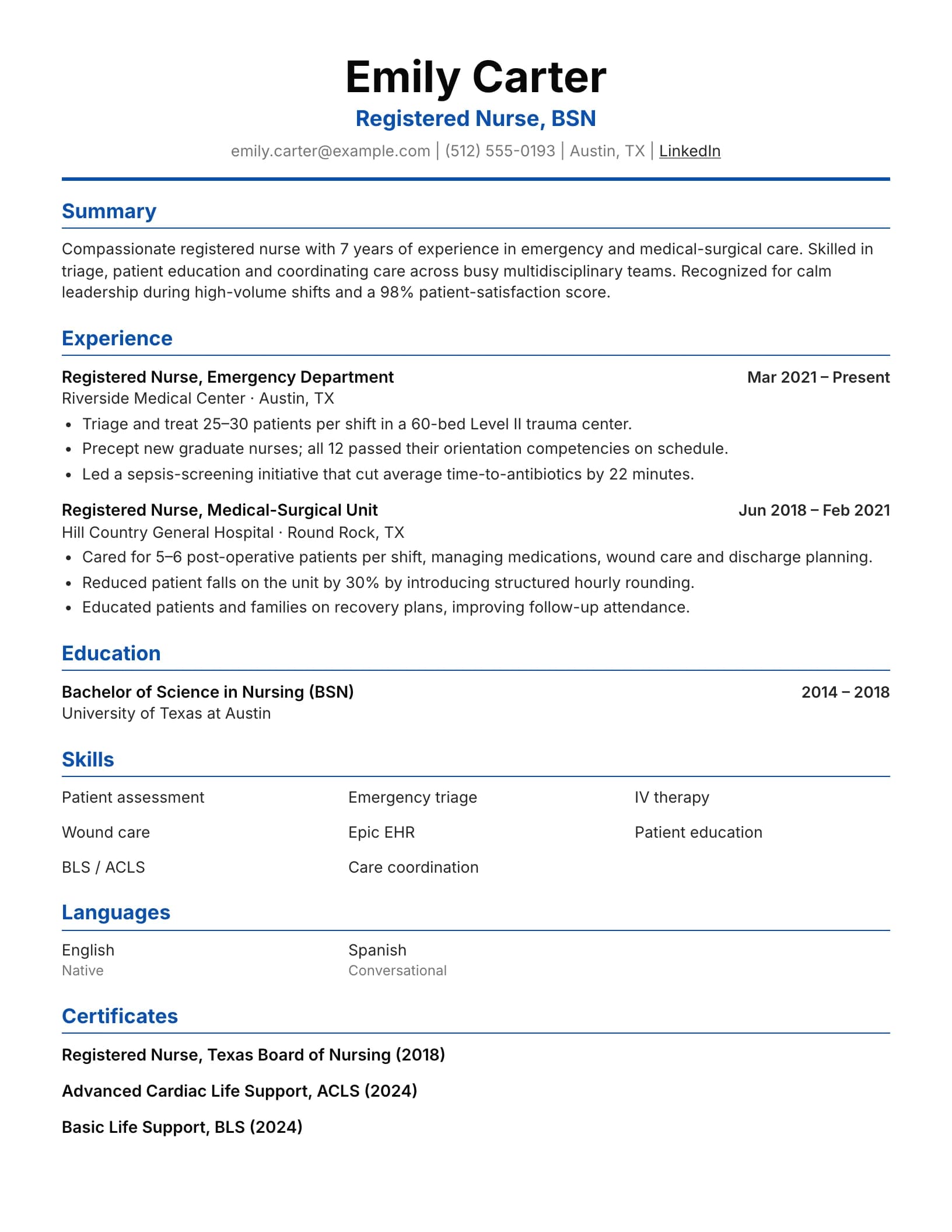
These examples show complete work experience sections: