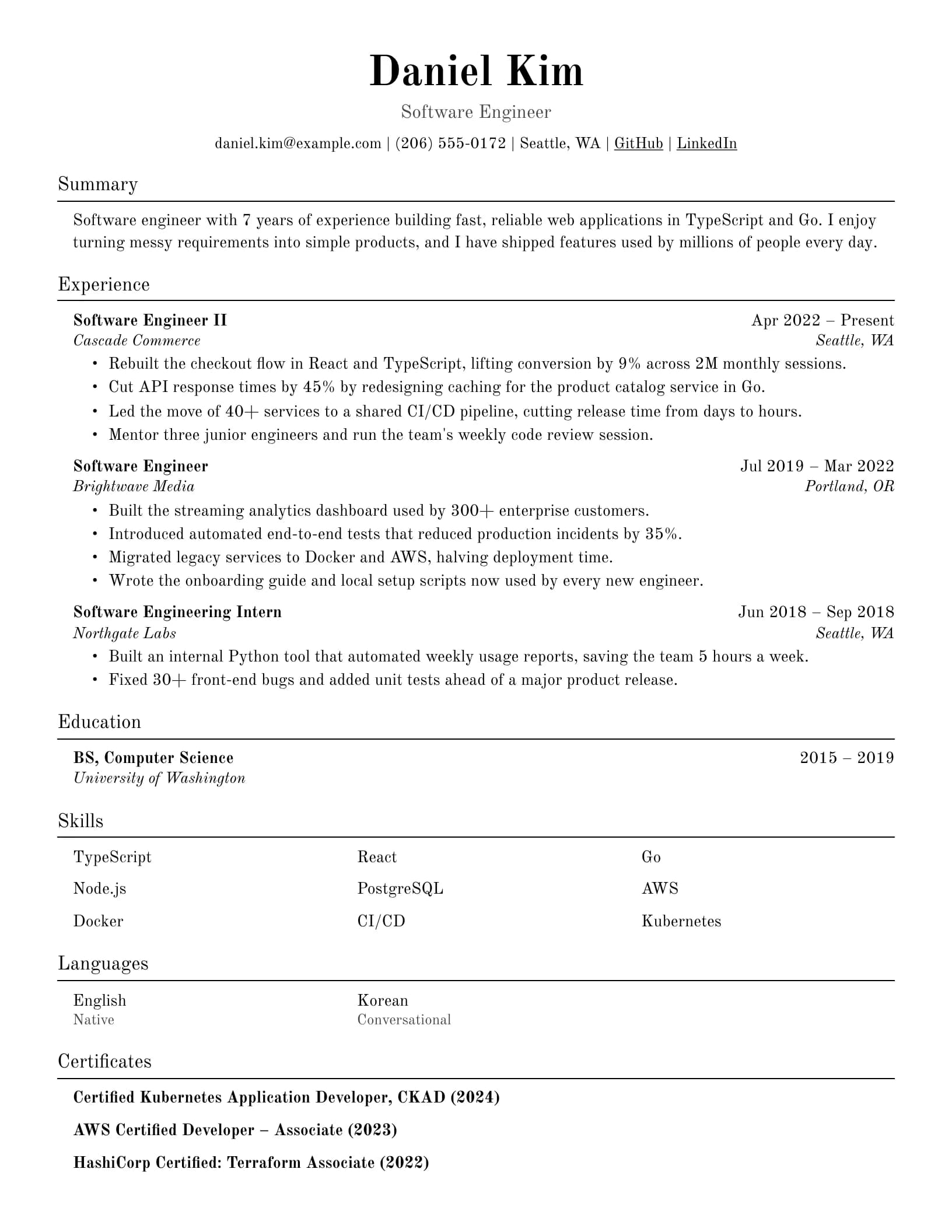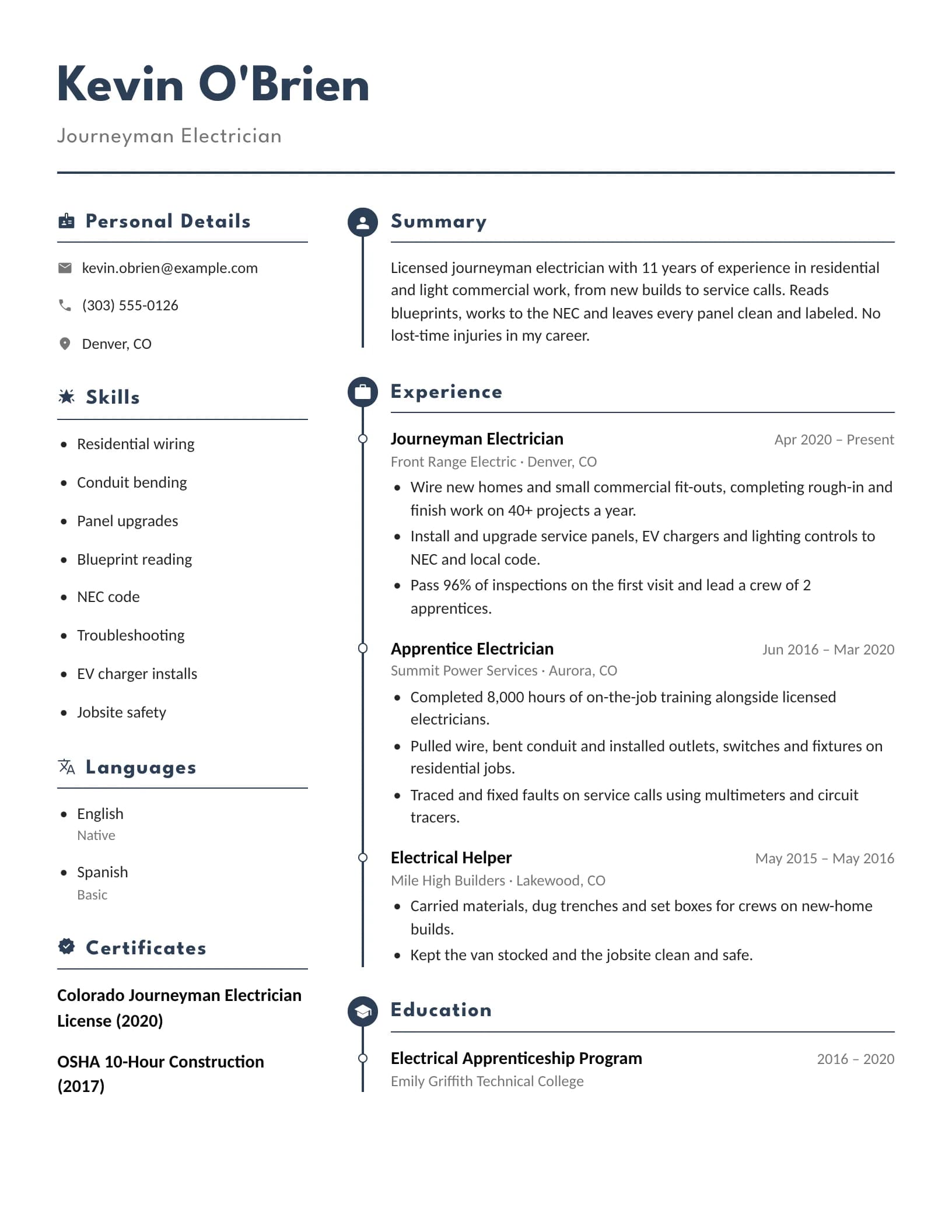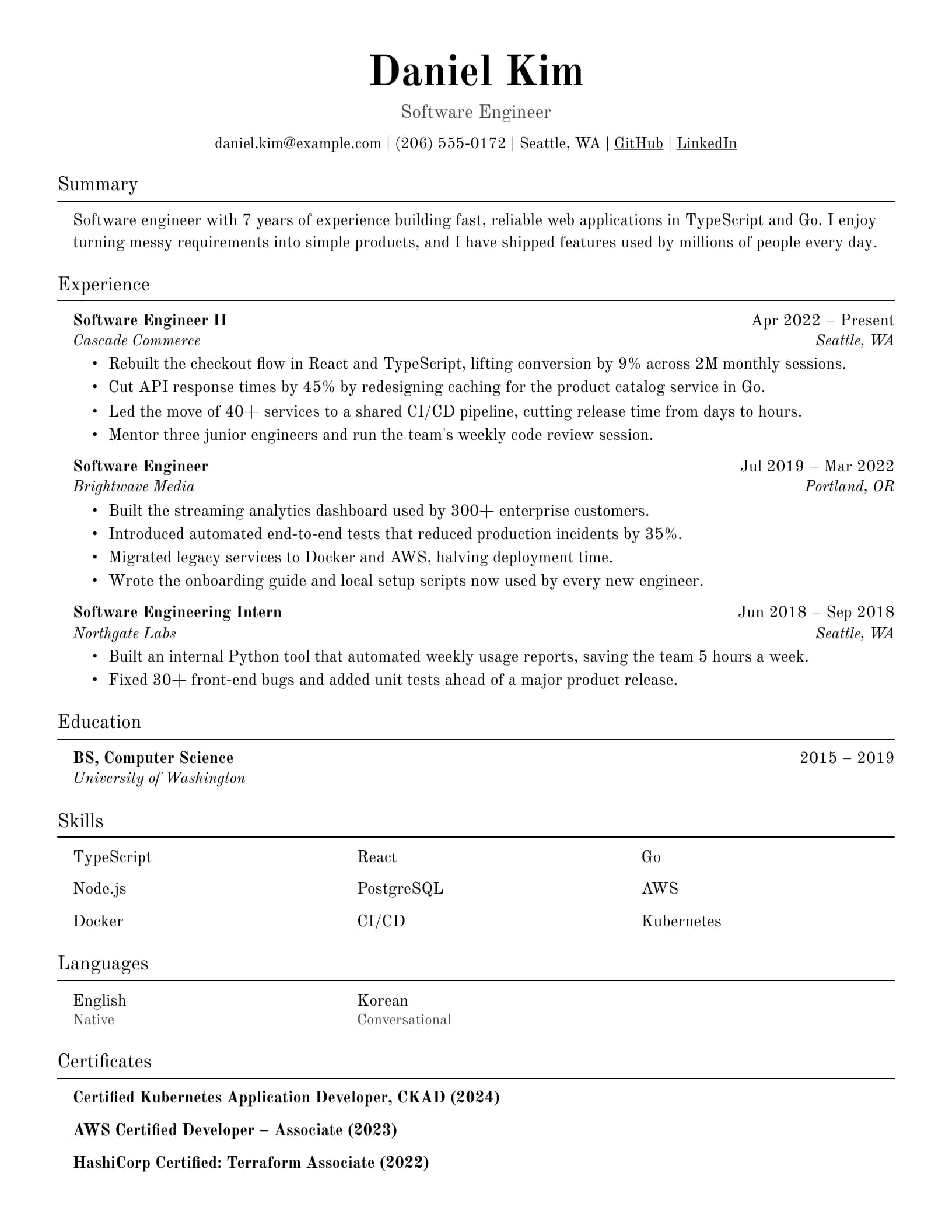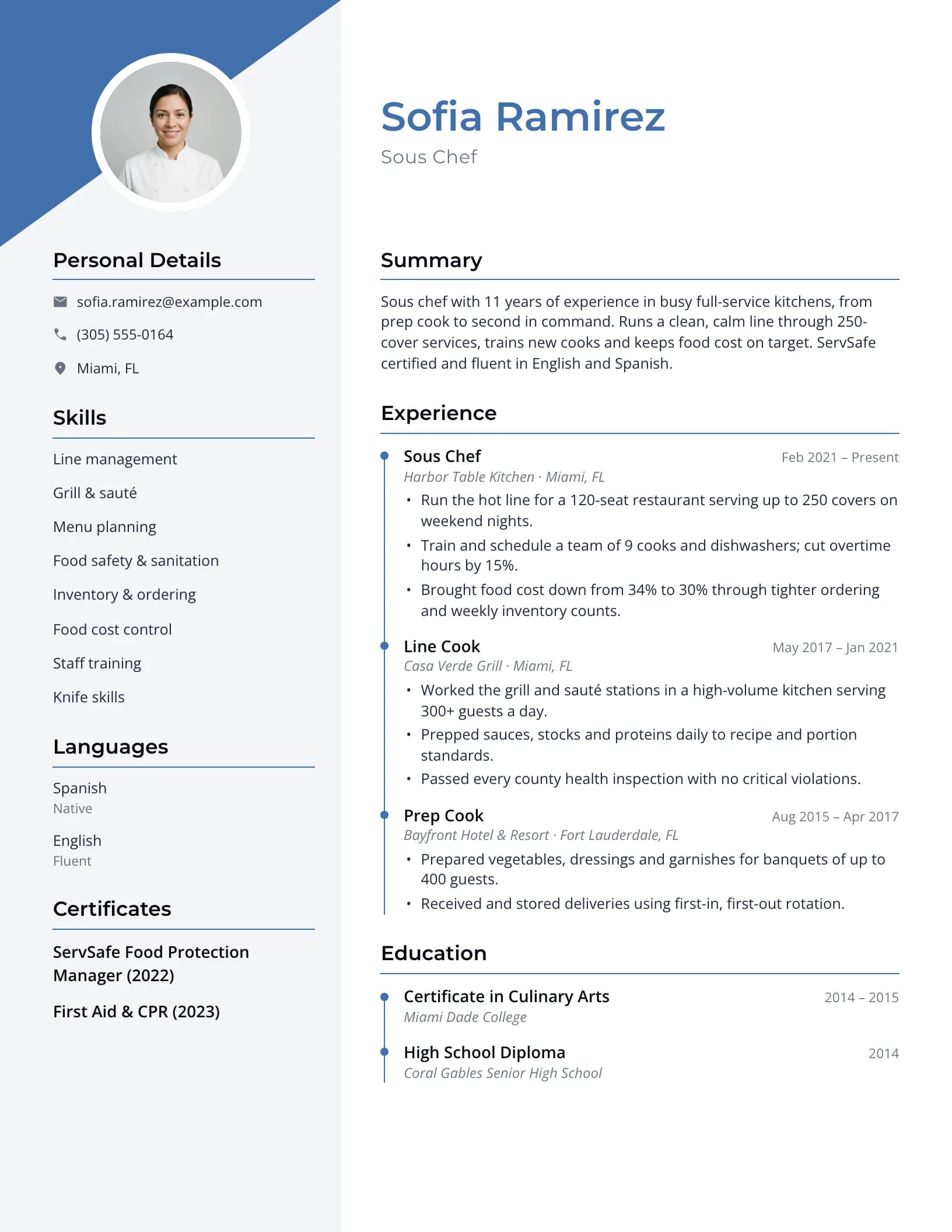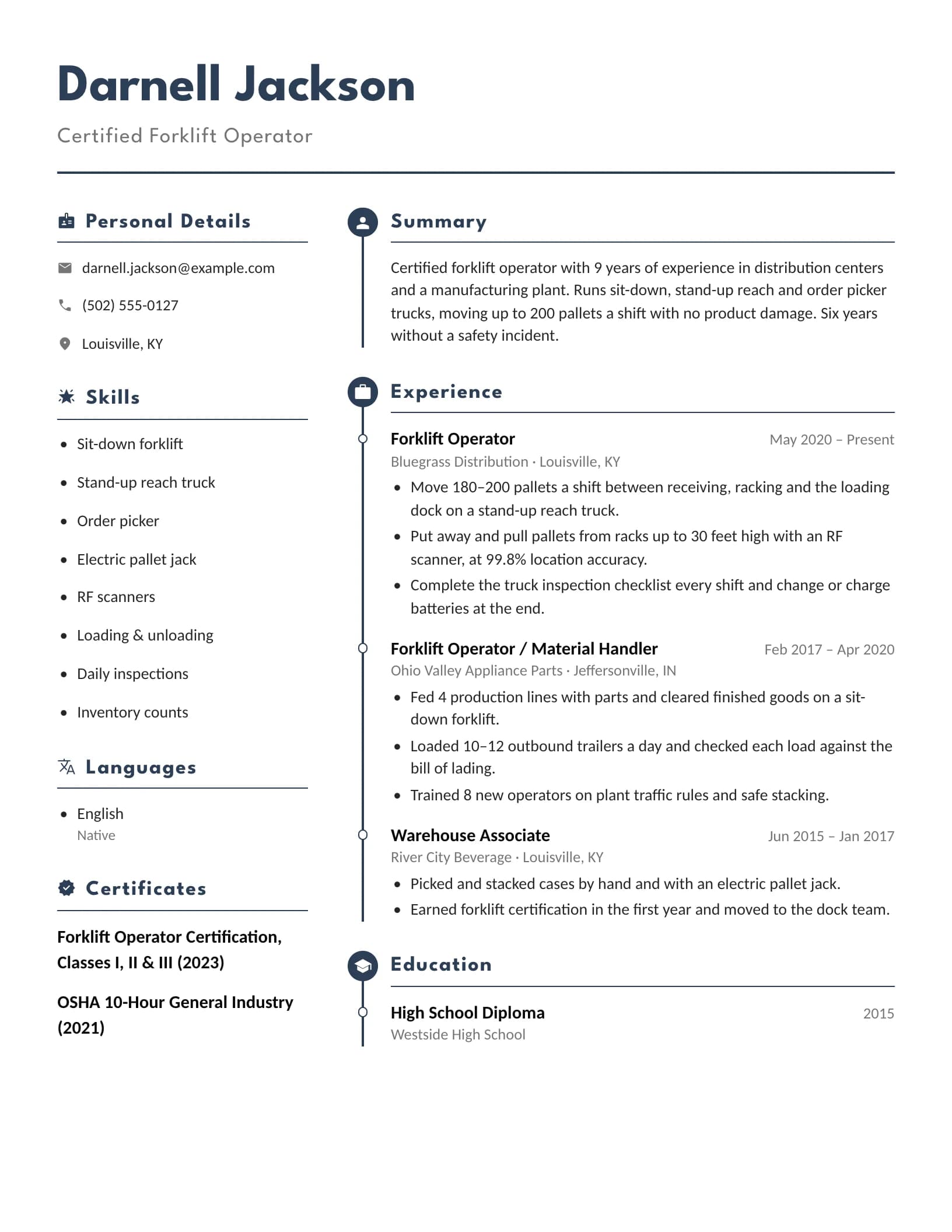
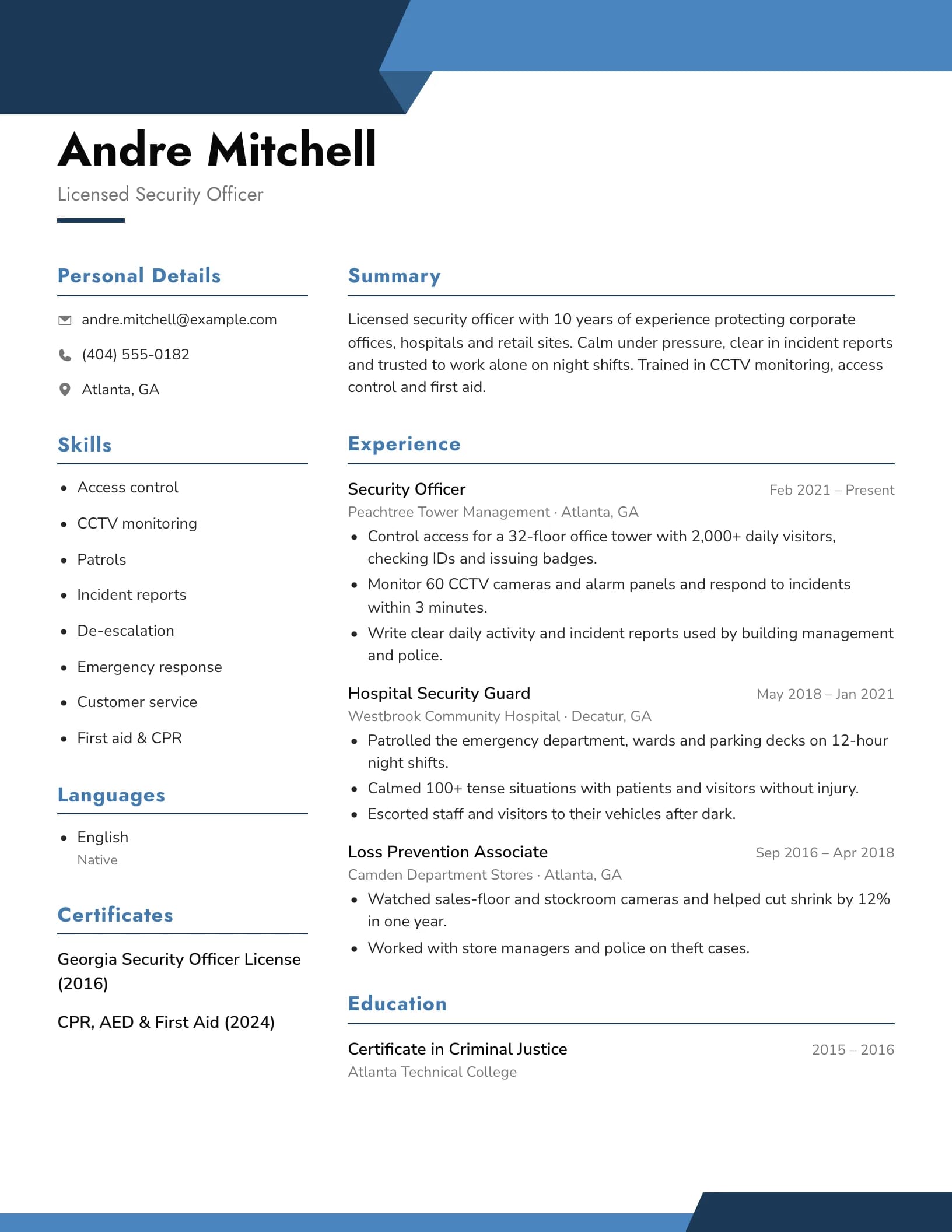
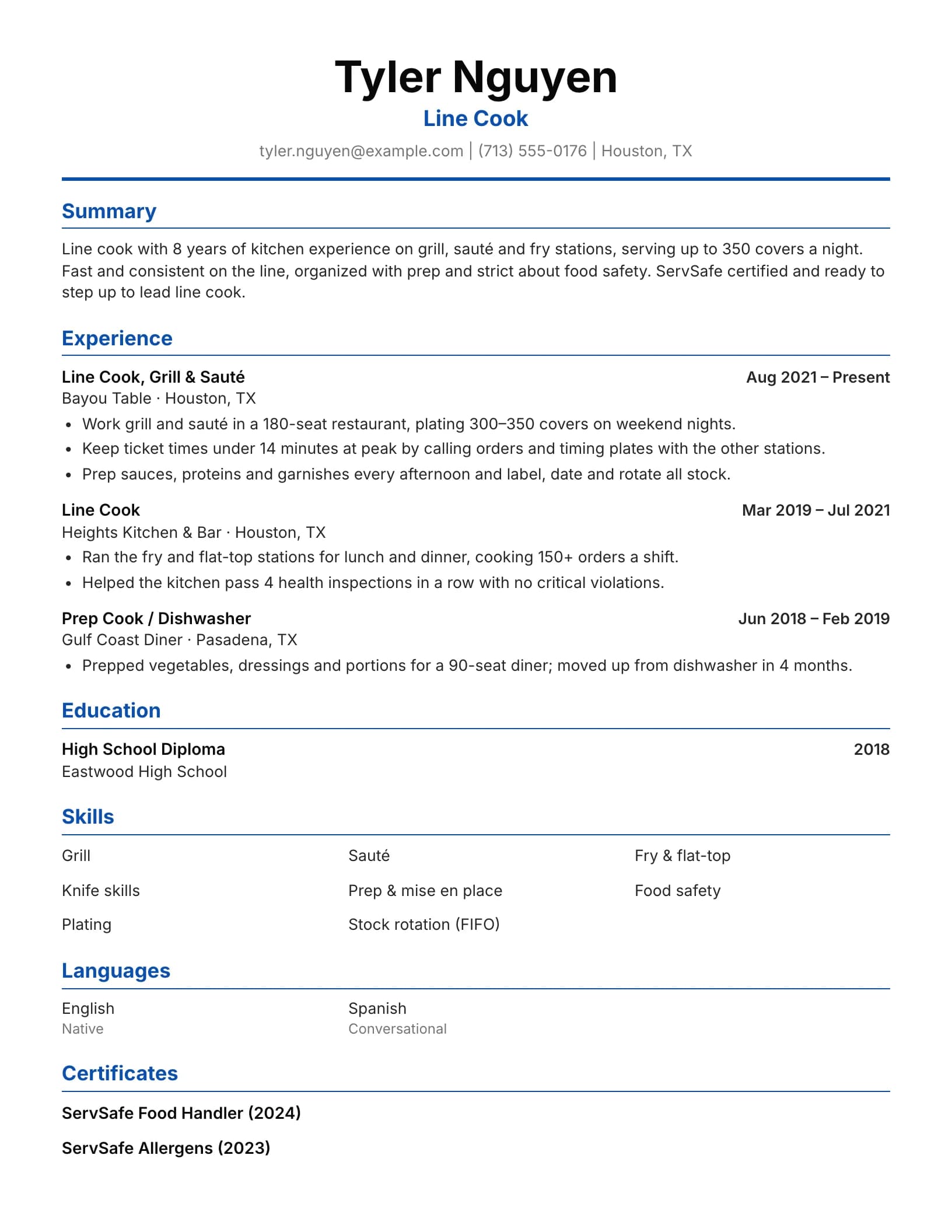
For most people, the best resume format is reverse-chronological: your newest job first, then each job before it. It is the layout employers know best and the easiest one to write. The other two formats, functional and combination, are worth a look if you are changing careers or have a long gap in your work history.
On this page · 14 sections
What is a resume format?
People use the word "format" for two different things:
- The order of your sections. This is where the three named formats come in. Each one puts a different part of your story first.
- The look of the page. Margins, fonts, length, columns, file type and paper size.
This guide covers both. A template is a third thing: it is the visual design, and any format can sit in any template. If you have not started writing yet, begin with our step-by-step guide on how to write a resume, then come back here to choose the format.
The three main resume formats
| Reverse-chronological | Functional | Combination | |
|---|---|---|---|
| Also called | Chronological | Skills-based | Hybrid |
| What comes first | Work experience, newest job first | Skills, grouped under headings | A skills section, then work experience |
| Work history | Every job, with dates and details | A short list of jobs with few details | Every job with dates, in fewer lines |
| Suits | Most people, above all those with steady work in one field | People with very little paid work to list | Career changers, people returning after a long gap, trades with many skills and licenses |
| Weak point | Gaps and job changes are easy to see | An employer cannot see where or when you used each skill | It can get long if you repeat yourself |
Reverse-chronological resume format
This format tells your story backward in time. The sections usually come in this order:
- Name and contact details
- A short summary
- Work experience, newest job first
- Education
- Skills
- Certificates, licenses and languages
Each job gets a title, the employer, the place, the dates and a few lines on what you did.
Warehouse Associate, Northgate Distribution, Columbus, OH. March 2022 to present
Picked and packed 140 orders a shift and loaded outbound trucks with a sit-down forklift.
Stocker, Fresh Valley Market, Columbus, OH. June 2019 to February 2022
Unloaded deliveries and restocked shelves on the overnight shift.
An employer can see in a few seconds what you do now, how long you stayed in each job and how you moved up. That is why most employers expect this format. It also fits online application forms, which often ask for each job with its dates. Our guide to the work experience section shows how to write each job entry.
Functional resume format
A functional resume puts skills first. Under headings such as Customer Service, Cash Handling or Food Preparation, you write a few lines about what you can do. Your jobs appear near the bottom as a short list, sometimes without dates.
It can suit someone with very little paid work to list. But it has a real weakness. An employer who reads "handled cash" cannot tell whether that was last year or ten years ago, or in which job. A page with few dates can also make the reader wonder what is missing.
If you use skill headings, put proof under each one.
Customer service. Cash handling. Teamwork. Time management.
Cash handling: Ran a register at a busy grocery store for three years and balanced the drawer at the end of every shift.
If you are thinking about a functional resume, look at the combination format first. It gives you the same skills-first opening without hiding your history.
Combination resume format
A combination resume starts with a skills section and then gives your full work history, newest job first, with dates. The skills section sits right under your summary. It holds the three or four strengths that matter most for the job you want, each with a line of proof. Because the skills take space at the top, each job entry is shorter.
Here is the top of a combination resume for a line cook moving into warehouse work:
Stock control: Checked in three food deliveries a week, rotated stock and ran the monthly count for a 120-seat restaurant.
Speed and accuracy: Plated up to 250 orders a shift on a four-person line.
Safety: Food safety certified. Trained six new hires on safe lifting and knife handling.
Line Cook, Maple Street Grill, Dayton, OH. 2020 to 2025
The skills are named in words a warehouse manager uses, and the job below them shows where they came from.
Which resume format should you use?
You have a steady work history
Use reverse-chronological. You do not need anything else.
You have no work experience
Use the reverse-chronological layout with one change: put education above experience. Then treat volunteering, school projects, informal work and helping in a family business as experience, and list them newest first. Our guide to writing a resume with no experience walks through every section.
You are changing careers
Use a combination format. Read a few ads for the new job, note the skills they ask for, and build your skills section from the ones you already have. Keep the work history short, and point each line toward the new job where you honestly can.
You have gaps in your work history
A gap of a few months rarely needs a special format. Stay with reverse-chronological. Some people list years only, with no months. That is fine if you do it for every job, but an application form may still ask for exact dates.
For a gap of a year or more, say in one line what you were doing, right where the gap falls. Caring for family, raising children, studying and recovering from an illness are all honest answers, and you do not need to give medical details. A combination format also helps, because your skills lead the page.
Full-time family caregiver, Mesa, AZ. 2022 to 2024
Cared for a parent after surgery: meals, appointments, medication reminders and the household budget.
Do not stretch the dates of other jobs to cover a gap. Employers can check dates with your past employers.
Resume margins, fonts and spacing
| Setting | What works |
|---|---|
| Margins | About 1 inch (2.5 cm) on every side, and never less than half an inch |
| Font | One plain, common font such as Arial, Calibri, Georgia or Times New Roman, or one that looks like them |
| Text size | 10 to 12 points for the body, larger for your name and the section headings |
| Headings | The same style for every section, in bold or a larger size |
| Dates | One style all the way through, such as "March 2022" or "03/2022" |
| Lists | Short bullet points under each job, not long paragraphs |
White space is not wasted space. It is what lets a busy reader find your last job in a few seconds.
Zoom out until the whole page fits on your screen and the words are too small to read. You should still see where each section starts and where each job begins. If the page looks like one gray block, add space between the sections or cut some lines.
How long should a resume be?
One page is right for most people with less than ten years of experience. Two pages are fine when you have a long work history that fits the job. In the UK and Australia, two pages are normal. Our resume vs CV guide covers the differences by country.
If you are a few lines over one page, do not shrink the font or the margins until it fits. Cut instead. Old jobs can drop to one line each, and skills the ad does not ask for can go.
Should a resume be one column or two?
A one-column resume runs straight down the page. It gives each line more room, and it is the simplest layout for the software many employers use to read applications.
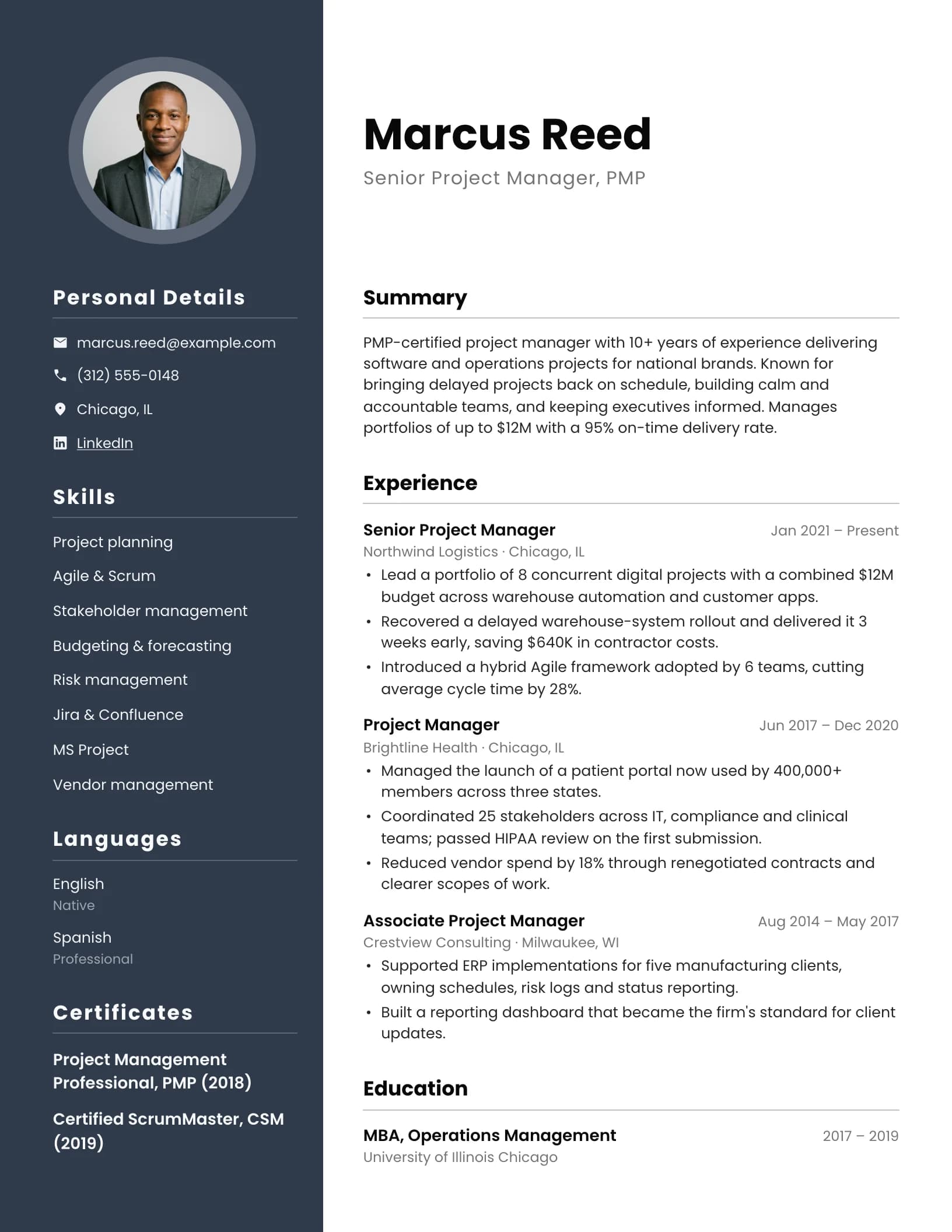
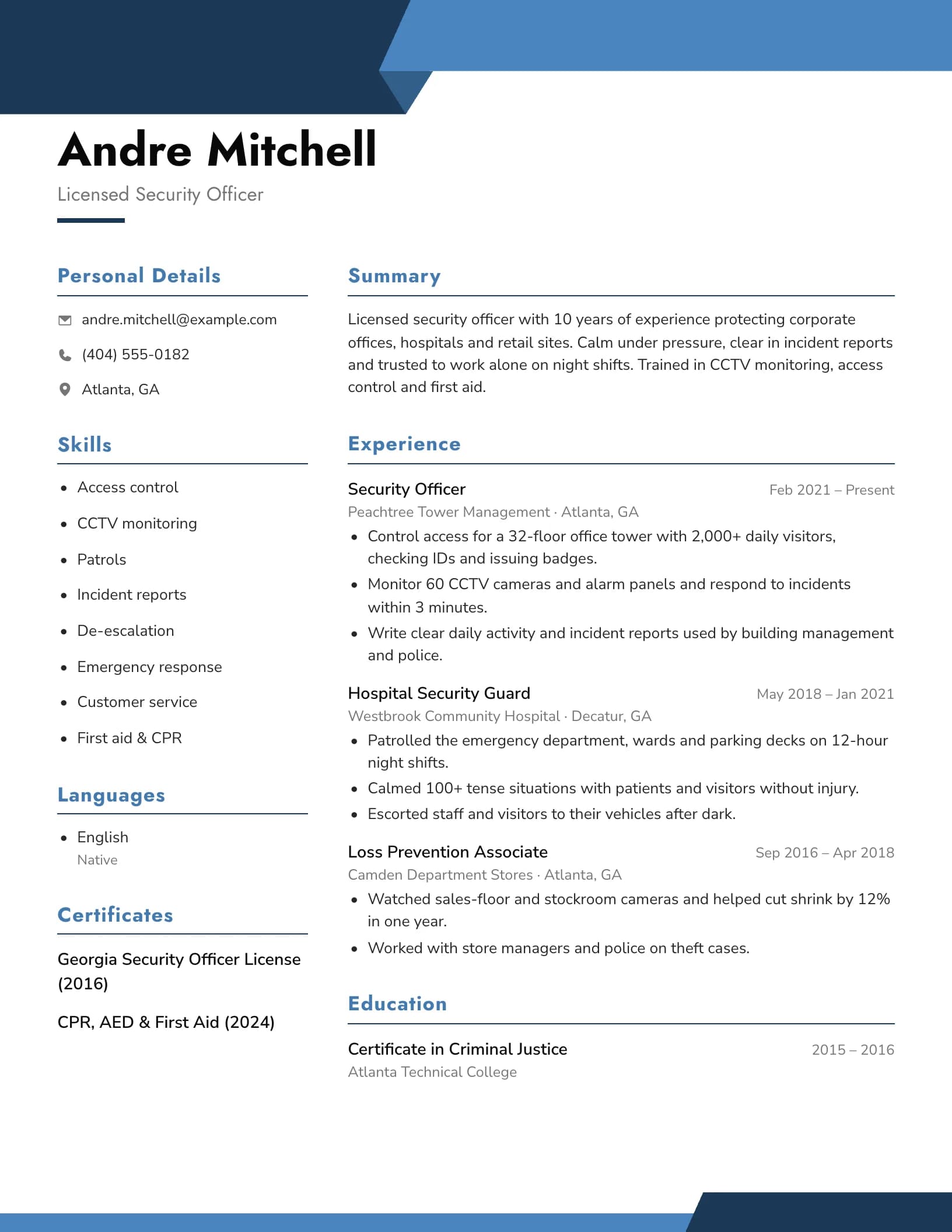
A two-column resume puts short items such as contact details, skills, languages and licenses in a narrow side column, and your work experience in the wide one. It fits more on one page.
Both work, as long as the file holds real text in the right reading order. Our guide to the ATS-friendly resume shows how to check that in two minutes.
DuckResume has one-column and two-column templates, and you can switch between them at any time without retyping. Of the three below, Ledger has one column, and Slate and Vertex have two.
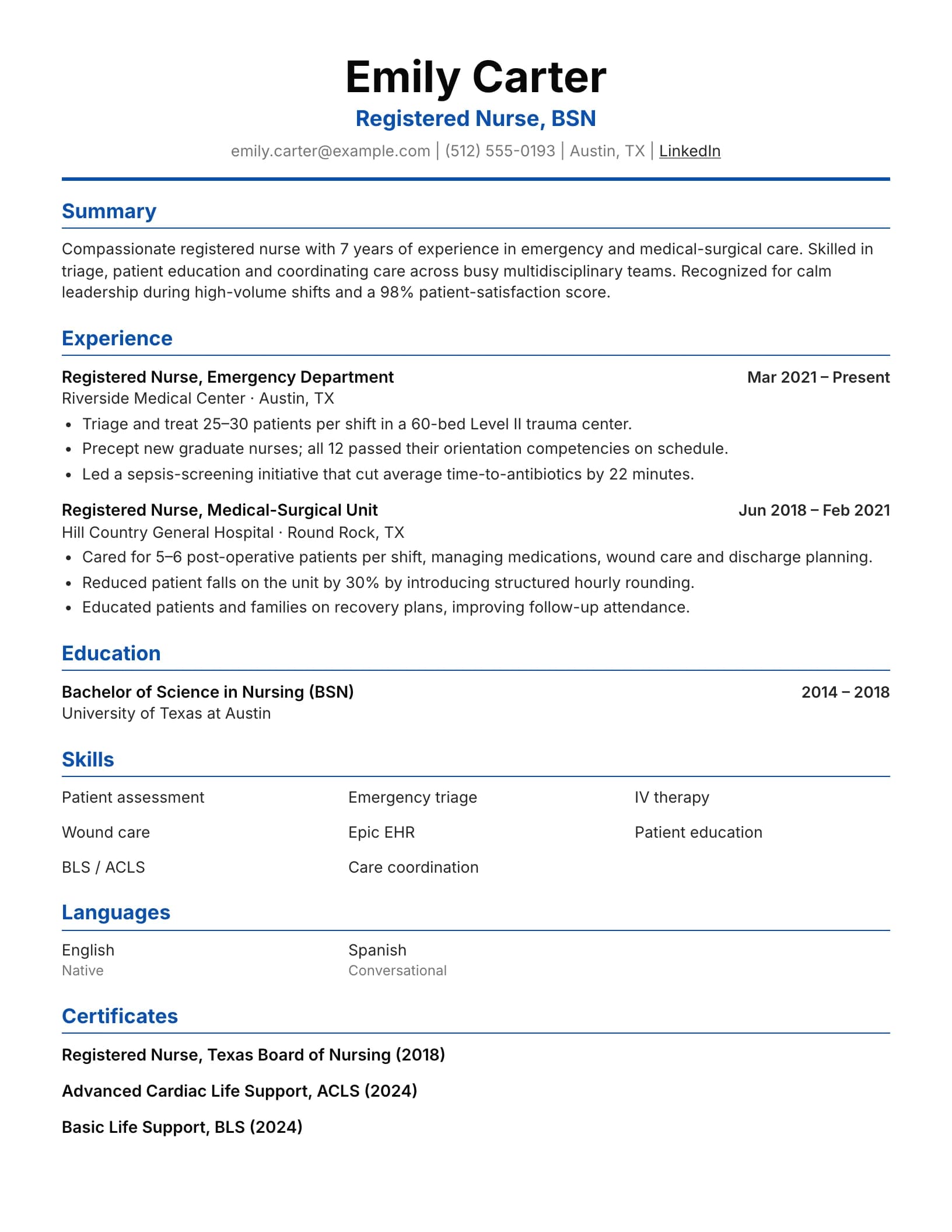 LedgerUse this template
 SlateUse this template
 VertexUse this template
Should you send a PDF or a Word file?
Send the file type the job ad asks for. If the ad does not say, send a PDF. A PDF looks the same on every phone, computer and printer, while a Word file can shift when it is opened in a different program.
Two more things matter here:
- Name the file after yourself, for example Maria-Lopez-Resume.pdf.
- Never send a photo or a scan of a printed resume. It is a picture, so nobody can search or copy the text in it.
US Letter or A4 paper size
Paper is not the same size everywhere.
- US Letter is 8.5 by 11 inches (216 by 279 mm). It is the usual size in the United States and Canada.
- A4 is 210 by 297 mm (about 8.3 by 11.7 inches). It is the usual size in most other countries.
A4 is a little narrower and a little taller. If you make a resume in one size and the employer prints it on the other, the page gets shrunk to fit or the margins come out uneven. Choose the size used in the country where the job is, not the country you are in. In DuckResume you can switch between US Letter and A4 at any time, and your resume reflows to fit.
Resume format mistakes to avoid
- Shrinking everything to fit one page. Small text and thin margins are hard to read. Cut words instead.
- Mixing styles. Three fonts, two date styles and headings of different sizes make a page look careless.
- Changing the order from job to job. The title, employer, place and dates should sit in the same order every time.
- Leading with your weakest section. Put first what the employer most wants to see. For most people that is work experience, and for a first job it is education.
Resume examples in reverse-chronological format
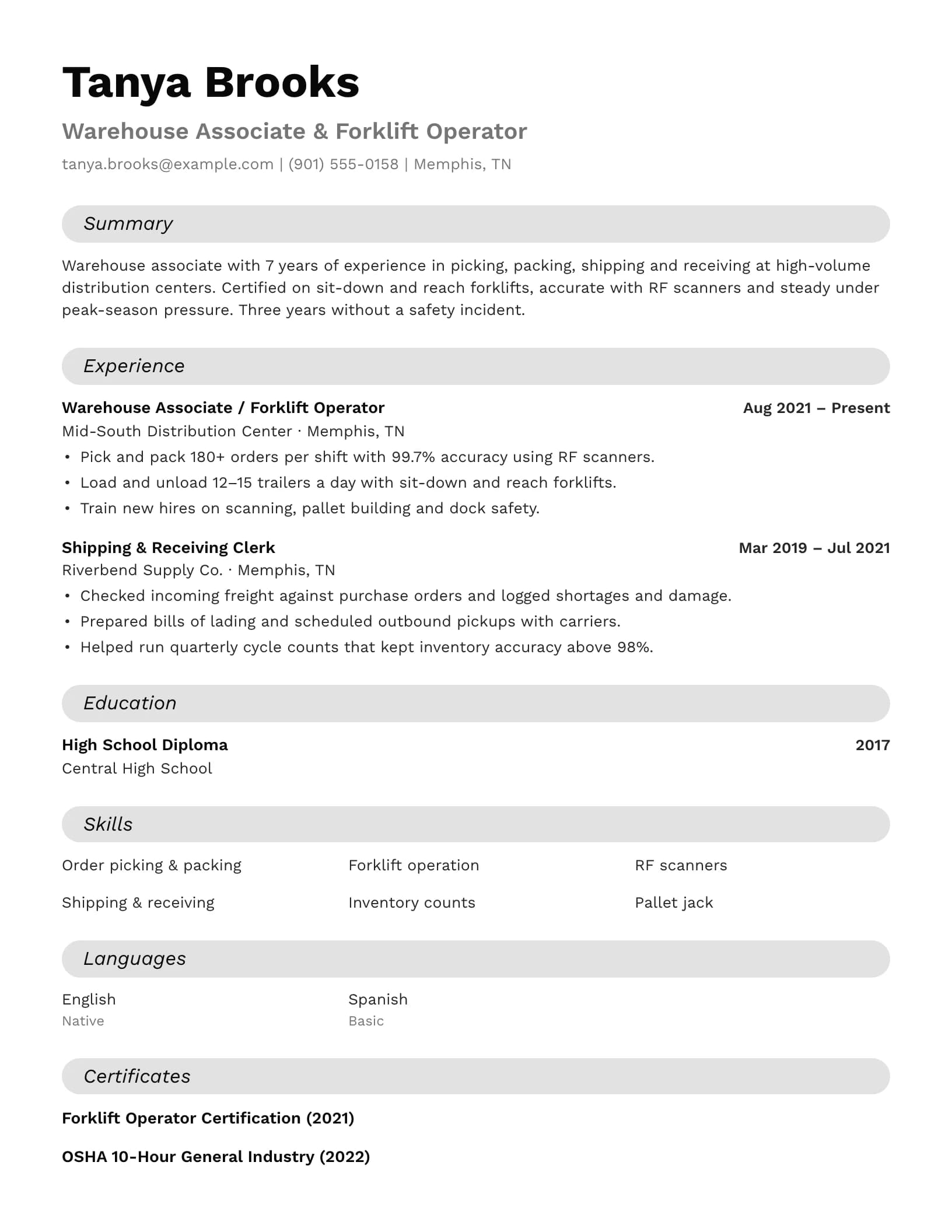
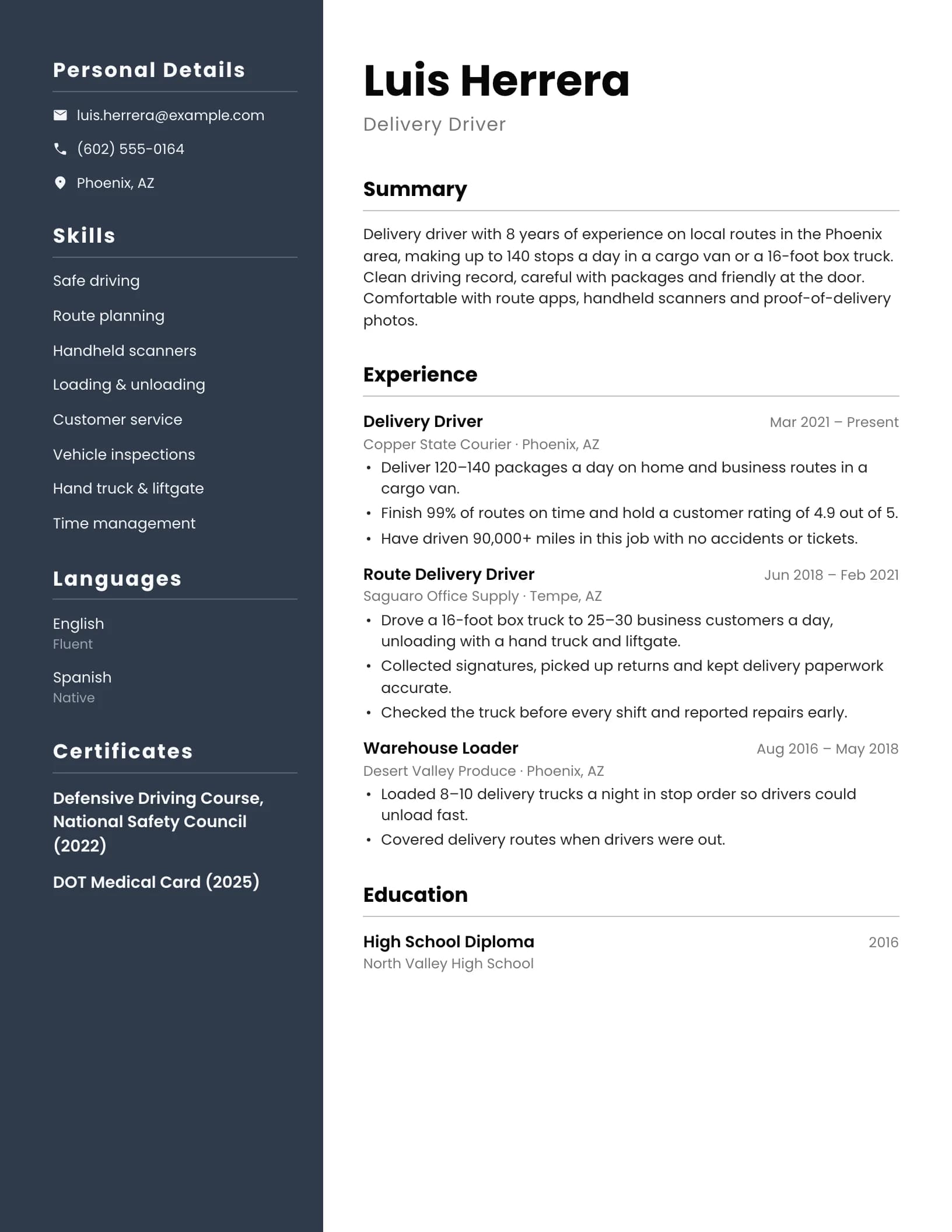
These finished resumes all list work experience newest first. The warehouse worker and line cook examples use one column, and the delivery driver example uses two.
Browse all our resume examples to see the format on a resume for your own job.