Everyone starts with no experience. Employers who hire for first jobs know that, and they are not looking for a long work history. They want to see that you show up, learn quickly and can be trusted with customers, money or equipment.
Your resume's job is to show that with what you already have. You have more than you think.
On this page · 10 sections
What to put on a resume when you have no work experience
A first resume has the same parts as any other. Only the balance changes: education and skills carry more weight, and "experience" means anything you have done that shows responsibility.
- Contact details: your name, phone number, email address and town or city.
- A short summary: two or three sentences on who you are and the job you want.
- Education: your school or college, what you studied and when you finish or finished.
- Experience: volunteering, school projects, clubs and sports, informal work, helping in a family business, caring for a relative.
- Skills: practical skills and people skills you can back up.
- Certificates and languages: a driver's license, first aid, a food handler card, any language you speak.
Choose a simple one-page layout
One page is the right length for a first resume. Put the sections in this order: contact details, summary, education, experience, skills, then certificates and languages. When you have a job or two behind you, experience moves above education.
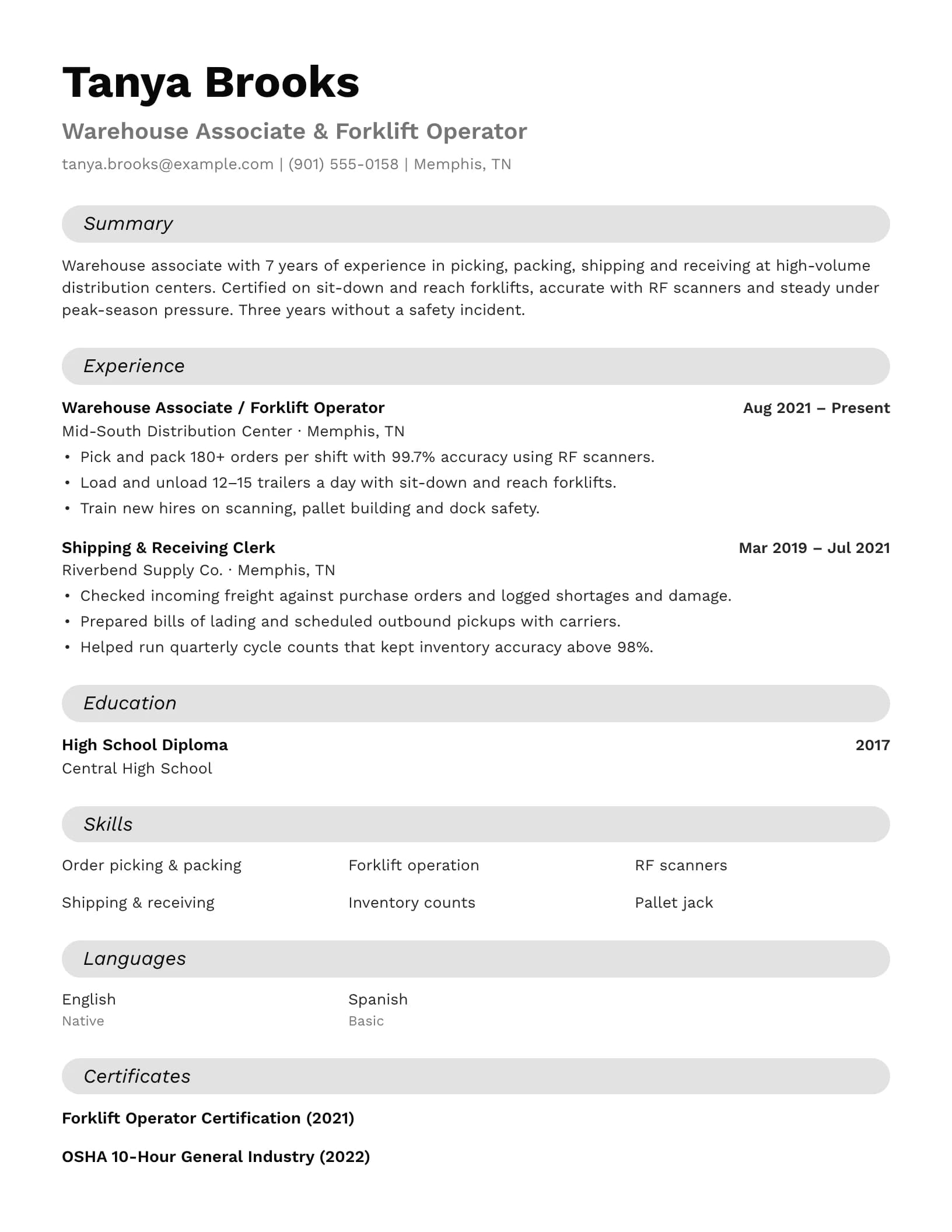
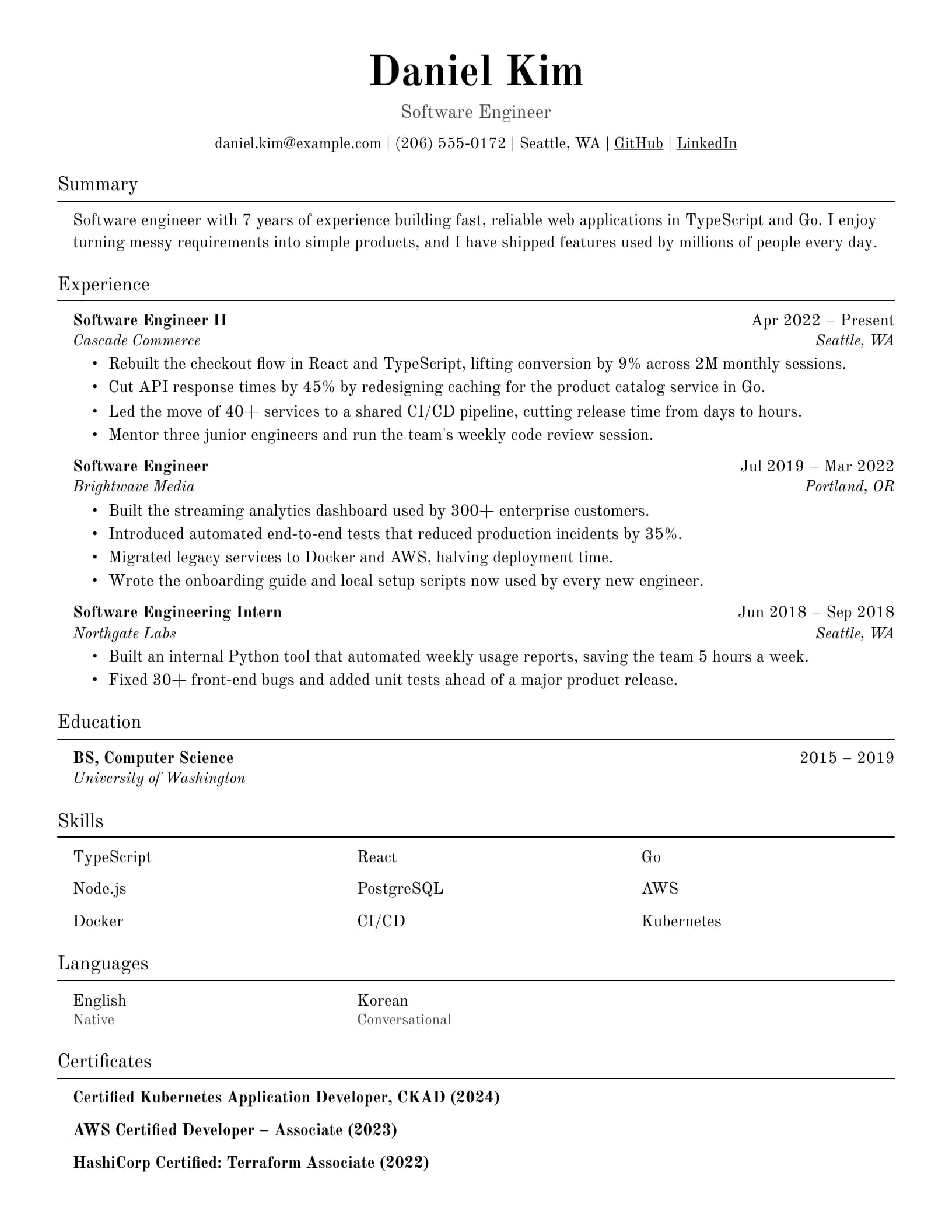
Pick a clean template with clear headings. A simple one-column design is easy for an employer to scan and easy for the software many companies use to read applications. Our guide to resume formats compares the layouts, and ATS-friendly resumes explains what that software needs.
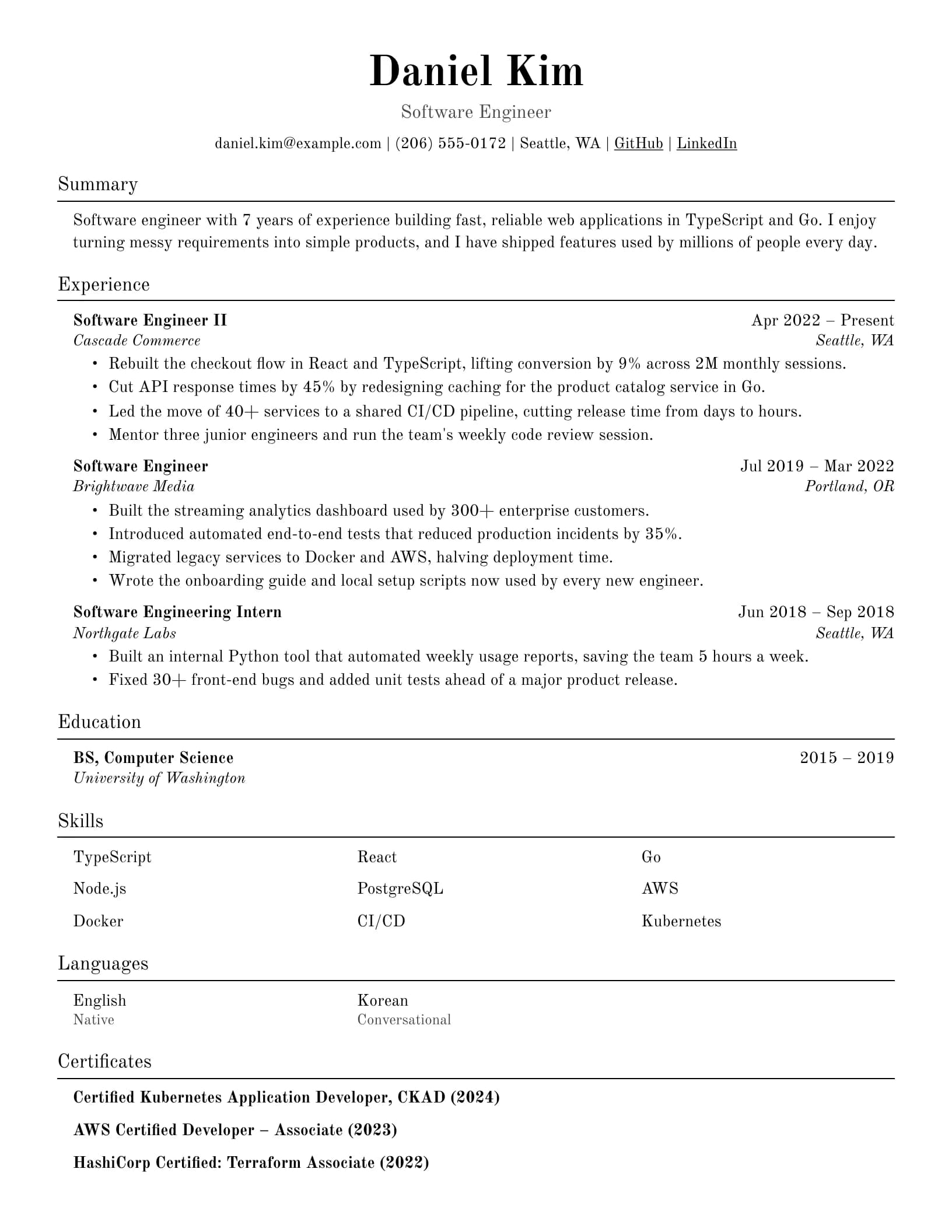
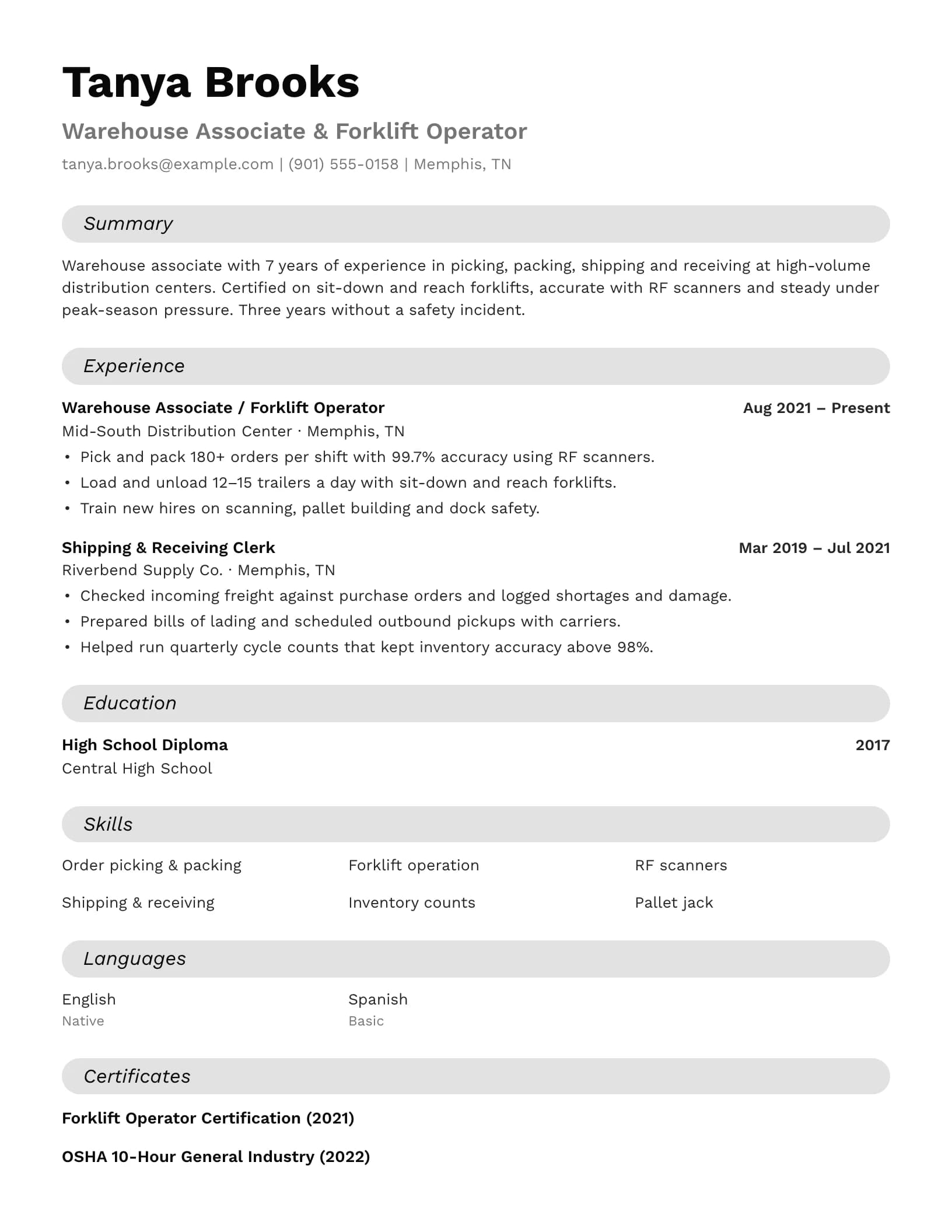
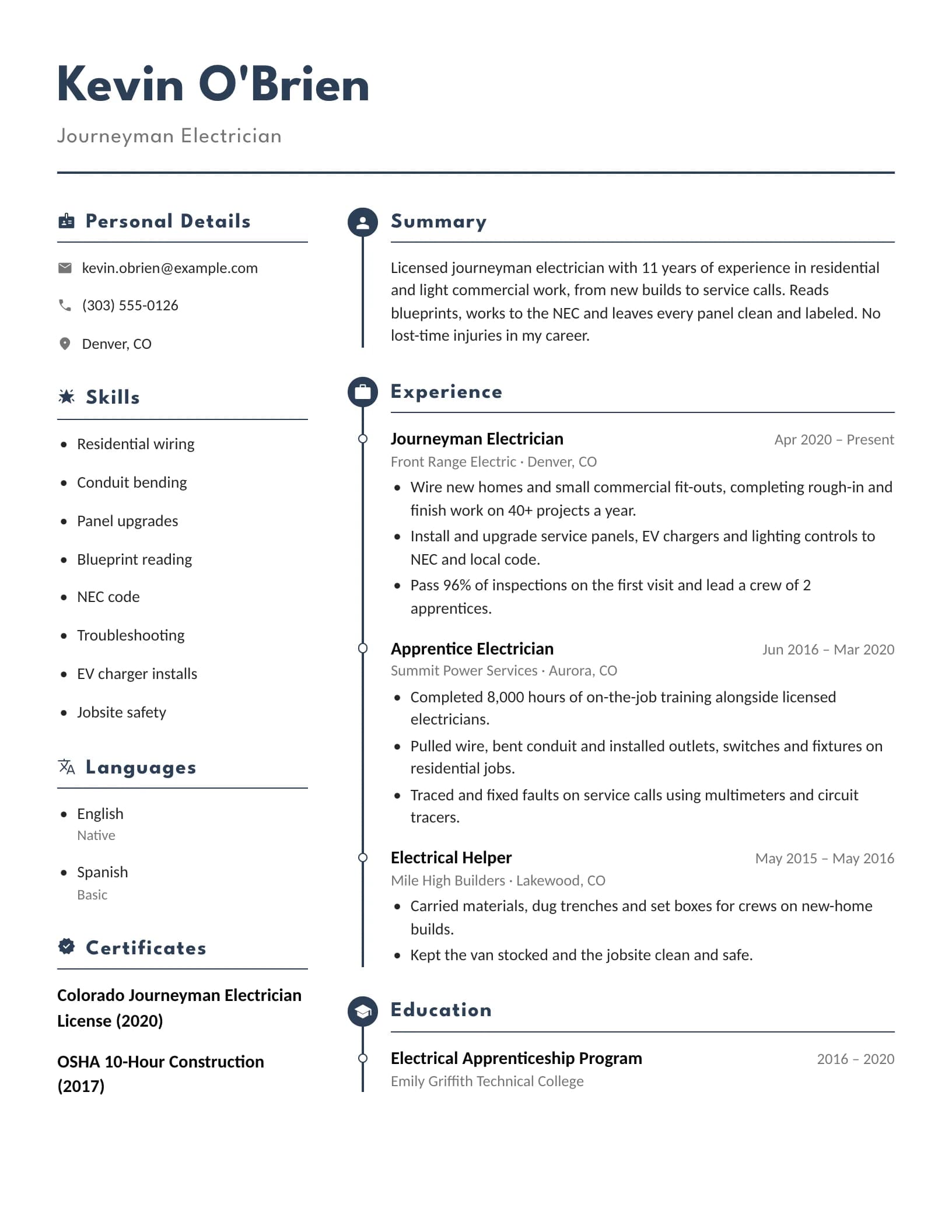
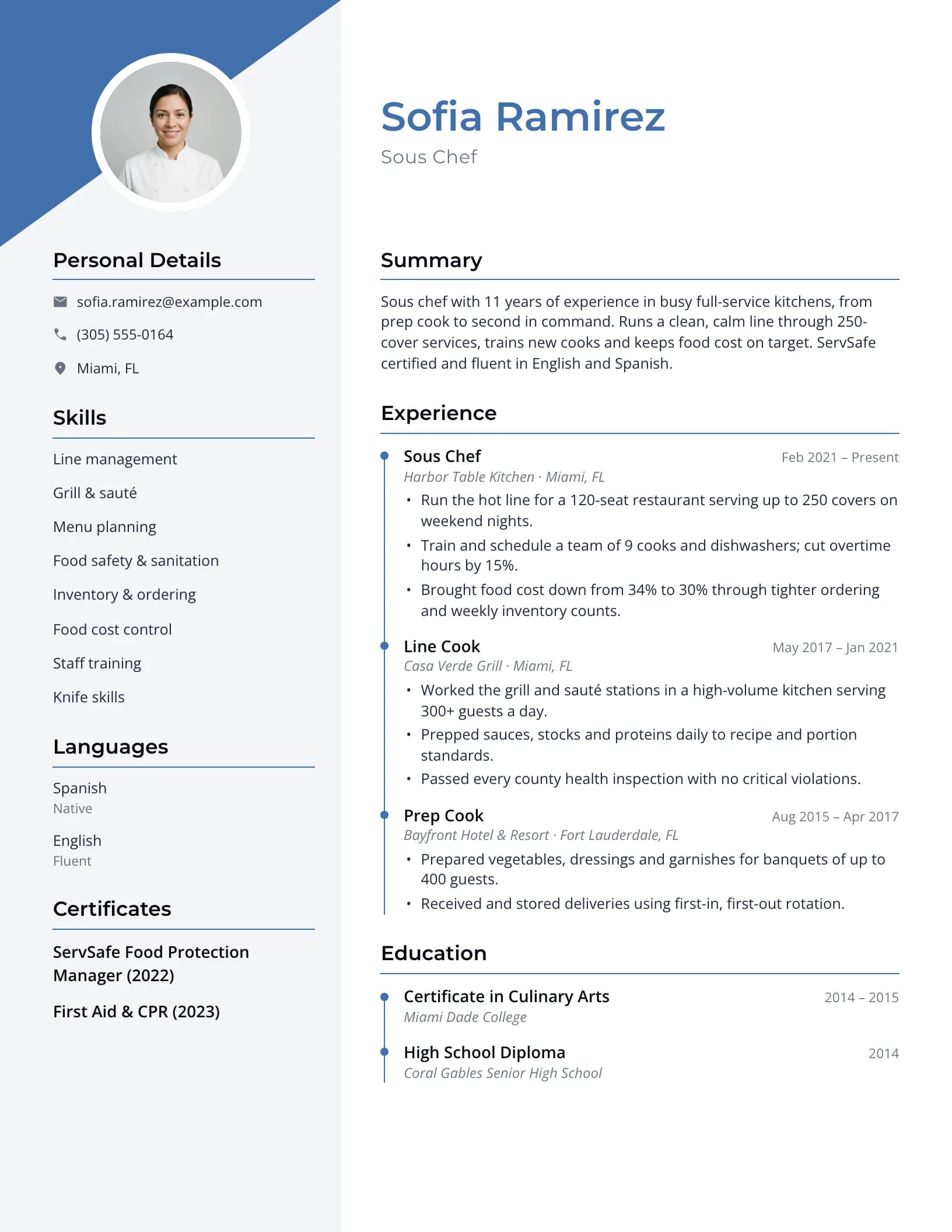
 LedgerUse this template
 CapsuleUse this template
 TypesetUse this template
Write a short summary
The summary sits under your name and is the first thing an employer reads. Say what you are, what you offer and what you are looking for. Use real details, because anyone can call themselves hard-working.
I am a hard worker looking for any job where I can learn and grow.
Reliable high school graduate looking for a first job in retail. Served customers at school fundraising events and handled cash as treasurer of the student council. Quick to learn, comfortable on my feet all day and available evenings and weekends.
The second one names things that happened. It also tells the manager when you can work, which is often the first question for an entry-level job. For more help, see our guide to writing a resume summary.
Put your education to work
With no job history, education is your strongest section, so give it more than one line. Under the school and qualification, add anything that shows effort or fits the job:
- subjects or courses related to the job
- a strong grade average, if you have one
- awards, prizes or a perfect attendance record
- a project you are proud of, with one line on what you did
- positions of responsibility, such as class representative or team captain
If you are still studying, write the date you expect to finish.
Turn everyday experience into resume lines
Unpaid and informal work counts. Write it up like a job: a title, where and when, and one to three lines on what you did. Start each line with an action word and add a number if you can. For more before-and-after lines, see how to describe work experience on a resume.
| What you did | How to write it |
|---|---|
| Babysat for neighbors | Cared for two children aged 4 and 7 after school, three days a week for two years |
| Helped in a family store | Served customers and restocked shelves at a family-owned grocery store on weekends |
| Played on a school team | Trained four times a week as part of a 20-player squad and never missed a season game |
| Volunteered at a food bank | Sorted and packed donations for more than 50 families a week |
| Mowed lawns for money | Ran a lawn-mowing service for 8 regular customers over two summers |
Not sure a task is worth listing? Ask what it proves. Babysitting proves trust. A paper route proves you get up on time. A team sport proves you work with others. Those are the things a first employer is hiring for.
List skills you can back up
Split your skills into two groups and keep each list short. Six to ten skills in total is plenty.
- Practical skills: handling cash, using a cash register or point-of-sale system, word processing and spreadsheets, a driver's license, lifting and physical work, tools you can use, languages.
- People skills: reliability, teamwork, clear communication, patience with customers, staying calm when it is busy.
Only list a skill you could explain or show in an interview. Then read the job ad and, where your skills match, use the ad's own words. Many employers search applications for those words. Our guide to skills to put on a resume has lists by kind of work.
Add certificates that are quick to earn
A short course can make a first resume look much stronger, and several cost little and take a day or less:
- first aid and CPR
- a food handler card, for kitchen and cafe work
- forklift training, for warehouse work
- a driver's license, for almost anything
List each one with the year you earned it.
Avoid these first-resume mistakes
- Leaving it nearly empty. Fill the page with the kinds of experience above before you decide you have nothing to say.
- Stretching the truth. Employers check, and entry-level interviews ask about every line.
- A joke email address. Use one with your name in it.
- Spelling mistakes. Ask someone else to read it; fresh eyes catch what you miss.
- One resume for every job. Change the summary and the skills to fit each ad. It takes five minutes and it shows.
See how others have done it
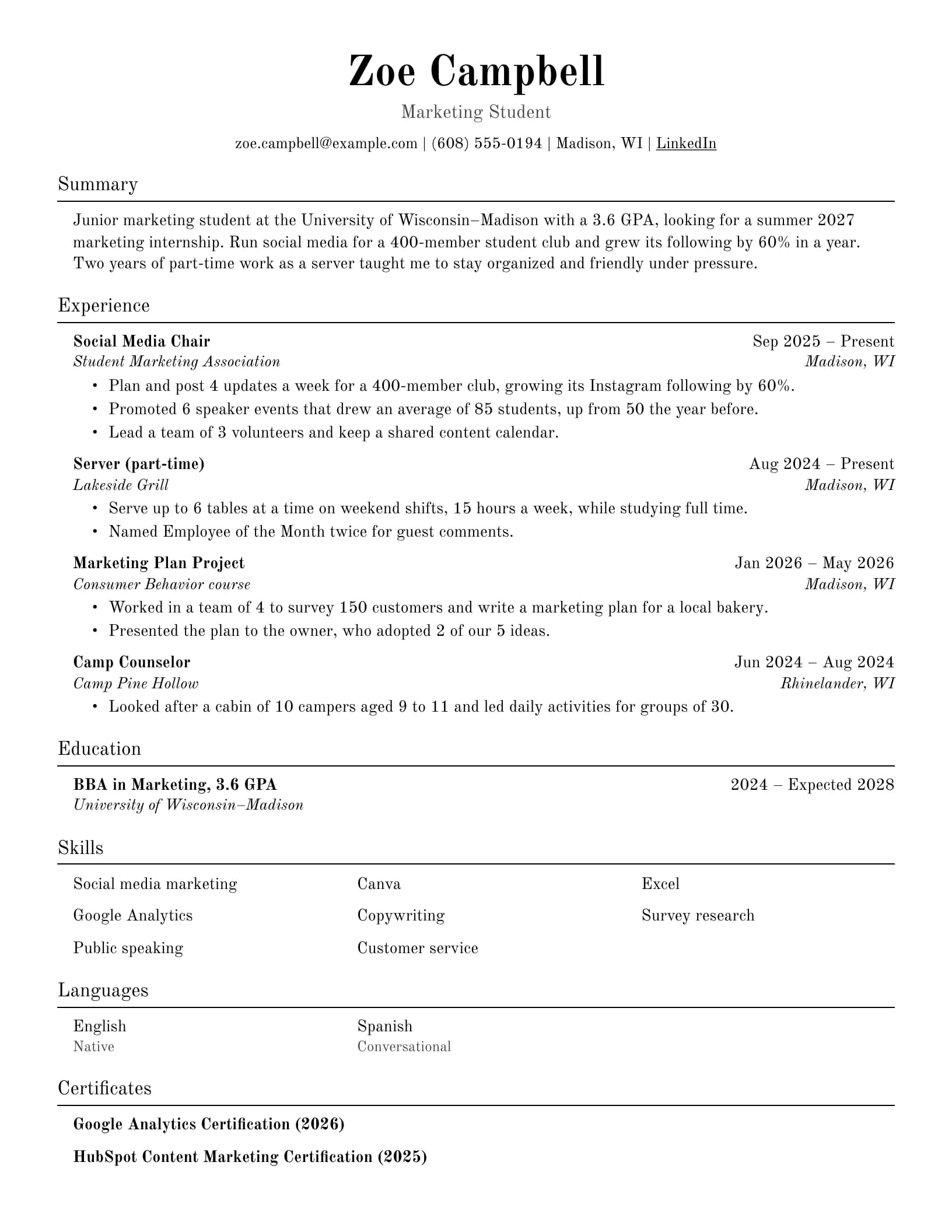
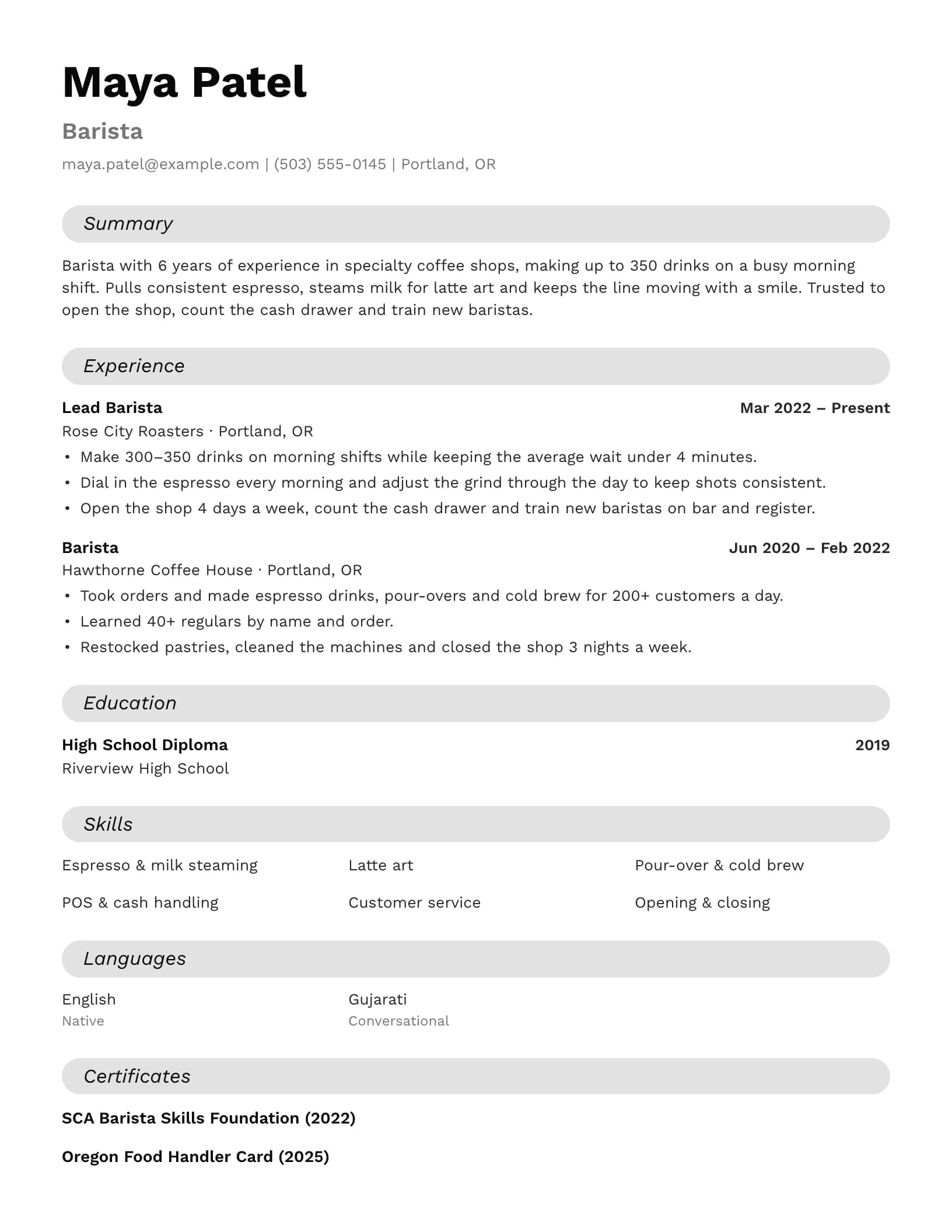
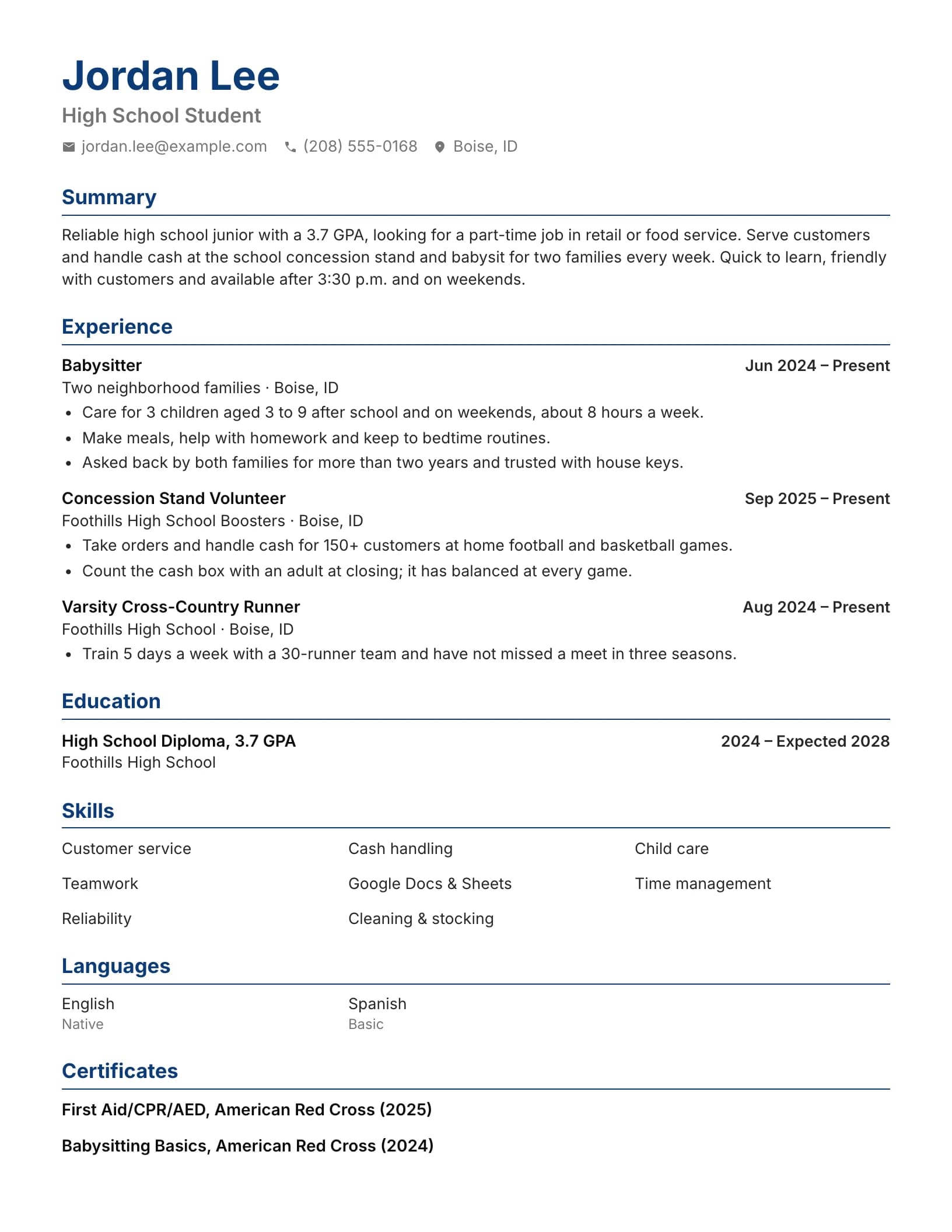
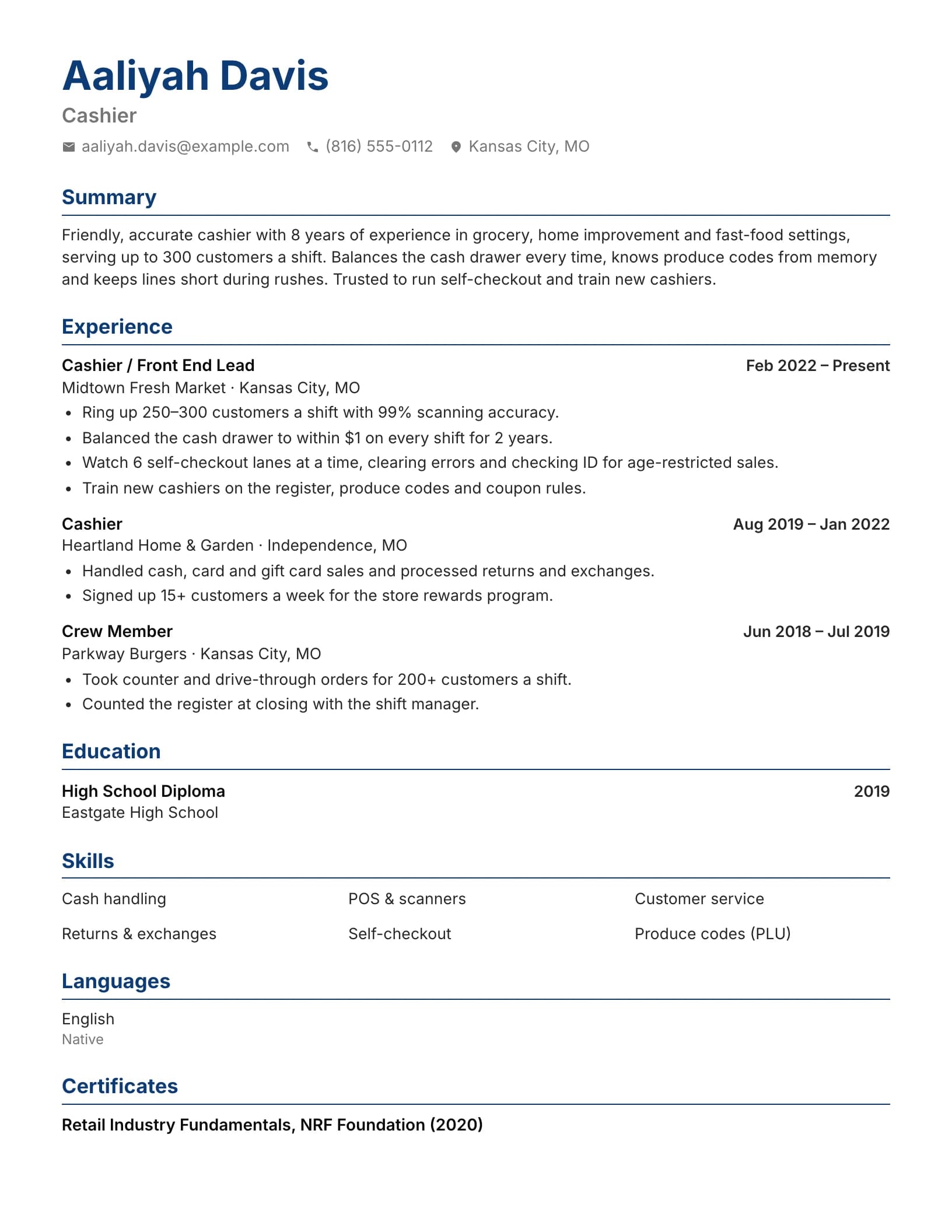
These resume examples are written for a first job. The first two are for students, and each one has a summary for someone with no experience that you can copy and change.
You can browse all our resume examples to find the job closest to yours. Once you have a job or two behind you, follow the full guide on how to write a resume.