A CV needs five things: your contact details, a personal statement, your employment history, your education and qualifications, and your skills. Other sections are optional and have to earn their place. A few things are better left out, and in the UK and Ireland that includes a photo and your date of birth.
This post is about the CV you send for an ordinary job, about two pages long. For the full method, section by section, follow our guide on how to write a CV.
On this page · 8 sections
What to include in a CV
These five sections belong on every CV, usually in this order.
| Section | What goes in it |
|---|---|
| Contact details | Your name, mobile number, email address and town or city |
| Personal statement | Three or four lines on who you are, what you are good at and the job you want |
| Employment history | Each job with your title, the employer, the dates and a few bullet points, newest first |
| Education and qualifications | Qualifications, courses and job tickets, with the place, the year and the result |
| Skills | Six to ten skills that the advert asks for and that you really have |
Contact details
Your name is the heading of the page. Under it go your mobile number, an email address with your name in it, and your town or city. You do not need your full home address. A link to an online work profile is fine if you keep it up to date.
Personal statement
The personal statement, also called a profile, is a short paragraph that tells the employer why to read on. Name your job, your experience and one or two things that prove you are good at it.
Care assistant with five years of experience in residential homes, supporting older adults and residents living with dementia. Holds a Level 2 Diploma in Care and a current enhanced DBS check. Looking for a senior carer role in the Cardiff area.
Employment history
List your jobs with the newest first. Give your job title, the employer, the town and the dates as month and year. Under each job, write three to five bullet points that start with an action word and carry a number where you have one.
Worked on the tills and helped customers.
Served up to 200 customers a shift on tills and self-checkouts, and balanced the cash drawer at the end of every shift.
Education and qualifications
List these with the newest first too: the qualification, where you studied, the year and the result. Job tickets belong here as well, such as a food hygiene certificate, a first aid certificate, a CSCS card or a forklift certificate. For many hands-on jobs, they are the first thing an employer looks for.
Skills
Keep the list short and match it to the advert. Driving licences, equipment you can use, software and languages are all skills. Our guide to skills for a resume explains how to choose them. It uses the US word, but the advice is the same for a CV.
Optional CV sections and when they help
Add one of these only when it gives the employer a reason to pick you.
- Interests: when they show a skill or a responsibility, such as running a five-a-side team or fixing cars at weekends. They help most when you have little work history.
- References: when the advert asks for referees. Otherwise leave them off. Employers usually ask later, often with a job offer.
- Volunteering: when it uses the same skills as the job, or covers a gap in your dates.
- Languages: when you speak more than one. Say honestly how well you speak each.
- Driving licence: when the job involves driving, or the workplace is hard to reach without a car. Give the category if it matters, such as C for lorries.
- Awards: when they are from work or training, such as employee of the month.
What not to include in a CV
Everything on a CV should help an employer decide to interview you. The things below do not help, and some of them can harm you, so leave them out.
A photo
Employers in the UK and Ireland do not expect a photo. A photo shows your age, sex and ethnic background before anyone has read about your work, and that can invite bias. Acting and modelling are the exceptions, because those jobs ask for a headshot.
Date of birth, marital status and other personal details
Leave off your date of birth, age, marital status, children, nationality, religion and health. The National Careers Service, the government's careers service for England, tells job seekers not to include their age, date of birth, marital status or nationality. Government guidance for employers also says they must not ask candidates whether they are married or have children.
Date of birth: 14 March 1988. Marital status: married, two children. Nationality: British. Health: excellent.
Priya Shah, Leicester LE2, 07700 900456, priya.shah@example.com
If you have moved from another country and already have the right to work, one short line such as "Eligible to work in the UK" is enough.
National Insurance number
Your National Insurance number is for your pay and tax, and an employer needs it only once you have the job. A CV gets emailed, copied and uploaded to job sites, so a number that identifies you should not be on it. The same goes for a PPS number in Ireland.
Salary and reasons for leaving
Leave out what you earn now and what you hope to earn. A figure on your CV can rule you out before the interview, or weaken your position when pay is discussed. If an application form asks for a figure, answer it there.
Leave out why you left each job as well. A CV shows what you did in a job, not why it ended. Reasons are easy to misread on paper and are better explained face to face if the employer asks. The one exception is a long gap, which you can explain in a single honest line.
Other things that waste space
- the words "Curriculum Vitae" as a heading
- your referees' names and contact details, unless the advert asks for them
- every job you have ever had, when the older ones have nothing to do with this one
- a joke email address
- anything that is not true
Test each line with one question: would this help the employer decide to interview me for this job? If the answer is no, cut it. A shorter CV with nothing wasted reads better than a full one.
What to include in a CV in other countries
Follow the customs of the country where the job is. These are the usual expectations.
| Country | Usual length | Photo | Date of birth | Paper size |
|---|---|---|---|---|
| UK and Ireland | 2 pages | No | No | A4 |
| Australia and New Zealand | 2 to 3 pages | No | No | A4 |
| Germany | 1 to 2 pages | Common | Common | A4 |
| France | 1 to 2 pages | Common | Sometimes | A4 |
| Spain | 1 to 2 pages | Common | Sometimes | A4 |
| United States and Canada | 1 to 2 pages | No | No | US Letter |
In the US and Canada the document is called a resume, and in Australia and New Zealand you will hear both words. Our post on resume vs CV explains the names. Customs also vary between employers inside a country, so look at local examples before you add a photo or a date of birth.
What a school leaver or graduate should include
With little or no work history, the sections stay the same but the balance changes. Education moves above employment history, and one page is enough.
A school leaver can include:
- a personal statement that says what kind of job you want and when you can work
- GCSEs in one line, with the number, the grades, and English and Maths named
- A-levels, a BTEC or a T Level, with the grades you have or expect
- a work experience placement, a Saturday job, a paper round or help in a family business
- volunteering, clubs, sports teams and any position of responsibility
- a short list of skills and interests
Education: Parkside Academy, Leeds, 2021 to 2026. 8 GCSEs at grades 7 to 4, including English Language (5) and Maths (6).
Work experience: one-week placement at a garden centre, June 2025. Served customers, watered stock and helped unload two deliveries a day.
A graduate can include:
- the degree, the university, the years and the class you got or expect
- a dissertation or final project in one line, if it fits the job
- placements, internships and part-time jobs, written up like any other job
- societies, volunteering and positions of responsibility
- A-levels in one line, and GCSEs in one line or left out
Our guide to writing a resume with no experience is written for US readers, who say resume, but every step works for a first CV.
CV checklist before you send it
Tick these off before you apply.
- Your name, mobile number, email address and town are at the top.
- The personal statement is three or four lines and written for this job.
- Your jobs run from newest to oldest, each with dates and bullet points.
- Your qualifications and job tickets have years and results.
- The skills match the advert and are true.
- There is no photo, date of birth, marital status or National Insurance number.
- There are no salary details and no reasons for leaving.
- It fits on two sides of A4.
- You have checked the spelling, and so has one other person.
- It is saved as a PDF with your name in the file name.
Choose a template that fits it all
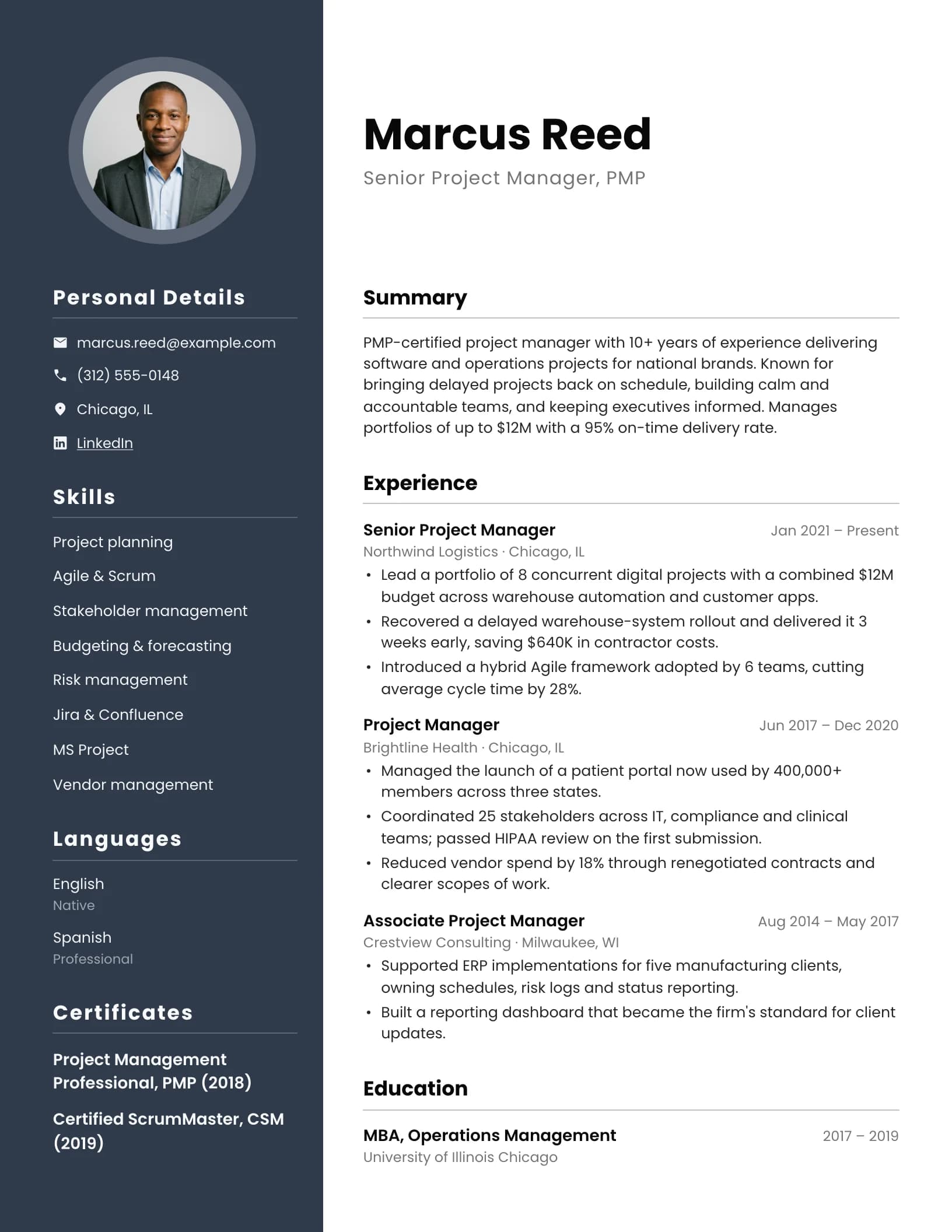
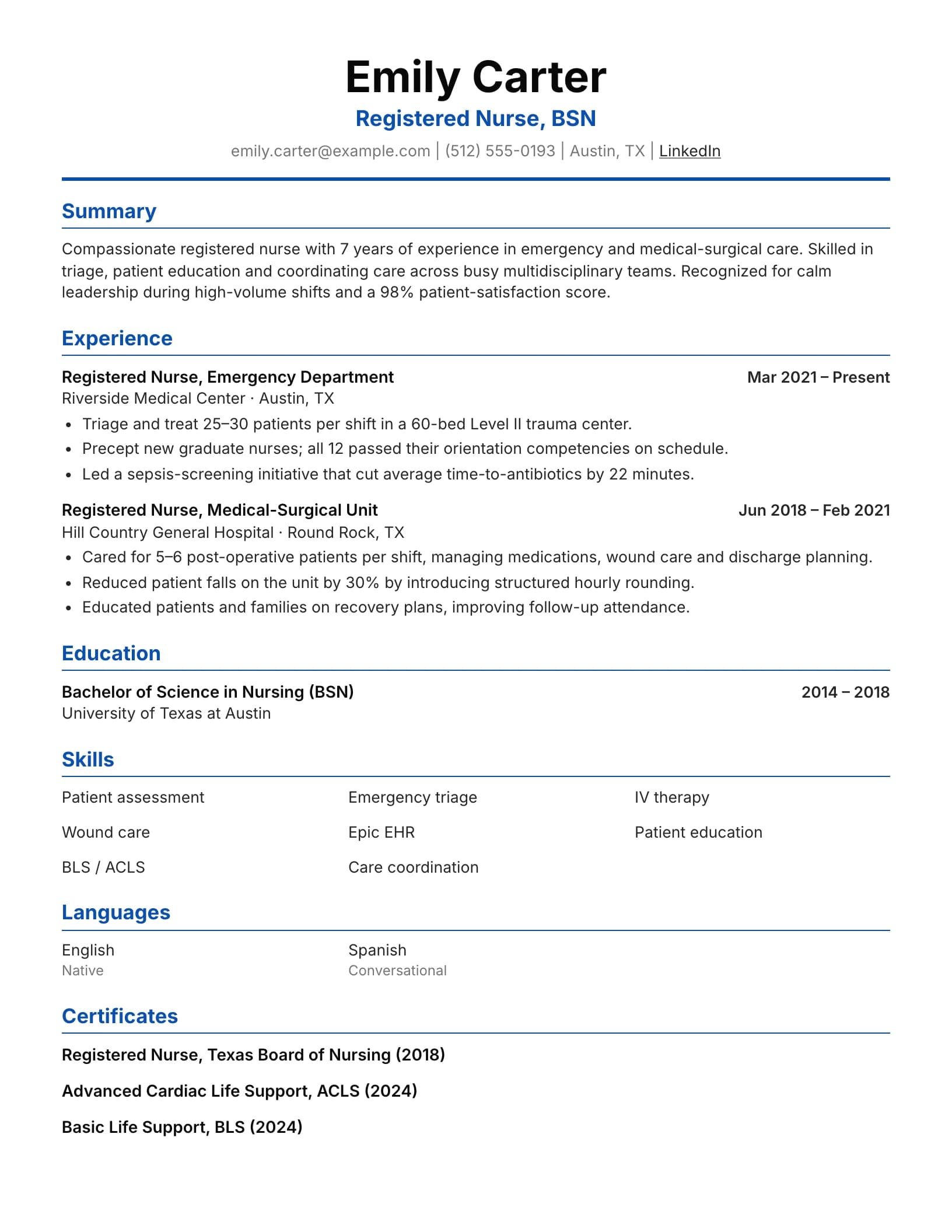
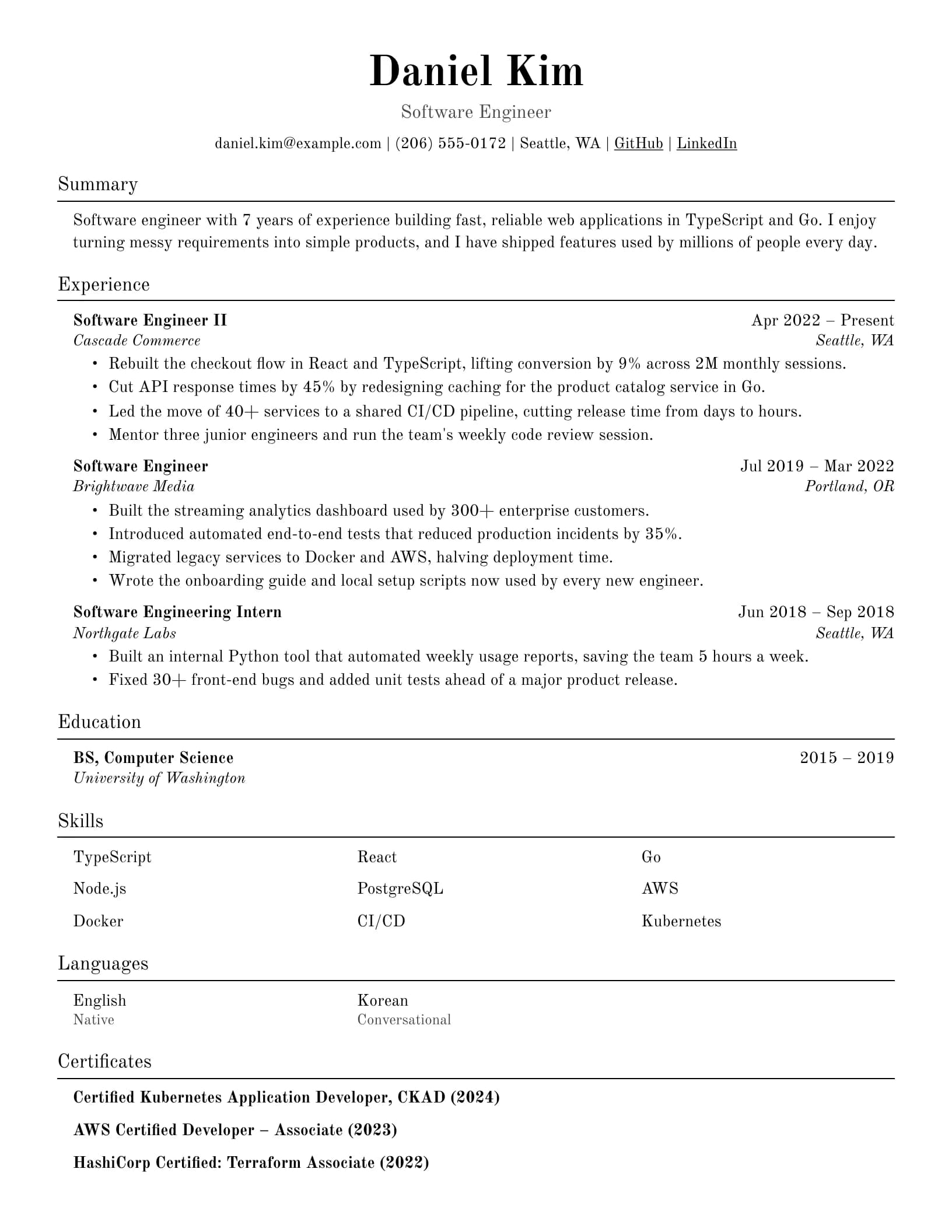
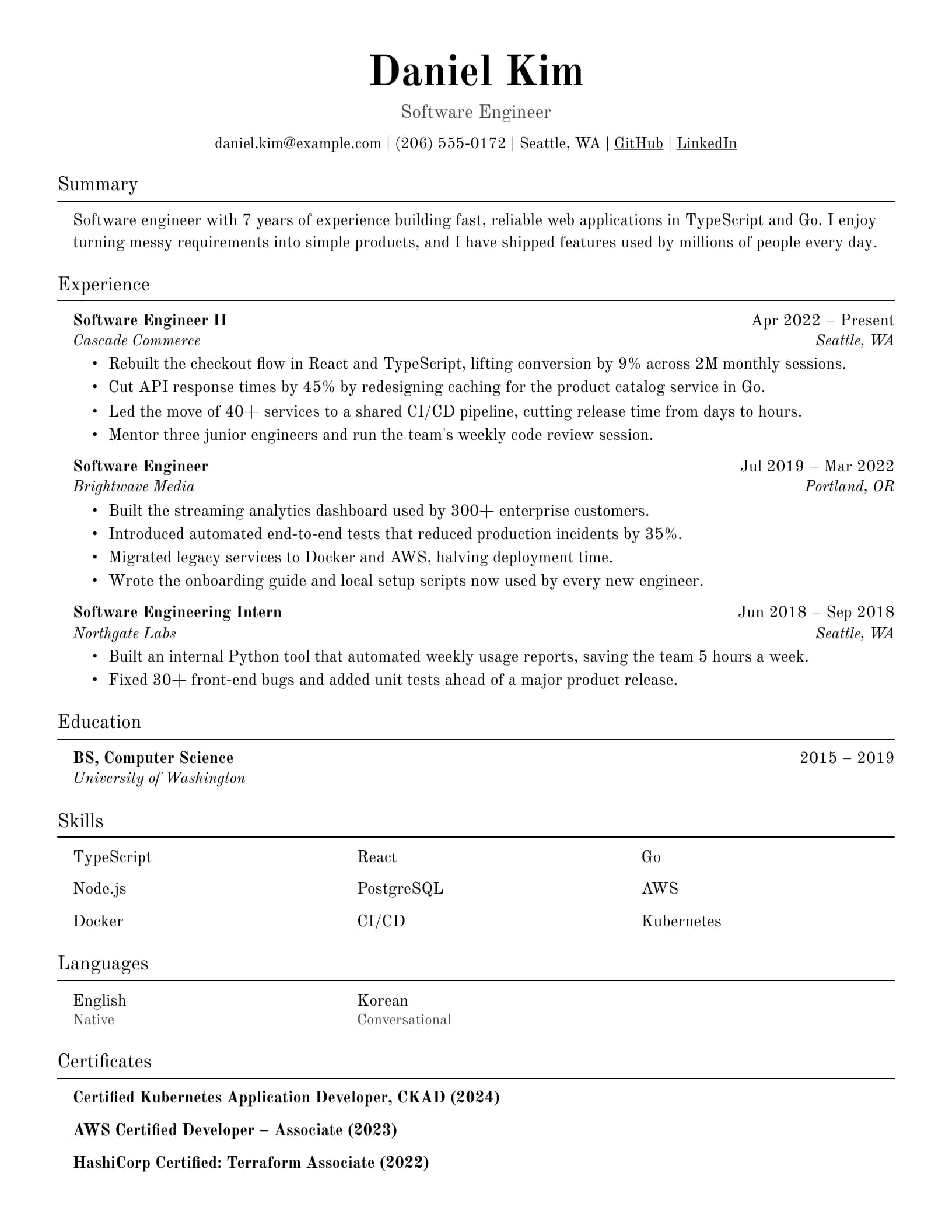
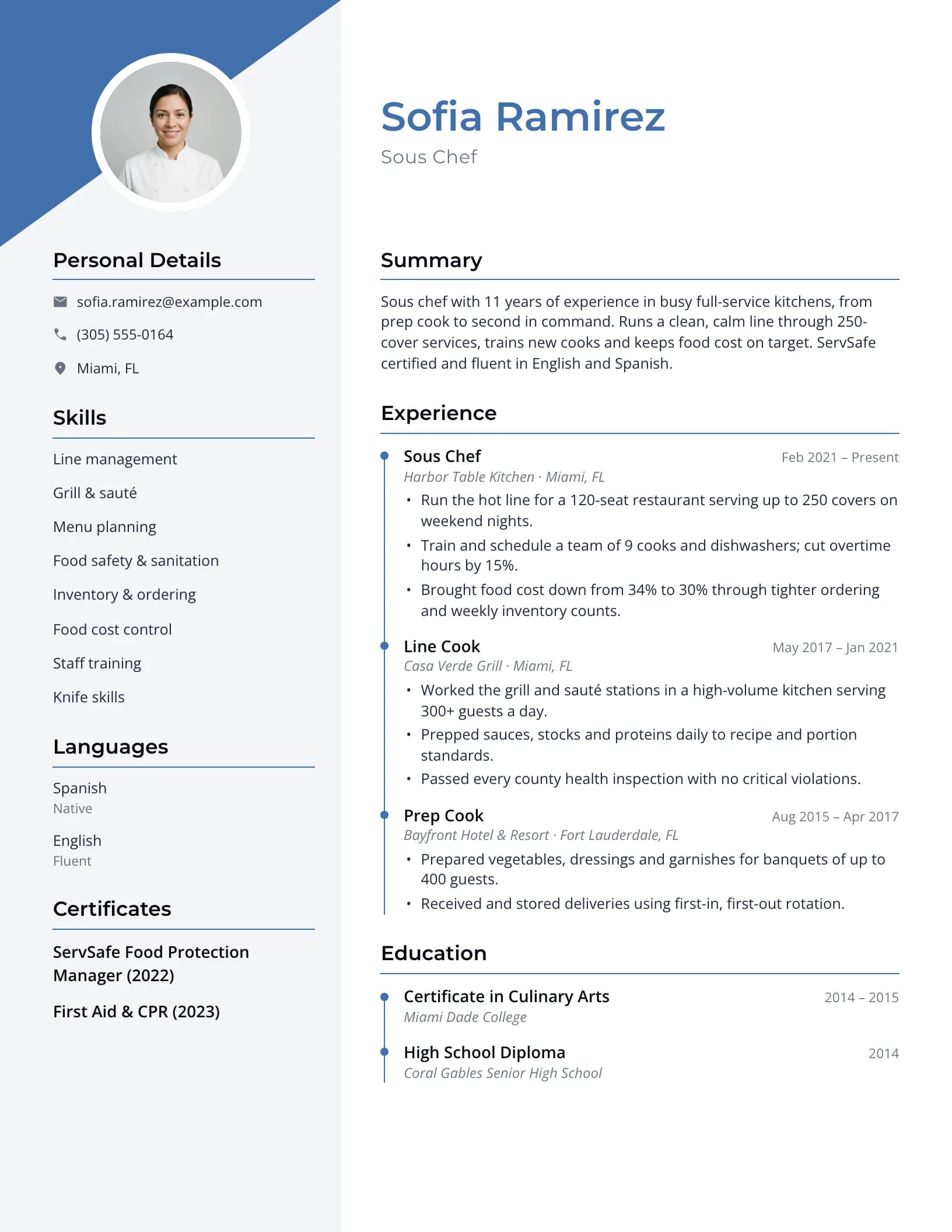
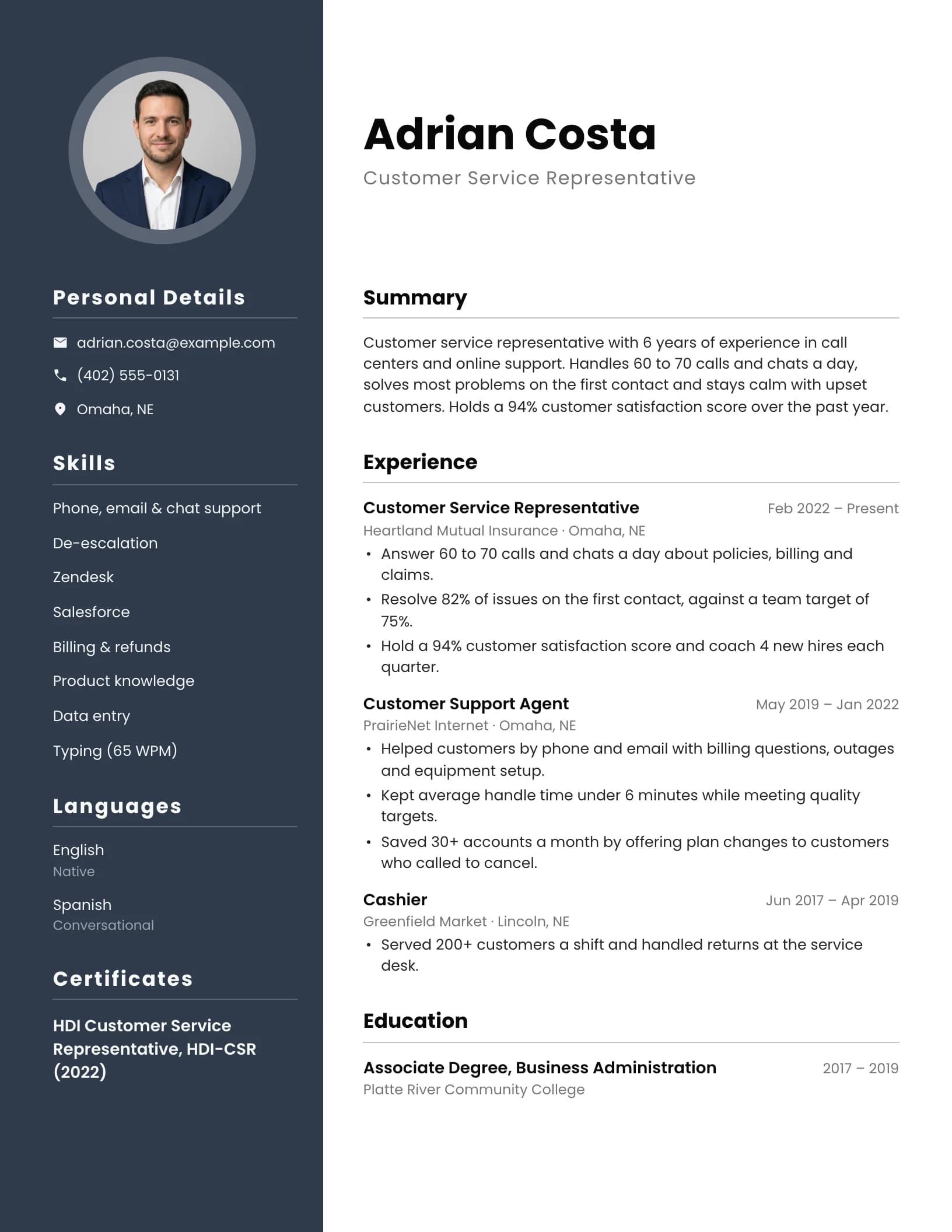
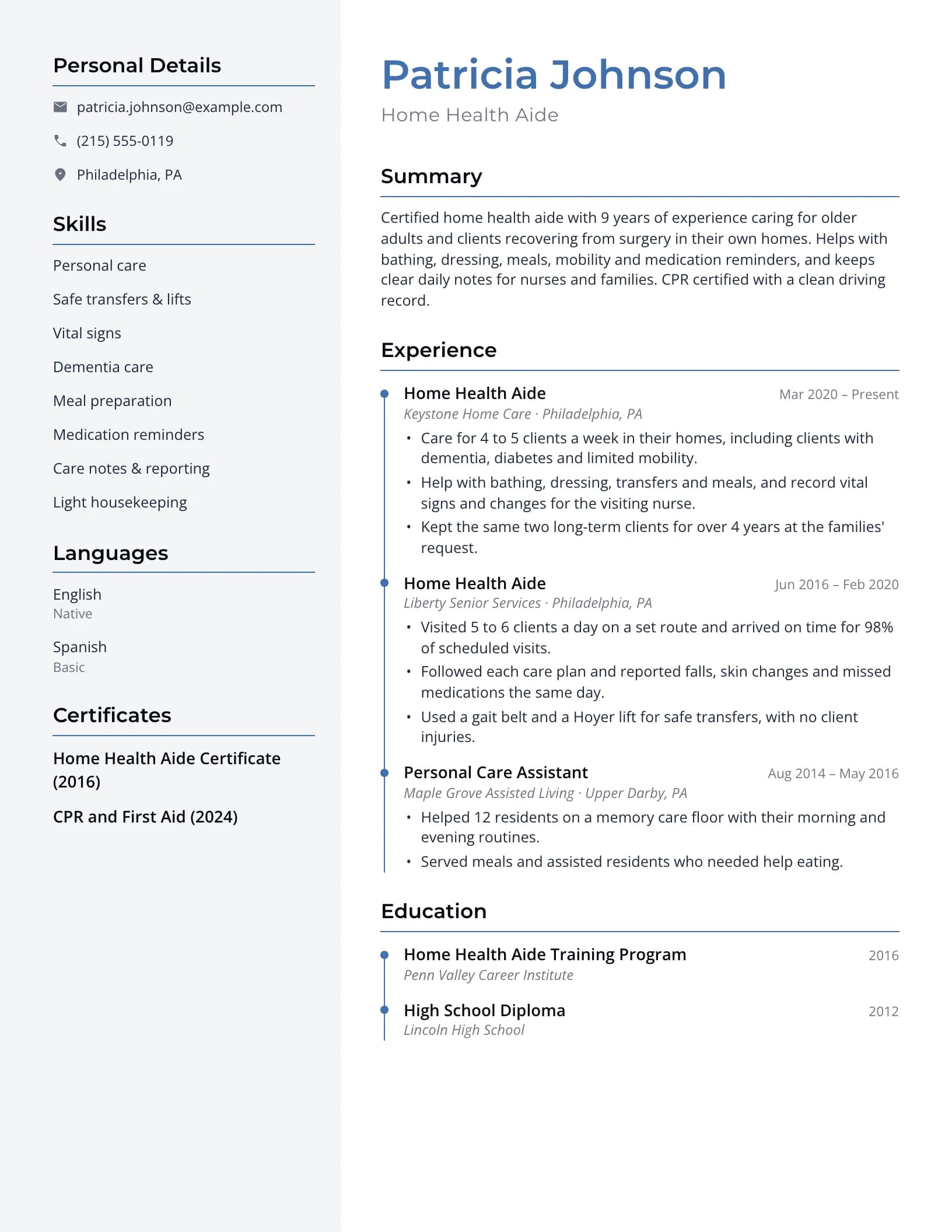
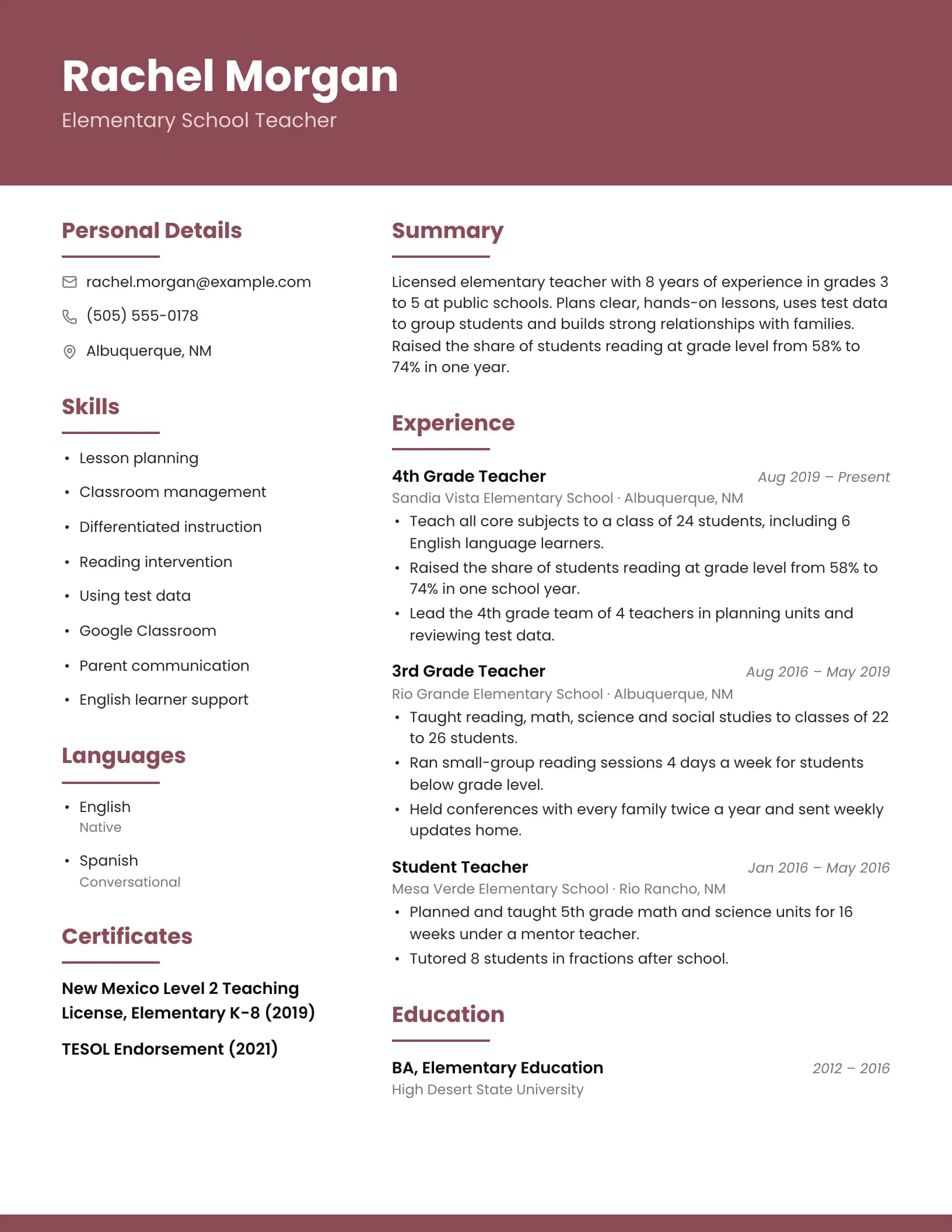
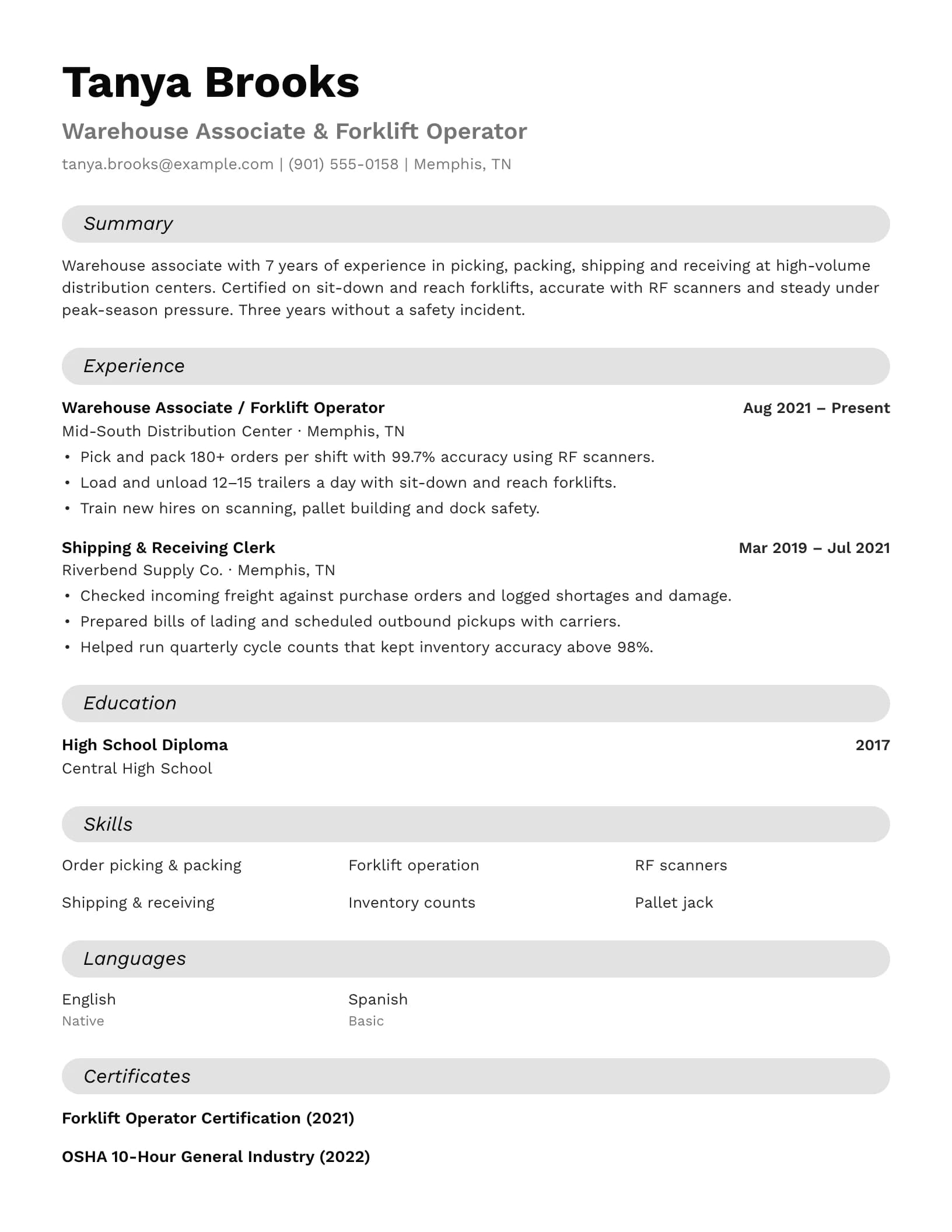
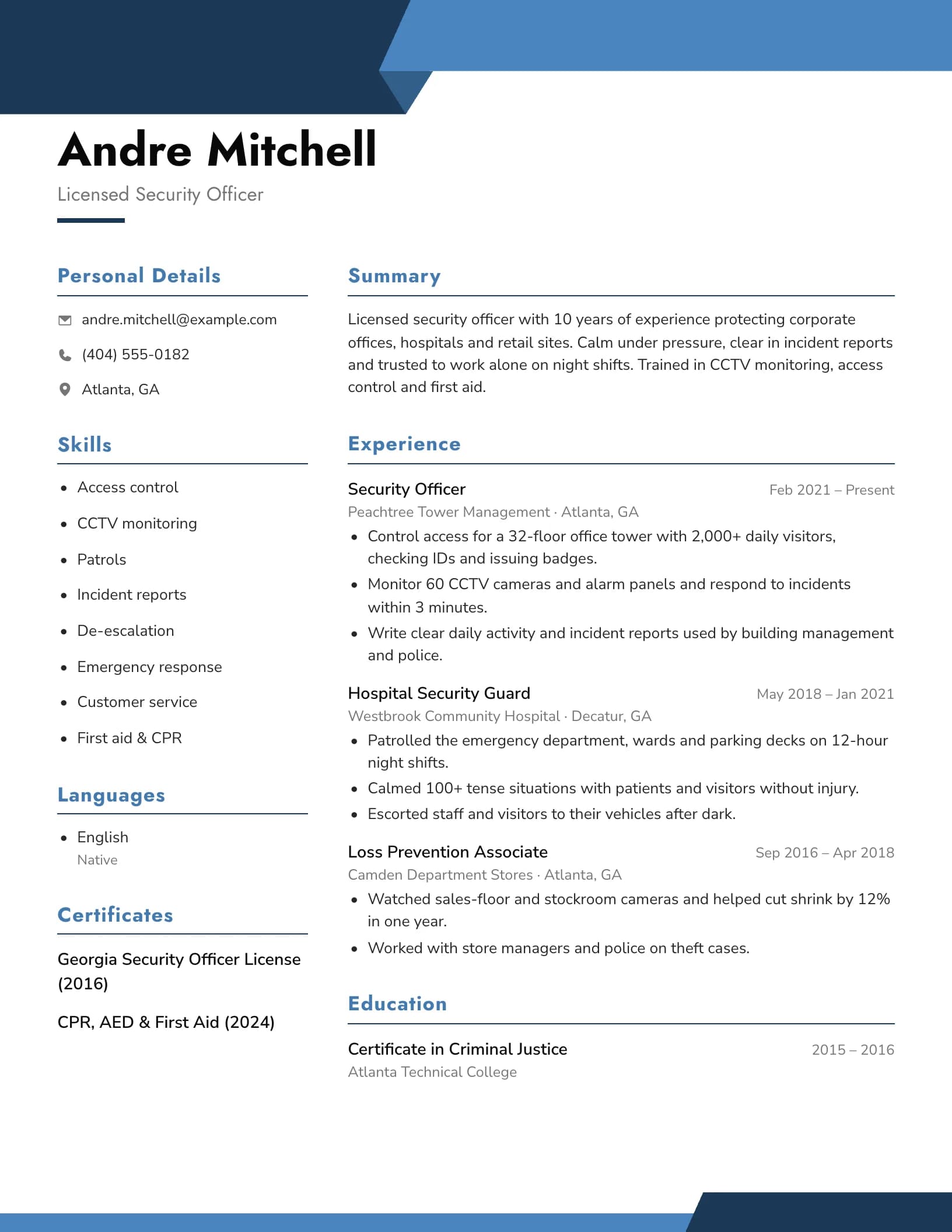
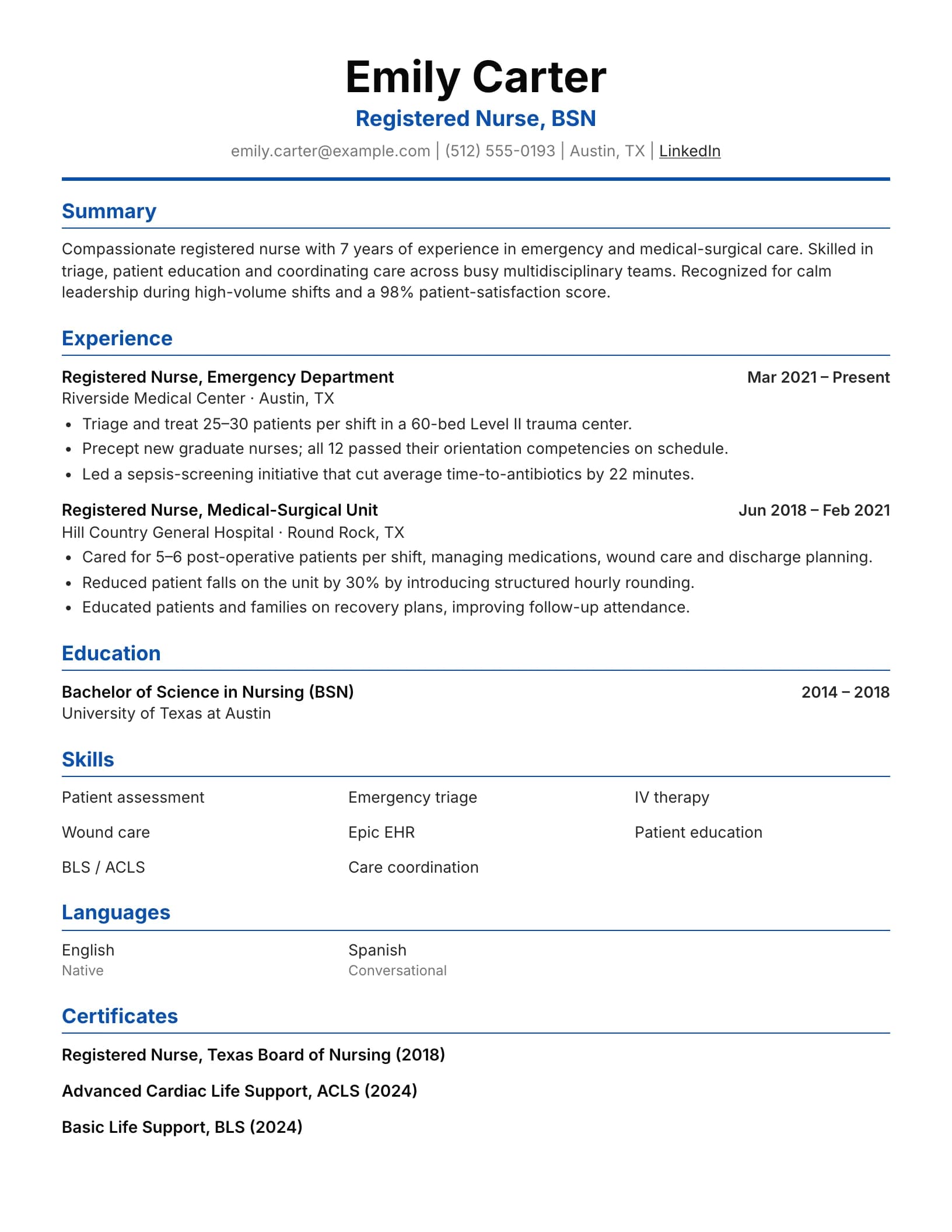
A clean template keeps the sections in a sensible order, so you only have to fill them in. DuckResume has one-column and two-column templates, and you can switch between them at any time without retyping. In every template the photo is optional and can be hidden. The pictures below show US-style samples, but each template can be set to A4.
 CapsuleUse this template
 VertexUse this template
 LedgerUse this template